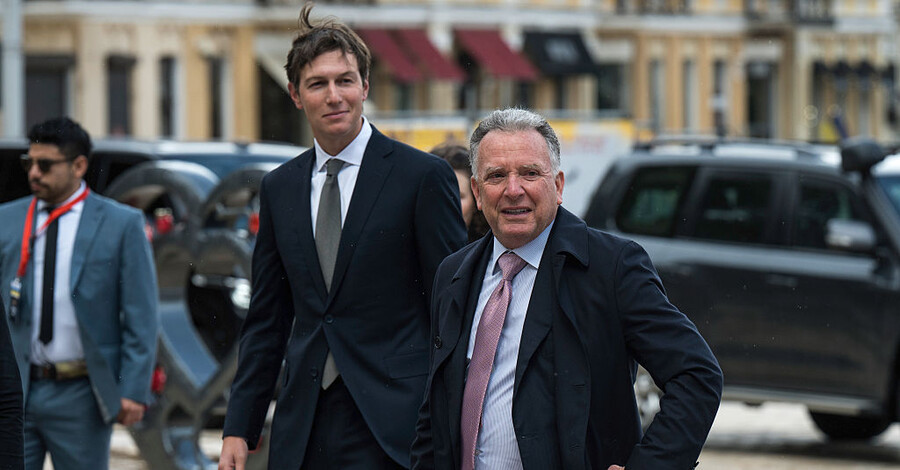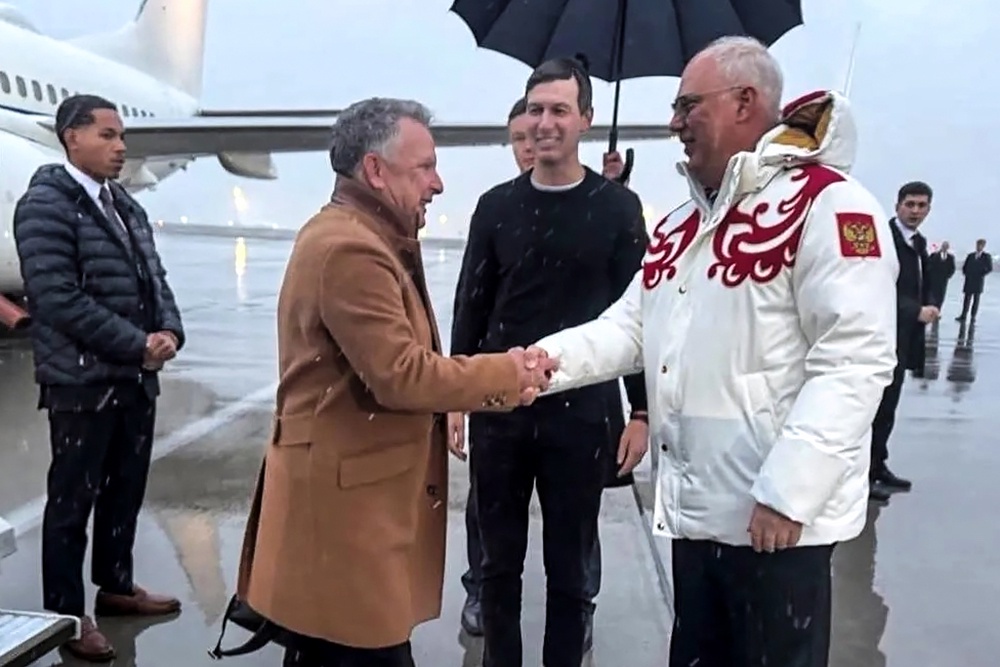
The red-carpet arrival at Vnukovo airport set the tone for a high-stakes diplomatic shuttle that bridged continents and capitals. US special envoy Steve Witkoff and Jared Kushner, son-in-law of the US president, stepped off an aircraft to be welcomed by Kirill Dmitriev, the head of the Russian Direct Investment Fund and a special representative of the Russian president. The scene quickly transitioned to central Moscow, where Dmitriev, Witkoff, and Kushner arrived at a hotel near the Kremlin in preparation for a heavily anticipated encounter with Russian President Vladimir Putin. For Witkoff, this journey marked his fourth visit to Putin this year alone, illustrating a persistent channel of communication regarding the conflict.

This immediate push into Moscow followed the conclusion of two-day trilateral negotiations involving delegations from Russia, the United States, and Ukraine in Abu Dhabi. These intensive talks brought adversaries to the table for crucial discussions, though the chasm between their positions remained vast. In ongoing shuttle diplomacy, the parties addressed various aspects of the conflict, with European observers conducting separate talks without direct negotiation with Russia.
Amidst sweeping disagreements on core issues, the diplomacy in the United Arab Emirates yielded limited practical breakthroughs. As Ukrainian negotiator David Arakhamia viewed the developments optimistically, the talks produced an agreement on a concrete outcome: the two sides agreed to an exchange of prisoners. While structural peace remained elusive, this single point of agreement provided a glimmer of humanitarian progress amid ongoing hostilities, even as European observers conducted separate talks without direct negotiation with Russia.
Overnight, Kyiv was attacked with ballistic missiles, underscoring the relentless kinetic pressure of the war.
With the Abu Dhabi meetings concluded, Kushner announced that he and Witkoff would travel directly to Russia to meet the Russian leader. Kremlin spokesman Yuri Ushakov announced the meeting for the morning hours, noting that the US representatives brought specific messages—remarking simply that "Sie bringen etwas mit" (they are bringing something). The morning talks served to inform Putin directly of the American perspective on the recent three-way discussions in Abu Dhabi. This ongoing shuttle diplomacy aimed to convey Washington's diplomatic positioning directly to the highest levels of the Russian government.
Even as diplomats maneuvered in conference rooms and hotels, the brutal reality of the conflict raged on the ground. Overnight, Kyiv was attacked with ballistic missiles, underscoring the relentless kinetic pressure of the war. Simultaneously, far from the capital, the Ukrainian navy announced it successfully carried out an operation on the left bank of the Dnipro river. The operation utilized an air-dropped ground drone equipped with explosives, marking a novel tactical deployment in the maritime and riverine theater of operations.
The American delegation's mission in Moscow carried a distinct structural objective regarding the architecture of future negotiations. US and NATO officials framed the inclusion of European nations as "integral components" of negotiations to end the conflict, a sentiment echoed by Jared Kushner in Abu Dhabi when he stated they must be an "integraler Bestandteil" of peace talks. The German government suggested that the primary goal of the Moscow visit was notifying Putin that Europe will sit at the table. Following their encounter with Putin, Witkoff and Kushner planned to travel onward to Dublin, where nearly 50 heads of state were gathering for the 9th European Political Community (EPC) summit to discuss ending the Russian offensive.
Arriving at the summit in Dublin, Ukrainian leadership looked toward the shifting diplomatic landscape with a mixture of caution and tentative hope. Volodymyr Zelensky estimated that there could exist a "window of opportunity" to achieve a breakthrough. With regional leaders noting the ongoing discussions, the international community watched closely as the dual tracks of relentless military conflict and hurried shuttle diplomacy collided on the international stage.