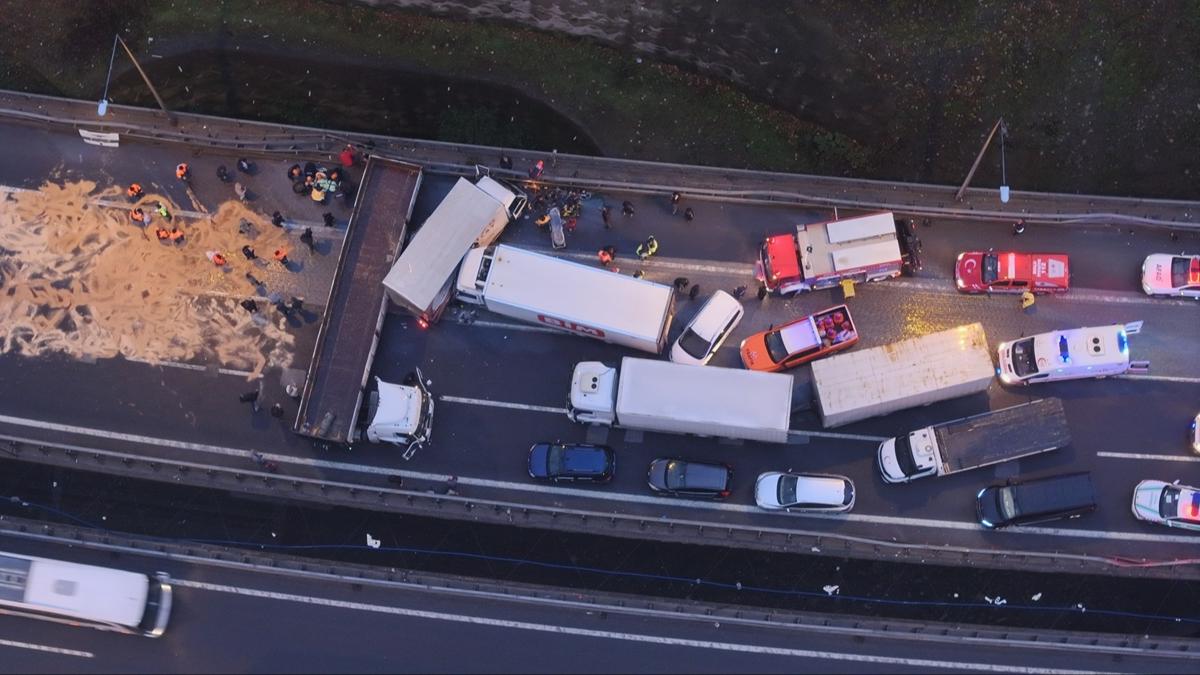
On a stretch of highway that demands constant vigilance, the rhythm of transit was violently interrupted. At the third viaduct of the Bolu Mountain section on the Anadolu Tollway, a heavy truck—identified by license plate 34 FEV 743—suddenly veered from its path. The driver lost control of the vehicle, sending the massive machine careening into the roadside barriers. It was a moment of sudden crisis that would transform a routine transit corridor into a scene of wreckage and emergency response.
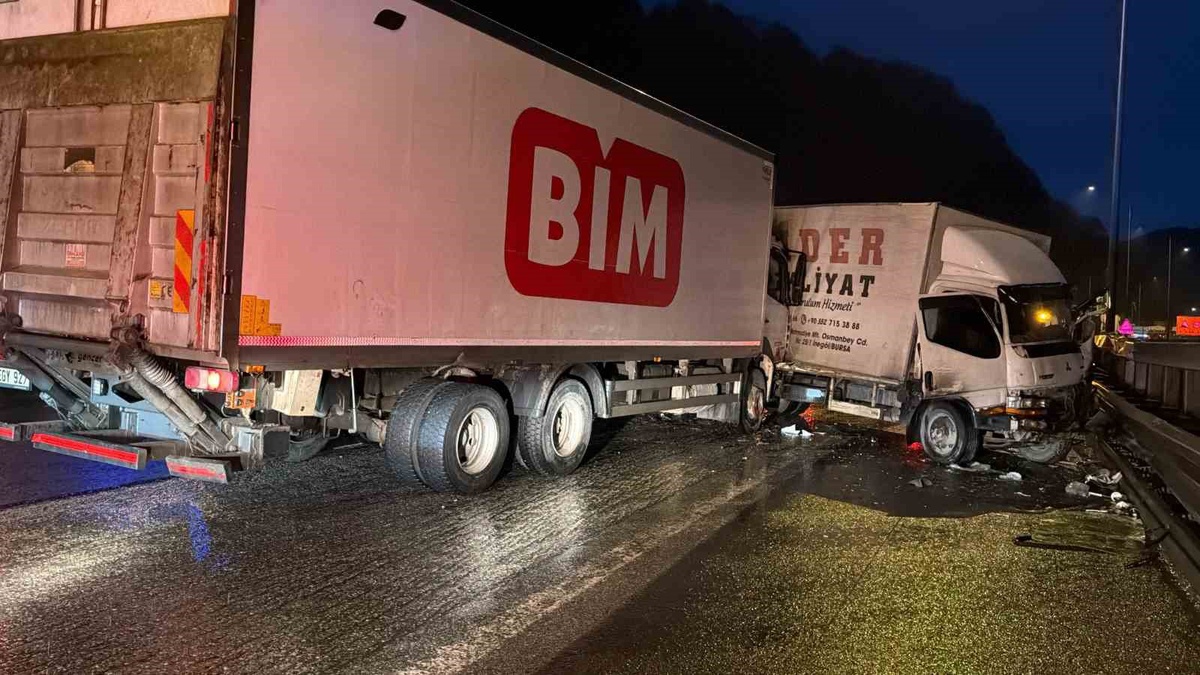
In the high-stakes environment of mountain passes, one vehicle's crisis often becomes the next driver's catastrophe. As the initial truck struck the barriers, the momentum of the accident rippled backward through the line of traffic. Two following trucks, bearing license plates 34 EGY 927 and 16 BHD 826, were unable to avoid the chaos. They collided with the swerving truck, creating a chain collision that left a trail of twisted metal across the viaduct. The impact was not merely a matter of property damage; it was a moment of physical trauma that left two people injured in the wreckage.
As the dust settled from the collision, the scale of the incident became clear to those on the scene. Emergency teams arrived quickly to manage the aftermath of the pileup. The priority was immediate: tending to the two individuals injured during the impact. Following the initial assessment, the injured were transported to Bolu Izzet Baysal Hospital to receive medical care. While the specific conditions of the victims were not detailed, the swift mobilization of medical teams marked the critical first phase of the recovery effort.
The highway, a critical link in the nation's infrastructure, had to be closed to all Istanbul-bound traffic.
For the thousands of motorists traveling toward Istanbul, the accident meant an abrupt and frustrating halt. The highway, a critical link in the nation's infrastructure, had to be closed to all Istanbul-bound traffic. This was not a minor inconvenience but a total stoppage of one of the region's most important routes. The closure was necessary to allow emergency responders to work and to ensure the safety of drivers who might otherwise have encountered the wreckage or the secondary hazards of a mountain pass accident.
With the Anadolu Tollway blocked, the flow of commerce and travel was forced into a complex redirection. Authorities implemented a traffic diversion, steering drivers away from the Bolu Mountain section and toward alternative routes. Drivers were redirected via the Abant Junction, sent onto the D-100 road to bypass the site of the collision. This detour transformed a direct journey into a much longer, more arduous trek, as the sudden influx of diverted vehicles tested the capacity of the secondary road networks.
Clearing a mountain pass after a multi-vehicle accident is a meticulous process. It is not enough to simply move the vehicles; the site must be made safe for high-speed transit once more. For approximately two hours, the highway remained a closed zone. During this window, crews worked to remove the damaged trucks and perform essential road cleaning to clear any debris or fluids left behind by the collision. Only after the wreckage was cleared and the surface of the road was deemed safe did the gates to the Istanbul-bound lanes reopen.
Once the physical barriers were removed and the traffic began to flow again, the focus shifted from immediate rescue to the formal inquiry. An investigation into the accident was launched to determine the precise circumstances that led to the driver of the 34 FEV 743 truck losing control. As the highway returned to its normal state of motion, the incident remained a stark reminder of the volatility inherent in mountain transit, where a single loss of control can trigger a cascade of consequences for everyone on the road.