
For anyone watching the slow, grinding machinery of global proliferation from the outside, the nuclear standoff on the Korean Peninsula can often feel like an abstraction—a matter of distant satellite imagery, tense diplomatic communiques, and dry intelligence estimates. Yet the reality of that program is relentlessly physical, rooted in factories, laboratories, and the singular, unyielding vision of a regime that has staked its entire survival on the atomic bomb. This complex reality came into sharp focus when North Korean leader Kim Jong Un walked through the doors of the country's nuclear material production and weapons research facilities.
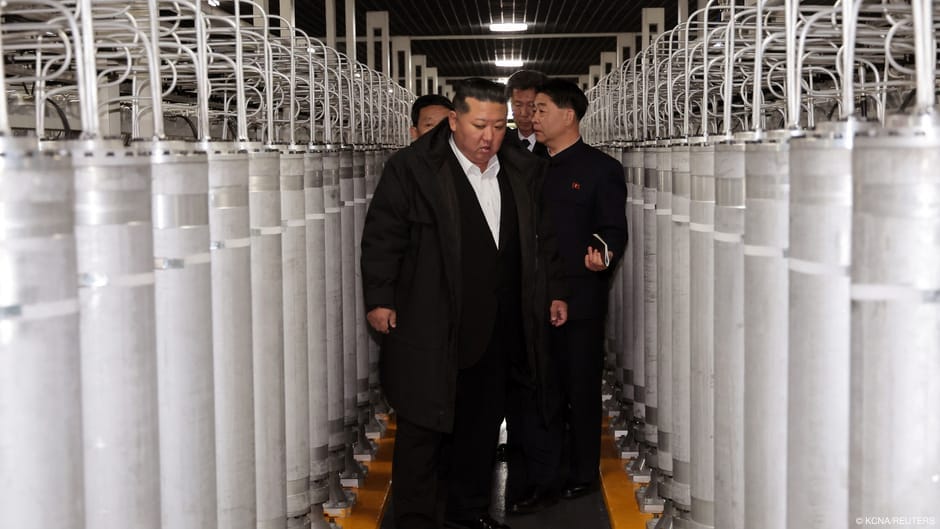
To understand the gravity of these inspections, one has to look at how North Korea has methodically codified its nuclear ambitions over the years. The journey has been marked by a deliberate escalation of underground detonations. North Korea has conducted six nuclear tests since 2006, a timeline of escalating technological sophistication that culminated in its last and most powerful test carried out in 2017. Having proven the devastating potency of its designs, the state moved to make its status permanent in the eyes of its citizens and the world. On January 1, 2023, North Korea enshrined its nuclear status in its constitution, closing the door on any theoretical future where denuclearization might remain on the negotiating table.
During his recent inspection tour of the research and production facilities, Kim made it clear that this constitutional milestone was merely a foundation for what comes next. He urged the country to focus on deploying tactical nuclear weapons across multiple domains, signaling a strategic shift toward integrating smaller, battlefield-ready atomic munitions for a variety of different military missions. It is a doctrine designed to make the country's arsenal not just a strategic deterrent of last resort, but an adaptable, operational tool of warfighting.
This sentiment was captured sharply by state media reporting on the visit.
When a dictator inspects his nation's most sensitive laboratories, the choreography is designed to project absolute confidence and technological mastery. For Kim, these visits are rituals of power that send an unmistakable message outward to rival capitals. As he examined the inner workings of the facilities, the North Korean leader declared that the country's nuclear capability is now an established reality. In his view, there is no turning back, framing the atomic arsenal as an essential shield against external threats.
This sentiment was captured sharply by state media reporting on the visit. Kim articulated a worldview that leaves no room for compromise, asserting that the nation's possession of nuclear weapons is an absolutely irreversible choice as long as malicious forces exist that use nuclear weapons as a means of achieving hegemony. In the logic of Pyongyang's leadership, the very existence of hostile foreign powers justifies an ever-expanding nuclear infrastructure.
Alongside the visual theater of the industrial inspections came fierce diplomatic and rhetorical posturing. KCNA reported that Kim stated North Korea's status as a nuclear weapons state is inviolable, warning that any attempt to deny it would be treated as an open declaration of war. It is a maximalist stance designed to preempt any international legal challenges or diplomatic campaigns aimed at rolling back the country's gains.
This uncompromising posture forces neighboring states and intelligence agencies to constantly reassess the scale of the threat. South Korea's defense minister recently noted estimates suggesting Pyongyang possesses between 80 and 120 nuclear warheads. That chilling numerical range represents a substantial stockpile, built over nearly two decades of defiance against international sanctions and isolation.
As the region absorbs the implications of these developments, the landscape of security in East Asia remains profoundly altered. What began decades ago as a clandestine nuclear ambitions program has matured into a constitutionalized, highly industrialized state arsenal with thousands of technical personnel and a sprawling network of production facilities. With Kim calling for the wider deployment of tactical nuclear weapons across multiple domains, the standoff enters a new, more volatile phase. The laboratories keep working, the warheads continue to accumulate, and the fundamental challenge of managing a nuclear North Korea remains one of the most intractable security problems of the modern era.