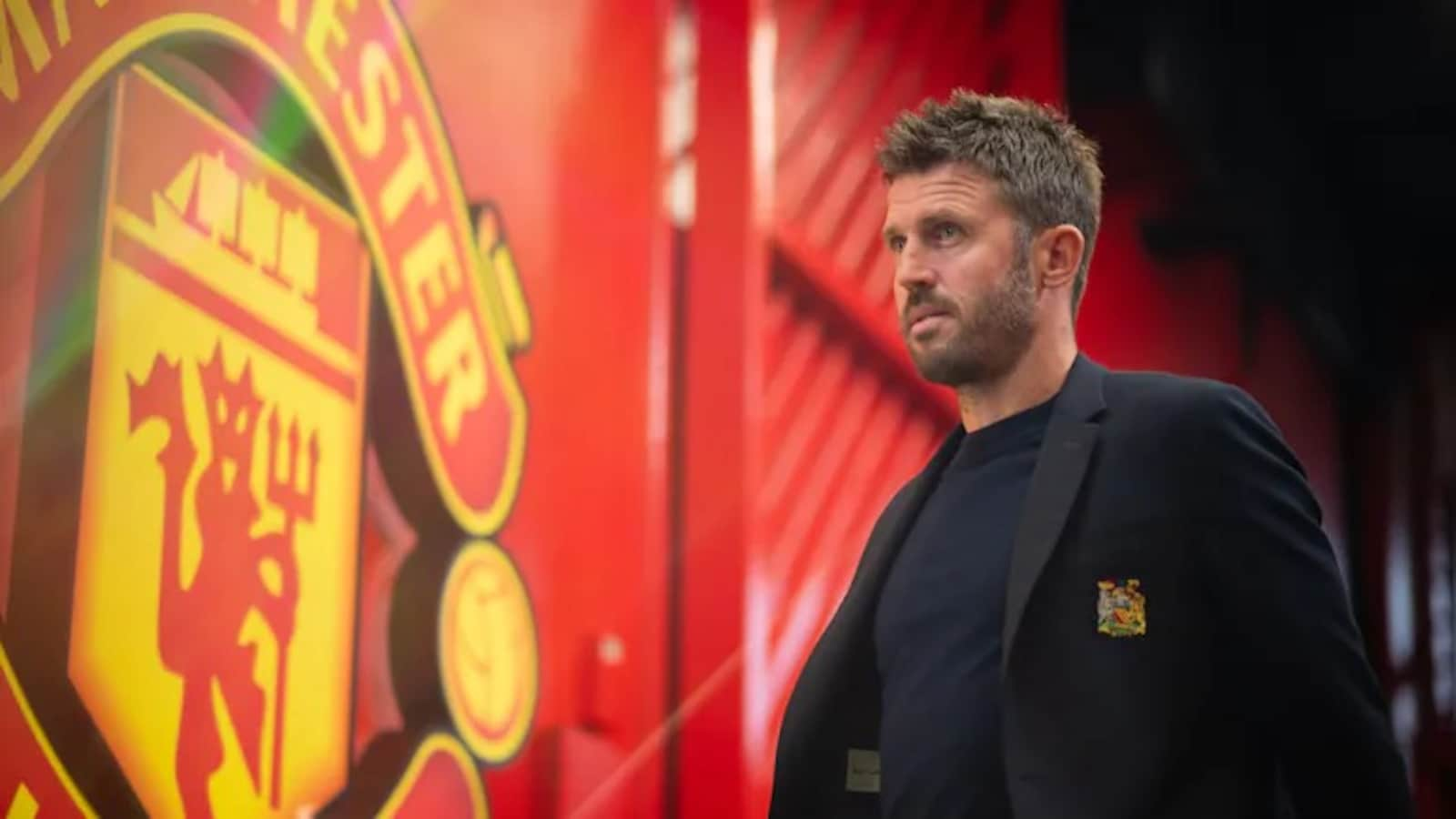
For the supporters of Manchester United, the current Premier League campaign has been nothing short of a nightmare. The club, a global institution synonymous with dominance, finds itself in the unfamiliar and precarious position of 18th place. This relegation-zone standing is the culmination of a disastrous start to the season. The numbers tell a stark story: in their first 10 matches, the team has managed to secure only a single victory. This lack of output on the pitch has created an environment of mounting pressure that eventually became untenable for the club’s hierarchy.

The turning point for the club’s leadership arrived following a period of internal assessment regarding the team's performance. With the team languishing near the bottom of the table, the consensus was clear: the status quo could no longer be maintained. Consequently, the club made the formal announcement that they had terminated the contract of head coach Michael Carrick.

🚨💣 BREAKING: MANCHESTER UNITED HAVE SACKED MICHAEL CARRICK WITH IMMEDIATE EFFECT. https://t.co/KcgPEGjSoN
Michael Carrick’s exit is a complicated affair, layered with the weight of history. Carrick, who had transitioned into the permanent head coach role in May following a previous interim stint, is deeply woven into the fabric of the club. His tenure as a player earned him the status of a legend, a fact the club was quick to acknowledge in the wake of his dismissal. In a statement, Manchester United noted, "Michael is, and always will be, a Manchester United legend. Just as he did as a player, he has conducted himself with the highest standards of dedication and professionalism throughout his time back with the club. His leadership and achievements last season will always be fondly remembered." Despite this reverence, the cold reality of professional football dictated that his time as manager had reached its natural, if painful, conclusion.
His leadership and achievements last season will always be fondly remembered.
The justification for the firing was framed by the club as a reluctant but unavoidable necessity. "After a disappointing start to the season, the club has come to the extremely difficult conclusion that a change is necessary in order to achieve our ambitions," the organization stated. The ambition of a club like Manchester United is rarely satisfied by mid-table mediocrity, let alone a fight against relegation. The decision to cut ties with Carrick reflects a broader anxiety within the organization to arrest a slide that has threatened the club's standing in the English game.

We can confirm Michael Carrick has departed his role as men’s first-team head coach.
Carrick’s departure highlights a persistent instability that has plagued Manchester United since the retirement of the legendary Alex Ferguson in 2013. The club has now cycled through seven permanent head coaches in the years since Ferguson stepped down, a revolving door that speaks to the immense difficulty of succeeding a figure of such singular influence. Each transition has brought its own set of expectations and, ultimately, its own set of frustrations, leaving the club in a state of perpetual rebuilding.
As the dust settles on the Carrick era, the club is already looking toward the future. Reports indicate that Manchester United is in advanced talks with Mauricio Pochettino, the current coach of the US Men’s National Team, to take the helm. The move to secure a manager of Pochettino’s profile suggests a desire for a proven tactical hand to navigate the remainder of the season. The focus now shifts to whether Pochettino can revitalize a squad that has struggled to find its identity, and whether he can provide the long-term stability that has eluded the club for over a decade.