For the average smartphone user, the phone screen is no longer a neutral interface. It has become a battlefield. Every time the device buzzes with an unknown number, a quiet calculation runs in the background of the mind: is this a lost friend, a business opportunity, or one of the thousands of scammers who have mastered the art of impersonation? In Russia, this anxiety has reached a critical point. The threat of telephone fraud is no longer a fringe concern for the tech-savvy; it is a daily risk for anyone holding a mobile phone. The vulnerability lies in the very nature of the medium. A voice can be mimicked. A number can be spoofed. For years, the gap between who a caller claims to be and who they actually are, has been wide enough to drive millions of citizens into financial ruin. The solution, it turns out, didn’t require complex encryption or behavioral AI. It required something far simpler, something that has existed in the telephony world for decades, but was largely unused: the Caller ID.

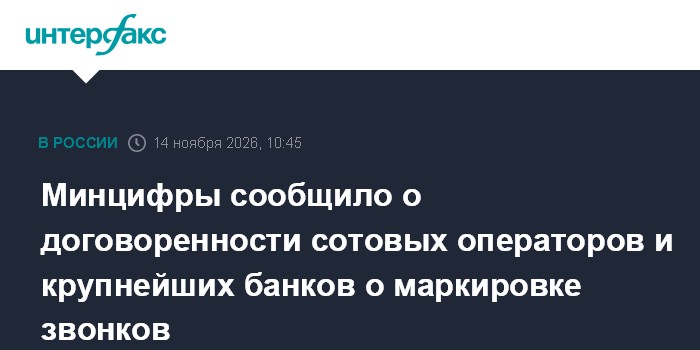
On November 14, 2025, the technological infrastructure of Russia’s financial sector shifted. The 'Big Four' telecommunications operators—the dominant giants that control the majority of the country’s mobile traffic—reached a formal agreement with the nation’s largest banks. The term sheet is straightforward. When a bank initiates a call to a customer, the name of that specific financial institution will now appear on the recipient’s screen. It is a move that transforms the anonymous 'Unknown Caller' into a verifiable entity. The Ministry of Digital Development has hailed the move as a pivotal moment in the fight against fraud. By anchoring the call to a corporate identity, the system removes the ambiguity that scammers exploit. If a stranger calls claiming to be from Sberbank, but the screen simply displays their personal number or a spoofed generic ID, the mismatch is immediately visible. The user knows, at a glance, that the claim is false. It is a defense mechanism built not into the user’s vigilance, but into the network itself.
This agreement does not exist in a vacuum. It is, in fact, the final piece of a puzzle that was begun months earlier. Since September 2025, a new regulation has been in effect across Russia, mandating that calls from companies and individual entrepreneurs must be labeled. This legal framework forced the hand of the telecom operators, requiring them to upgrade their signaling systems to handle corporate identifiers. For a while, this obligation applied broadly to the business sector. However, the voluntary, high-profile agreement between the Big Four and the banking sector represents a distinct strategic choice. By proactively implementing this for the most targeted sector of fraud, the banks and operators are signaling a commitment to security that goes beyond mere legal compliance. It is a public statement that the most sensitive transactions, those involving personal wealth, deserve the highest level of transparency. The Ministry of Digital Development views this collaborative effort as an important step in protecting citizens, recognizing that the threat of impersonation is too complex for any single entity to manage alone. The synergy here is between the reach of the telecoms and the trust deficit of the financial sector. By bridging the two, the system creates a safety net that is both technical and psychological. Users are no longer left to guess; they are given the data to judge.
It is a public statement that the most sensitive transactions, those involving personal wealth, deserve the highest level of transparency.
What this agreement changes is the texture of the phone call itself. The era of the mysterious unknown number, where fear and curiosity are the only cues for the receiver, is ending for interactions with major financial institutions. The smartphone, that pocket-sized portal to the world, is becoming a place of verified truth. It is a small, digital shift, yet it carries the weight of significant cultural change. We move from a world where trust is granted by default and revoked by suspicion, to one where trust is displayed by default. The 'Big Four' and the banks have agreed to write their names on the wall, literally, on the screen of millions of devices. It is not a cure-all for fraud, as scammers will undoubtedly adapt, moving to other channels or using more sophisticated spoofing techniques that might bypass even labeled calls. But it removes the easiest prey from the predator’s table. It forces the fraudster to work harder, to be more clever, and to risk more exposure. For the citizen, it is a quiet victory. The phone no longer rings with the void. It rings with a name. And in a world of increasingly sophisticated deception, the ability to know who is on the other end is the most valuable security feature there is. As the system settles into this new state, the expectation is no longer just about convenience; it is about safety, woven into the very fabric of the connection.