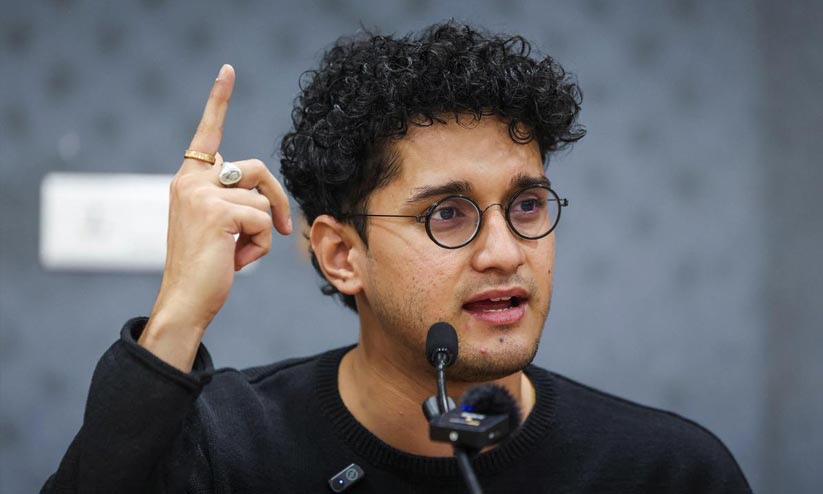
For most travelers, arriving at the airport immigration counter is simply the final bureaucratic hurdle before a long-awaited journey. But for Saurav Das, the night of November 23 transformed into an abrupt halt that would soon reverberate through the high halls of the judicial system. Standing ready to board a flight to London, Das was stopped at the Delhi airport immigration counter while attempting to catch a flight to London for an Oxford University event. Instead, his journey was cut short right there at the Delhi airport immigration counter, leaving him grounded and setting the stage for a high-stakes legal confrontation.

At the heart of the sudden travel restriction was an administrative mechanism typically reserved for tracking individuals of interest across international borders: a Look Out Circular, commonly known as an LOC. As the legal challenges began to unfold, the Central government informed the Delhi High Court that the restrictive circular had been issued specifically by the Mumbai Police. According to the disclosures made in court, this directive was put into motion on November 23, neatly coinciding with the exact night Das attempted to catch his flight to London. For an individual suddenly finding their freedom of movement curtailed without prior warning, the existence of the circular came as a complete shock.
Behind the abrupt airport stop lay a web of administrative and biographical concerns raised by state authorities. The Centre argued before the judiciary that glaring inconsistencies within Das's passport records warranted immediate scrutiny, noting that these discrepancies could potentially impact his very citizenship. Specifically, officials pointed to problematic details concerning his schooling, his recorded home address, and his parentage. Adding to the administrative tangle, the Regional Passport Office in Chennai had previously stepped into the fray by issuing a formal show-cause notice regarding discrepancies found specifically in his listed place of birth.
Specifically, officials pointed to problematic details concerning his schooling, his recorded home address, and his parentage.
When the matter finally landed before the Delhi High Court on Thursday, the courtroom became an arena for a sharp debate over transparency and due process. Represented before Justice Amit Mahajan, Das's legal team launched a vigorous challenge against the restrictions, zeroing in on the complete lack of prior notice given to their client regarding the circular. Voicing the profound frustration of a citizen caught unaware by state machinery, senior advocate Akhil Sibal captured the essence of the defense's grievance in court:
"Nothing has been served on me. Somebody has to tell me that there is an LOC. How are citizens to be treated like this?"
While the Centre's counsel maintained that a show-cause notice had indeed been issued to Das—noting that he had not yet formally answered it—his legal representatives maintained they had been left entirely in the dark about the restrictive measures targeting his mobility.
As the hearing progressed, the judiciary stepped in to establish a structured path forward for the competing arguments. Justice Amit Mahajan formally issued notice to the Central government, prompting a formal response to the petition filed by Das, who serves in leadership roles as a co-convenor for the Citizens for Justice and Peace and as a co-convenor for the Cockroach Janata Party. Recognizing the complex layers involving the Mumbai Police's lookout circular, the passport discrepancies flagged by Chennai authorities, and the overarching questions of personal liberty, the court chose to adjourn the proceedings. Detailed arguments and the next critical chapter in the legal standoff have now been officially scheduled for December 9, leaving Das's international travel plans—and the broader questions surrounding his passport—hanging in a delicate judicial balance.
