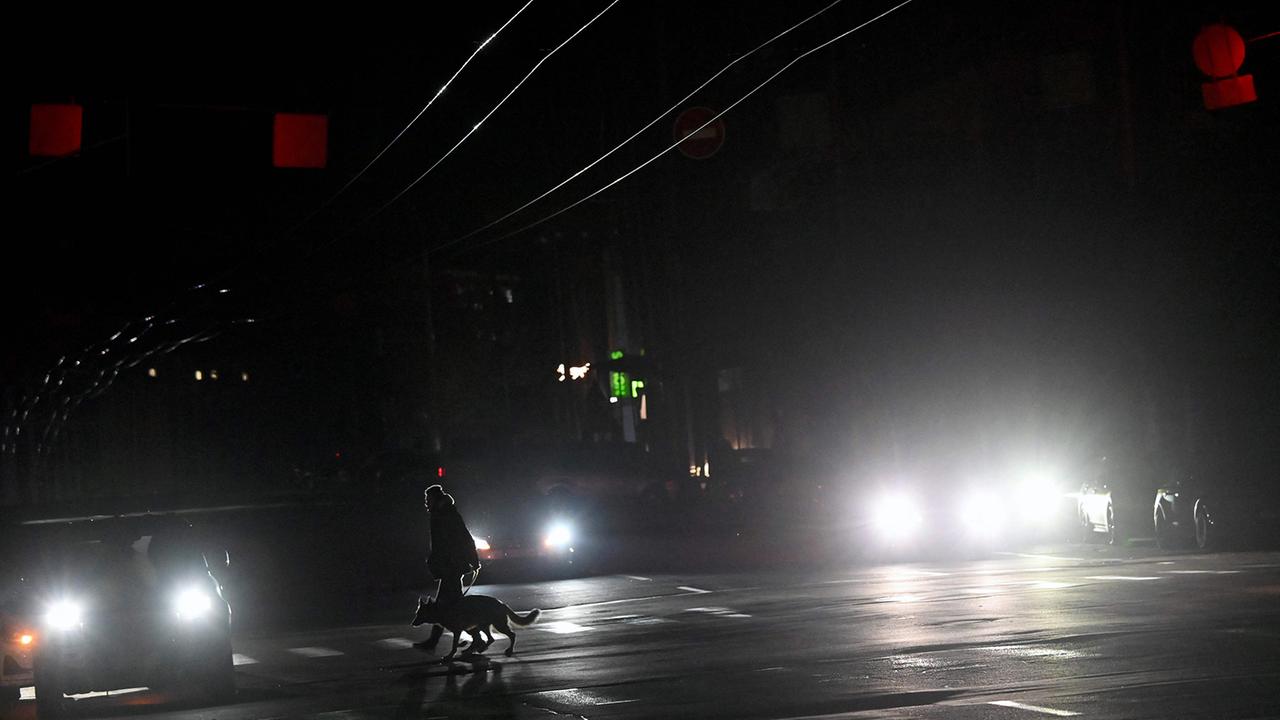
The silence of a darkened city is often mistaken for peace, but for residents of Ukraine’s Dnipro region, the absence of light signifies something far more urgent. Following recent waves of Russian air raids, the darkness has expanded into a profound humanitarian crisis, isolating communities and forcing critical infrastructure into survival mode.

The scale of the disruption became clear when the energy provider DTEK reported that 600,000 people in the Dnipropetrovsk region were cut off from electricity. This staggering number is not just a statistic; it represents tens of thousands of households where heating systems have gone cold and communication lines have frayed. In a country already navigating a prolonged conflict, the loss of power is a direct threat to basic stability, stripping people of their ability to work, heat their homes, or even see to navigate their own streets at night.
The impact of the strikes extended well beyond Dnipro. In the Kharkiv region, a separate attack left approximately 250,000 people in the city of Slavyansk without power. These strikes were part of a broader pattern of aggression that had already touched five different regions during massive attacks earlier in the month. The targeting of such wide geographic areas indicates a sustained effort to degrade the Ukrainian energy infrastructure, a strategy that has kept the grid under constant pressure since the invasion began in 2022.
The International Atomic Energy Agency confirmed the loss of this external connection, underscoring the precariousness of the site's safety systems.
In the medical sector, the consequences of these outages are visible in the halls of hospitals across the Kharkiv, Poltava, and Kyiv regions. Facilities that normally rely on the main grid are now forced to operate on generators. Oleksandr Gonchar, a local leader, emphasized the dire necessity of this backup power, stating, "We must pay attention to the crisis and use generators to keep hospitals and other essential service centers operating." For patients and staff, these generators are the thin line between continued care and total shutdown. The reliance on such temporary measures highlights how deeply the infrastructure has been compromised; hospitals are no longer just treating illness, but are themselves managing an energy emergency.
Perhaps the most chilling development of this latest wave of strikes is the situation at the Zaporizhzhia Nuclear Power Plant, the largest in Europe. Under Russian control and in a frozen state since the occupation began in 2022, the plant has again lost its external power supply. While the facility is not currently producing electricity, its reactors still require a massive amount of energy to cool the spent fuel rods. Without external power, the plant is being cooled by emergency generator sets. The International Atomic Energy Agency confirmed the loss of this external connection, underscoring the precariousness of the site's safety systems.
Russian plant management stated that radiation levels on the site remain normal, a claim that serves to mitigate international alarm. Yet, the dependence on backup generators for nuclear cooling is a constant source of tension. The plant's status as a frozen, occupied facility makes it a unique vulnerability. Every strike on the surrounding grid increases the risk of a power failure that could have catastrophic consequences, not just for the region, but for the wider continent.
Ukrainian President Volodymyr Zelenskyy framed the timing of these attacks with specific intent, accusing Moscow of increasing pressure ahead of planned diplomatic talks in Abu Dhabi. The synchronization of military strikes with a diplomatic window suggests that the energy attacks are not merely tactical, but are designed to weaken Ukraine's bargaining position. By keeping the population in the dark and hospitals on backup power, the strikes aim to erode the societal resilience that Ukraine needs to stand firm at the negotiating table.
As the lights remain off across the Dnipro and Kharkiv regions, the resilience of Ukrainian infrastructure is being tested to its limits. The use of generators in hospitals and the emergency cooling at the Zaporizhzhia plant are stopgaps that buy time but do not solve the underlying vulnerability. For the 600,000 people in Dnipropetrovsk alone, the immediate challenge is not just the loss of power, but the uncertainty of when it will return. In the meantime, the entire system is holding together by the strength of its emergency backups, a fragile equilibrium that hangs in the balance while diplomatic efforts unfold in Abu Dhabi.
The current situation stands as a stark reminder of the intersection between energy security and national survival. While Russia claims normal radiation levels and a stable grid, the widespread outages tell a different story. For now, the Ukrainian people are navigating the darkness with whatever generators and resilience they can muster, waiting for the light to return while the world watches the ticking clock of diplomatic negotiations.