
On the day he ascended to the premiership, Andy Burnham did more than just accept the keys to Downing Street; he issued a challenge to the status quo. Standing at the threshold of power, the Prime Minister made it clear that his administration would not be defined by the short-termism of the past. Instead, he promised a decade of direction.
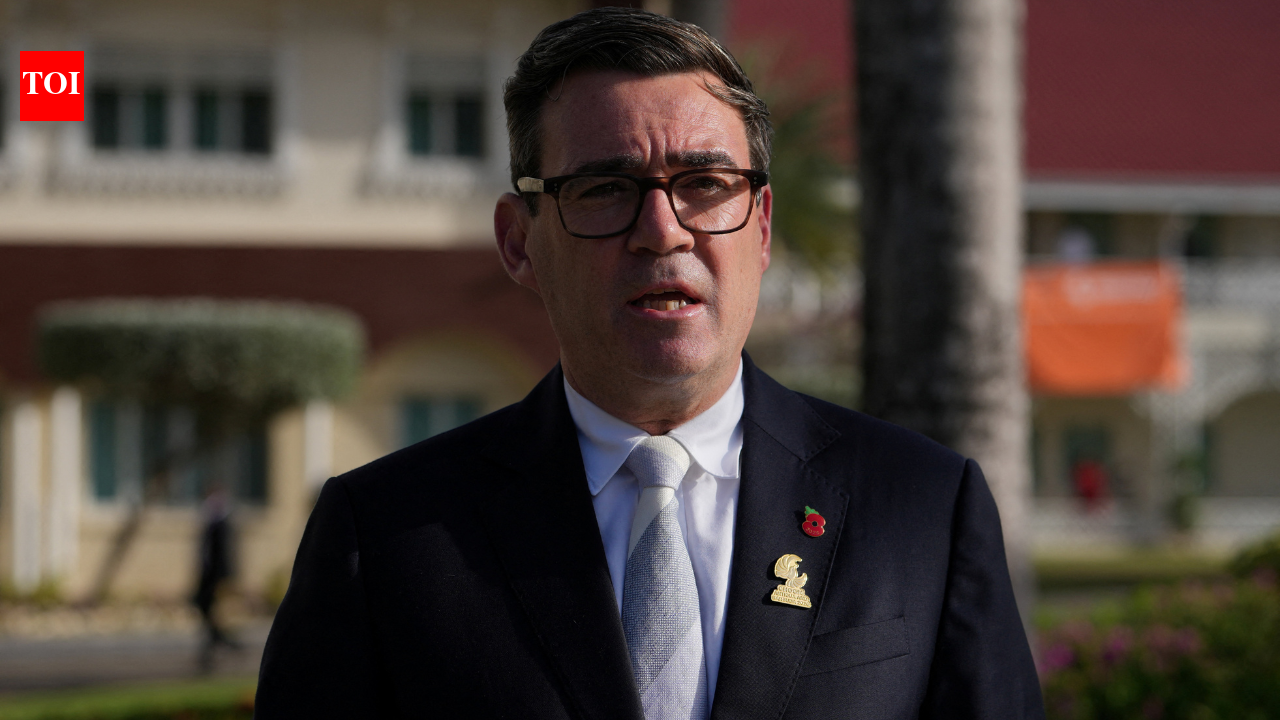
"I did walk up Downing Street promising a 10-year plan for this country because I am determined to give this country the stability that they failed to provide," Burnham declared. It was a statement of intent aimed at a nation weary of political volatility, proposing a long-term strategic roadmap designed to bridge the gap between the current reality and a more prosperous future. This 10-year plan is intended to serve as the core policy statement for No. 10, a foundational document that would dictate the trajectory of British life for a generation.
While the full scope of the document remains under wraps, the outlines of Burnham’s vision suggest a significant departure from previous government policies. The Prime Minister has signaled that the plan will focus on fundamental shifts in how the state interacts with its citizens, particularly regarding the cost of living and the safety net of social care.
Internal critics, including MPs Andy MacNae and Jonathan Hinder, have voiced concerns regarding the practical feasibility of these industrial ambitions.
Central to this vision is the establishment of a national care service, a proposal Burnham intends to flesh out with specific details when the plan is officially released. Beyond social care, the administration is looking toward the very infrastructure of daily life. The roadmap aims to bring utilities under public control, a move designed to directly reduce bills for households. By repositioning these essential services, the government hopes to provide a level of economic predictability that has long been absent from the British domestic experience.

🚨 Andy Burnham has confirmed Labour’s 10-year Plan for Britain will be presented to Parliament next month. https://t.co/NQsWUFmNxk
However, the path to this decade of stability is already proving to be politically treacherous. As the details of the strategy's development have emerged, a new point of contention has surfaced: the involvement of the Boston Consulting Group (BCG). Down Street has confirmed that at least one BCG consultant is currently involved in the strategy's formulation.
This reliance on external expertise has provided the opposition with a potent rhetorical weapon. Mrs. Badenoch, a leading critic of the administration, used the news to question the Prime Minister's innate capacity for leadership. "Is it really true he has so little vision for this country he needs the Boston Consulting Group to write it for him?" she asked during a session of Prime Minister's Questions. She further derided the move, suggesting that the Prime Minister's reliance on management consultants was a sign of weakness, stating, "I'm not surprised he's asked management consultants to help him write his 10-year plan. He needs all the help that he can get."
The scrutiny is not coming solely from across the aisle. Even within the Labour Party, the ambitious scale of Burnham's vision is meeting with cautious skepticism. The plan's emphasis on reindustrialization—the process of revitalizing the nation's manufacturing sectors—has raised eyebrows among some of the Prime Minister's own colleagues.
Internal critics, including MPs Andy MacNae and Jonathan Hinder, have voiced concerns regarding the practical feasibility of these industrial ambitions. For these lawmakers, the gap between a high-level strategic vision and the granular reality of economic implementation is a chasm that may be difficult to cross. Their skepticism highlights a tension common in transformative governments: the struggle to balance grand, transformative promises with the hard constraints of economic reality.
As the political temperature rises, the clock is ticking toward the unveiling. The Prime Minister has initially suggested that the comprehensive plan would be laid out before the Christmas recess. This timeline would allow the government to set the tone for the coming year with a clear, unified direction.
Yet, the complexity of such a massive undertaking means the schedule may be fluid. There are indications that the release of the document could potentially be delayed until January. Regardless of whether the roadmap arrives in the final weeks of the year or the first weeks of the next, the stakes remain identical. The document is not merely a collection of policy papers; it is the centerpiece of Burnham's attempt to redefine the British state.
As it stands, the administration is locked in a dual struggle: one to convince the public that a decade of stability is possible, and another to defend the methods used to build that stability. The Prime Minister remains determined to provide the leadership he believes the country lacks, even as he navigates the criticisms of his opponents and the doubts of his own party.
Whether the 10-year plan becomes a blueprint for national renewal or a lightning rod for further political division depends on the substance of the proposals. For now, the nation waits to see if the vision promised at the gates of Downing Street can survive the scrutiny of the halls within.

Andy Burnham pledged to outline his 10-year plan for Britain’s future before Christmas, after suggesting just last week that his blueprint might slip to next year. https://t.co/JNVap5v8Fd