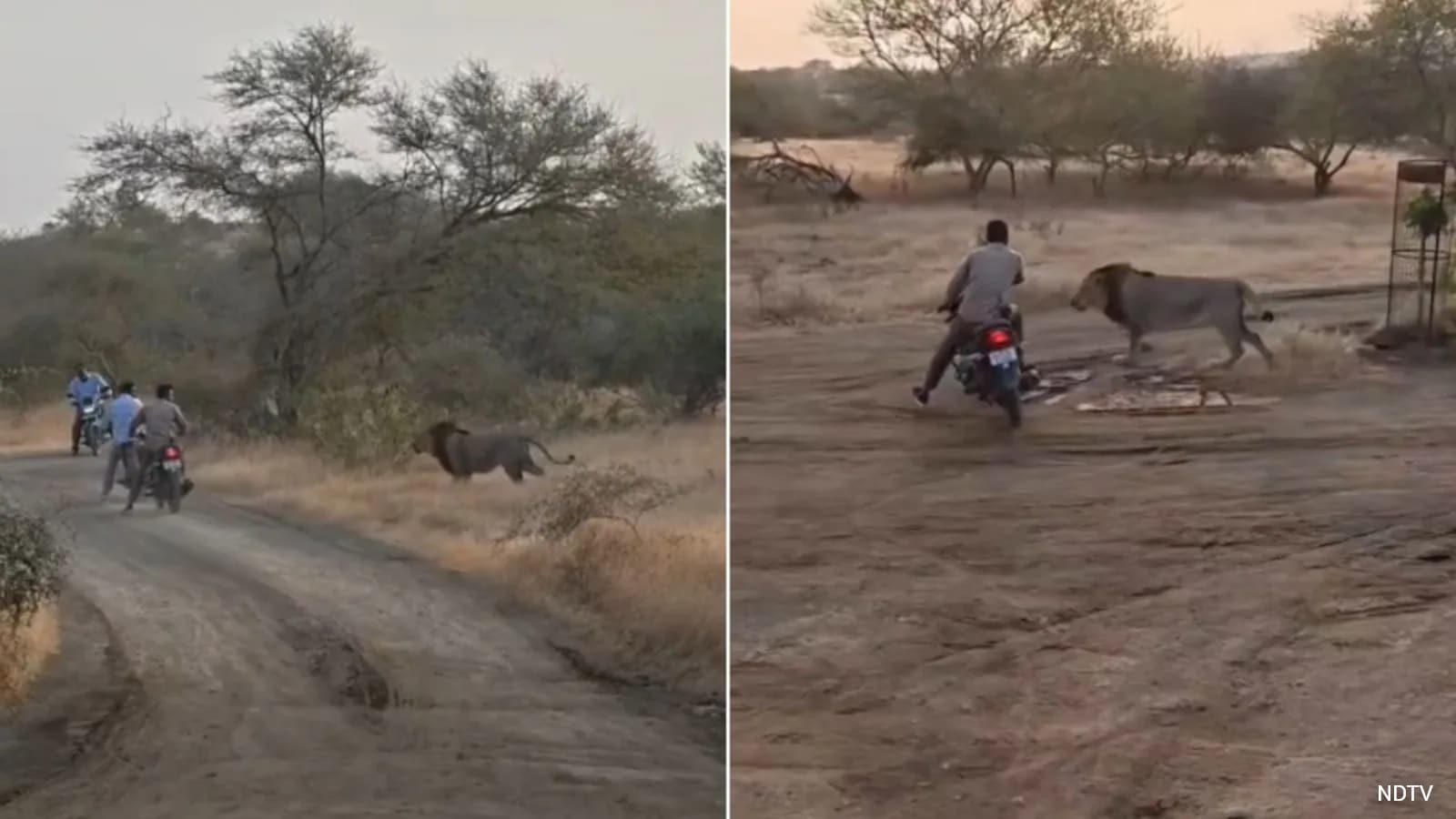
The serene expanse of Ambardi Safari Park in Gujarat's Amreli district became the unexpected stage for a startling scene that would soon ripple across social media. On November 15, 2026, a video depicting three forest department contract workers chasing a lion on motorcycles began circulating widely, igniting immediate concern among wildlife enthusiasts and the public alike. The footage, captured during the Diwali holiday period, showed a reckless disregard for established safety protocols, placing both the workers and the magnificent big cat at unnecessary risk.

As the video gained traction online, the Forest Department found itself under scrutiny for what appeared to be a blatant violation of wildlife protection guidelines. The incident, occurring during one of India's most celebrated festivals, highlighted the potential dangers when established procedures are circumvented. The park, which serves as a protected habitat for numerous species including Asiatic lions, suddenly found its management practices under intense public examination.

సఫారీ పార్క్లో సింహాన్ని బైకులతో తరిమిన సిబ్బంది.. సస్పెన్షన్ Gujarat safari park: staff who chased an escaped lion on motorcycles were suspended, as aired. దృశ్యాలు వైరల్ కావడంతో జంతు ప్రేమికులు మండిపడ్డారు. #TV5News #Lion #Gujarat https://t.co/TH4Ck8fQ42
In the immediate aftermath of the viral incident, the Forest Department moved swiftly to contain the damage. By November 16, 2026, just one day after the video surfaced, the department terminated the services of the three contract employees directly involved in the chase. Assistant Conservator of Forests Mitesh Vaniya was appointed to oversee the park's response, signaling the seriousness with which authorities viewed the breach of protocol.
By November 16, 2026, just one day after the video surfaced, the department terminated the services of the three contract employees directly involved in the chase.
While the viral video clearly showed workers pursuing the lion on motorcycles, conflicting accounts emerged regarding their intentions. Some allegations suggested the staff were attempting to provide an exclusive viewing experience for VIP guests, a claim that would indicate a serious ethical breach. However, officials presented a different narrative. According to Jaipal Singh, a representative of the Forest Department, "Some staff were trying to guide the lion in the safari park back to its designated enclosure. Usually, a jeep is used for this work. But this time, it was found that some staff used motorcycles." This explanation, while attempting to justify the workers' actions, still acknowledged the deviation from standard operating procedures.
The incident raised fundamental questions about wildlife management practices in protected areas. Established protocols exist for precisely such situations—guiding animals back to their designated zones using appropriate vehicles like jeeps that provide both safety and control. The use of motorcycles, while perhaps appearing more agile, eliminates the protective barrier that vehicles provide and increases the risk of provoking the animal into defensive behavior. The Forest Department's swift termination of the contract workers demonstrated a commitment to upholding these professional standards, even as the investigation continues to determine whether additional disciplinary measures or systemic changes might be necessary.
As of now, the Forest Department continues its investigation into the circumstances surrounding the incident, with Assistant Conservator Mitesh Vaniya overseeing the process. The incident serves as a stark reminder of the delicate balance required in managing wildlife habitats and the critical importance of adhering to established protocols that protect both the animals and the humans tasked with their care.