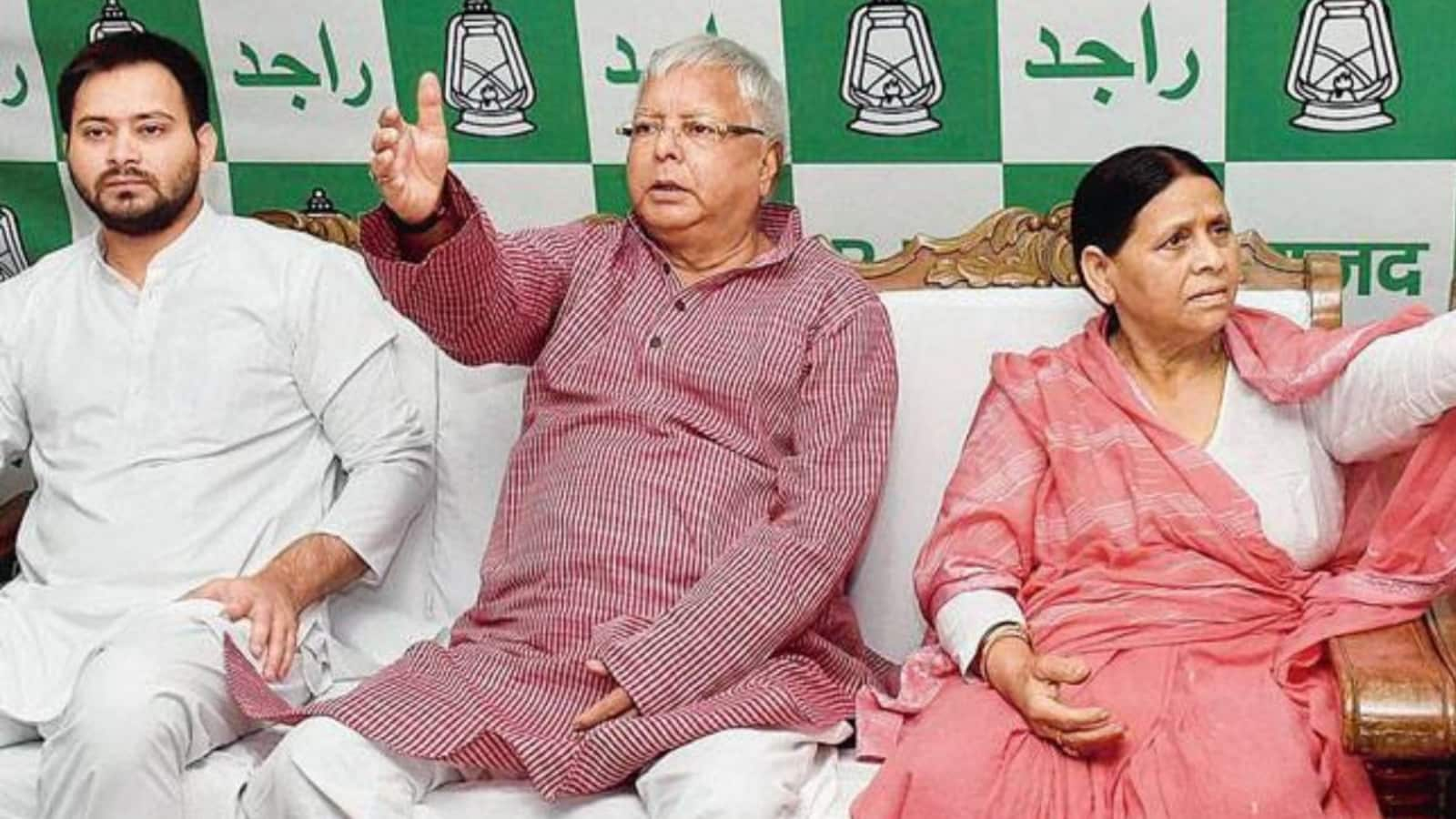
In the political landscape of Bihar, the name Yadav carries a weight that has shaped regional politics for generations. Lalu Prasad Yadav, the chief of the Rashtriya Janata Dal (RJD), is not just a politician; he is a patriarch whose influence has extended into the very fabric of the state’s governance. Yet on Thursday, in the quiet but consequential chambers of the Delhi High Court, that influence was tested against the cold, unyielding logic of the law. The court dismissed the criminal revision petitions and stay applications filed by Lalu Prasad Yadav, his wife Rabri Devi, and their son Tejashwi Yadav.

The decision was handed down by a single-judge bench led by Justice Swarana Kanta Sharma. In legal battles of this magnitude, the composition of the bench matters, but so does the precedent it follows. The High Court’s judgment was not an isolated act of judicial will; it was a reaffirmation of a decision made earlier that year. By upholding the order, the bench signaled that the higher judiciary sees merit in the charges that the trial court had already begun to process. For the Yadav family, who have long argued that they are being targeted, this ruling closed a significant legal loophole. They had sought a stay, a temporary pause that would have allowed them to delay the trial indefinitely. The High Court said no. The clock, it seemed, was no longer ticking in their favor.
To understand the weight of the High Court’s decision, one must look back to October 13, 2025. On that date, Special Judge Vishal Gogne of the Rouse Avenue Courts made a pivotal move. The judge directed the framing of criminal charges against the three family members. This is a critical step in the Indian legal system. It means that the court has reviewed the charge sheet filed by the prosecution and found enough substance to proceed. The charges were not trivial: they included corruption, criminal conspiracy, and cheating under the Prevention of Corruption Act. By directing the framing of these charges, the trial court essentially told the defense that the allegations were not baseless, but substantive enough to warrant a full trial.
Senior advocate Kapil Sibal, representing Lalu Prasad Yadav, made a technical but potent argument.
The Yadav family’s defense was built on a classic two-pronged argument. First, they contended that the trial court had made an error in law by framing charges based on presumptions rather than hard evidence. Their legal team argued that the material on record did not sufficiently prove their guilt, and that the judge had failed to properly appreciate the nuance of the case. Second, they attacked the jurisdictional basis of the prosecution. Senior advocate Kapil Sibal, representing Lalu Prasad Yadav, made a technical but potent argument. He contended that the charge sheet had been filed before the necessary sanction for prosecution was granted. In legal terms, this is a procedural hurdle that, if successful, can invalidate an entire case. Sibal further argued that the transactions in question were conducted in accordance with government policy, not under the Prevention of Corruption Act, meaning the wrong law had been applied.
Stripping away the legal jargon, the heart of the case is a financial allegation that has haunted the Yadav family for nearly twenty years. The case relates to the period between 2004 and 2009, when Lalu Prasad Yadav served as the Railway Minister. During this tenure, the Central Bureau of Investigation (CBI) alleged that there were irregularities in the leasing of two IRCTC hotels. IRCTC, or Indian Railways Catering and Tourism Corporation, is a body that manages food and lodging services for the railways. The accusation was that the Yadav family had directed the allotment of these hotels to their associates in violation of prescribed norms. It is a charge that touches on the very core of public trust: the idea that a minister used their power to enrich specific individuals in exchange for favors, or simply for personal gain.
For the Yadav family, this is not just a legal case; it is a narrative of political persecution. They have consistently maintained that the charges are insufficient and that the process has been rigged against them. The family’s stance is one of defiance. They argue that there is a lack of evidence to proceed against them, and that the case is a continuation of a long-standing vendetta. By losing the stay application in the High Court, they have lost one of their primary tools for delay, forcing them to confront the trial head-on rather than letting it fizzle away in procedural limbo.
The dismissal of the petitions by the Delhi High Court on Thursday marks a significant turning point. The legal barriers that kept the trial at bay have been removed. The next step is for the court to formally frame the charges, a process that will set the stage for the full trial. For the Yadav family, the stakes could not be higher. A conviction would not only result in criminal penalties but would also have profound political consequences, potentially disqualifying them from office. For the public, it is a test of whether the legal system can hold even the most powerful political figures accountable, decades after the alleged offenses were committed. The era of legal maneuvering is over; the era of the trial has begun.
