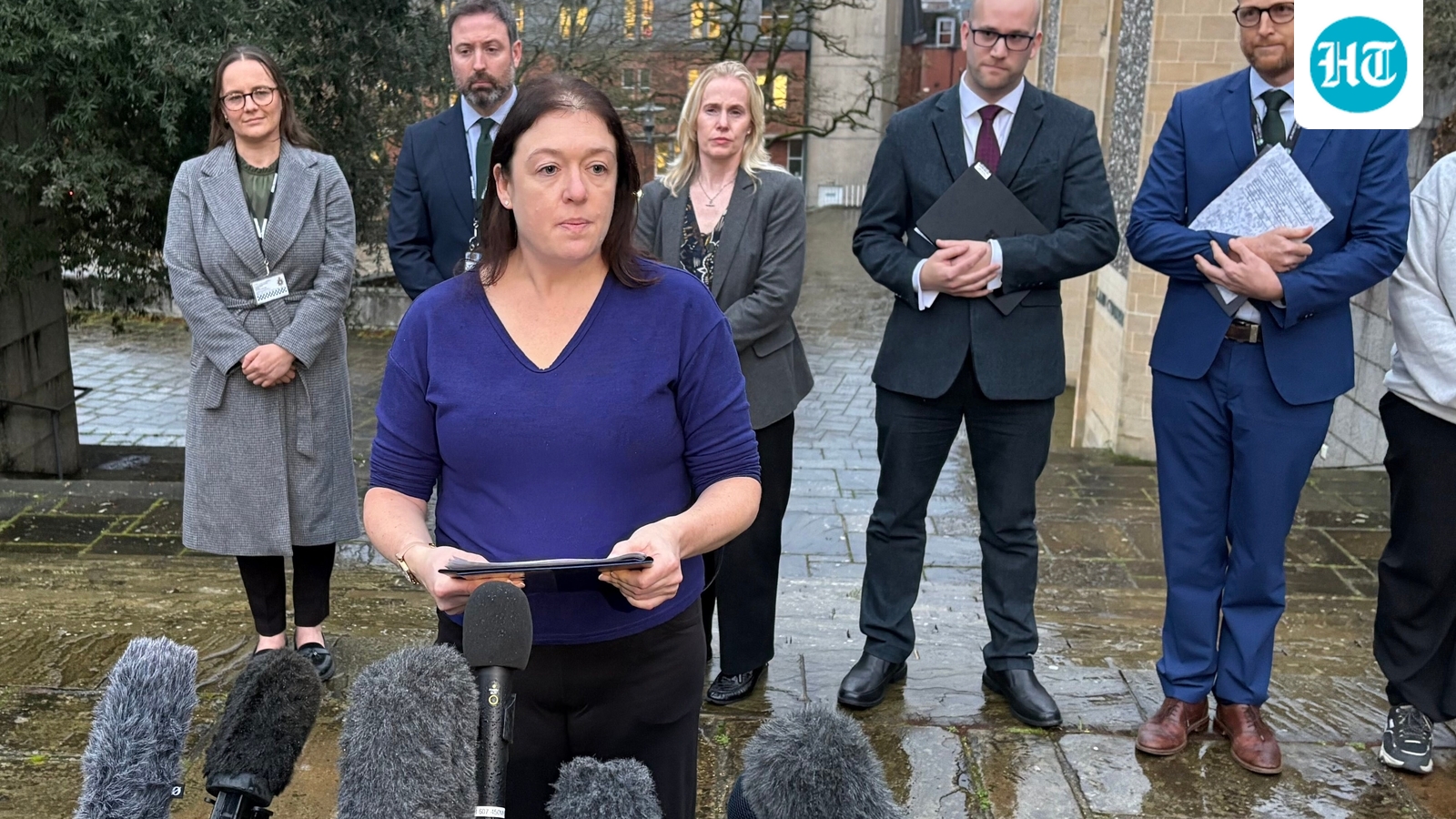
There is a specific kind of silence that belongs to victims who have been rendered unconscious for the majority of their adult lives. For Joanne Young, that silence lasted thirteen years. It was not a silence of safety, but of survival. Her husband, a man she had trusted with her life, held the keys to that silence. He held them, quite literally, in the form of drugs that kept her asleep while he and others took turns violating her. Now, with the veil of anonymity lifted by her own hand, Joanne Young has exposed the mechanics of a crime that was so systematic it resembles a dark mirror of other international scandals, forcing Britain to confront the legal and societal gaps that allowed it to persist in the open.

Philip Young did not operate from the shadows of a criminal underworld; he operated from the local government. As a former local councillor, he possessed a veneer of civic trust that allowed him to move freely through his community while conducting a private campaign of abuse against his wife. The conviction of his accomplices on Thursday at Winchester Crown Court reveals the scale of the betrayal. Philip Young, now 50, has pleaded guilty to more than 50 charges. Among these is a staggering 11 counts of rape. These numbers are not just statistics; they represent the erosion of a human being over more than a decade. The court heard that Philip Young did not just assault his wife himself; he advertised her. He posted online adverts, effectively turning his private marital relationship into a public service for sexual access. Four men who responded to those calls to action were found guilty of raping or sexually abusing Joanne Young while she was incapacitated.
The legal framework in which this crime occurred is currently under scrutiny. In the eyes of the law, Joanne Young was technically married to the man committing these acts. Under existing statutes, the defense of marital rape was long a gray area, but even as laws have tightened, the issue of consent while drugged remains a complex legal minefield. Philip Young’s actions highlight a terrifying gap: a person can be in a legally recognized relationship with their abuser, yet have no ability to consent or resist. Joanne Young’s decision to waive her anonymity was a strategic strike against the stigma that keeps victims quiet. She did so to force a governmental reaction, urging leaders to prioritize reform of consent laws. Her argument is clear: the current legal definitions may not adequately protect a woman who is chemically silenced by the very partner who is legally bound to protect her. The conviction of the four men is a victory, but for Joanne, it does not undo the loss of time or the trauma of the act itself.
This is no longer a series of isolated domestic incidents; it is a coordinated, transnational issue.

Men guilty of assaulting woman drugged and advertised for sex by husband https://t.co/sNMGy5vT1A
This case did not occur in a vacuum. It sits at the intersection of personal betrayal and a broader, more disturbing trend identified by law enforcement. Britain’s National Crime Agency (NCA) has uncovered what it describes as a "truly international network" of drug-facilitated rape and sexual assault. This is no longer a series of isolated domestic incidents; it is a coordinated, transnational issue. The NCA’s findings indicate that the use of sedatives to facilitate sexual violence is an organized enterprise that crosses borders. This context is crucial for understanding why the British justice system is paying such close attention to Philip Young’s method. He was not just a rogue husband; he was likely a node in a larger pattern of exploitation that targets vulnerable, isolated individuals. The online platform he used to advertise the abuse is the same digital infrastructure that connects the global network the NCA is targeting.
The implications of this case extend well beyond the walls of Winchester Crown Court. The gravity of the investigation has triggered a coordinated response involving law enforcement officials from ten countries, including the United States. This global operation is a direct answer to the transnational nature of the drug-facilitated abuse network. It signals that the fight against this specific type of crime requires a synchronized effort, sharing intelligence and strategies across jurisdictions. For Joanne Young, whose story has been compared to the Gisele Pelicot affair in France, the international spotlight serves a dual purpose. It validates her suffering as part of a larger systemic problem, rather than a private shame, and it provides the political pressure necessary to change the laws that allowed it to happen. The involvement of the US and other nations suggests that the predators involved in these networks are not limited to one geography, making the 50+ charges Philip Young faces part of a much larger puzzle that global authorities are now trying to solve.
In the aftermath of the verdict, it is the victims who provide the moral compass for this new legal era. Joanne Young’s words carry the weight of that lost time. "This abuse has cost me my life as I knew it," she said. It is a statement that transcends legal categories of "aggravation" or "injury." It describes a total annihilation of self. "The person I trusted most in the world betrayed me in the most horrific way," she added. This betrayal by a former councillor, a figure of public authority, makes the violation of trust even more profound. It suggests that those who hold positions of community responsibility are not necessarily safeguarding the community. In closing her public address, she directed her plea not to the past, but to the future: "I urge the government to look at this as a priority so that women are properly protected in the future." This call to action is the final piece of the case. While the convictions of the four accomplices and the guilty plea of Philip Young are judicial outcomes, the true resolution of this story lies in the legislative changes that will prevent the next Joanne Young from having to wait thirteen years for justice to arrive.