
On November 14, 2026, the constant, rhythmic hum of American aviation was abruptly severed. In a matter of moments, the vast network of flight paths that crisscross the continental United States fell silent. The Federal Aviation Administration (FAA) issued a nationwide ground stop, a sweeping directive that halted all flights across the country. It was a move of unprecedented scale, marking the longest period of total flight suspension since the attacks of September 11, 2001.
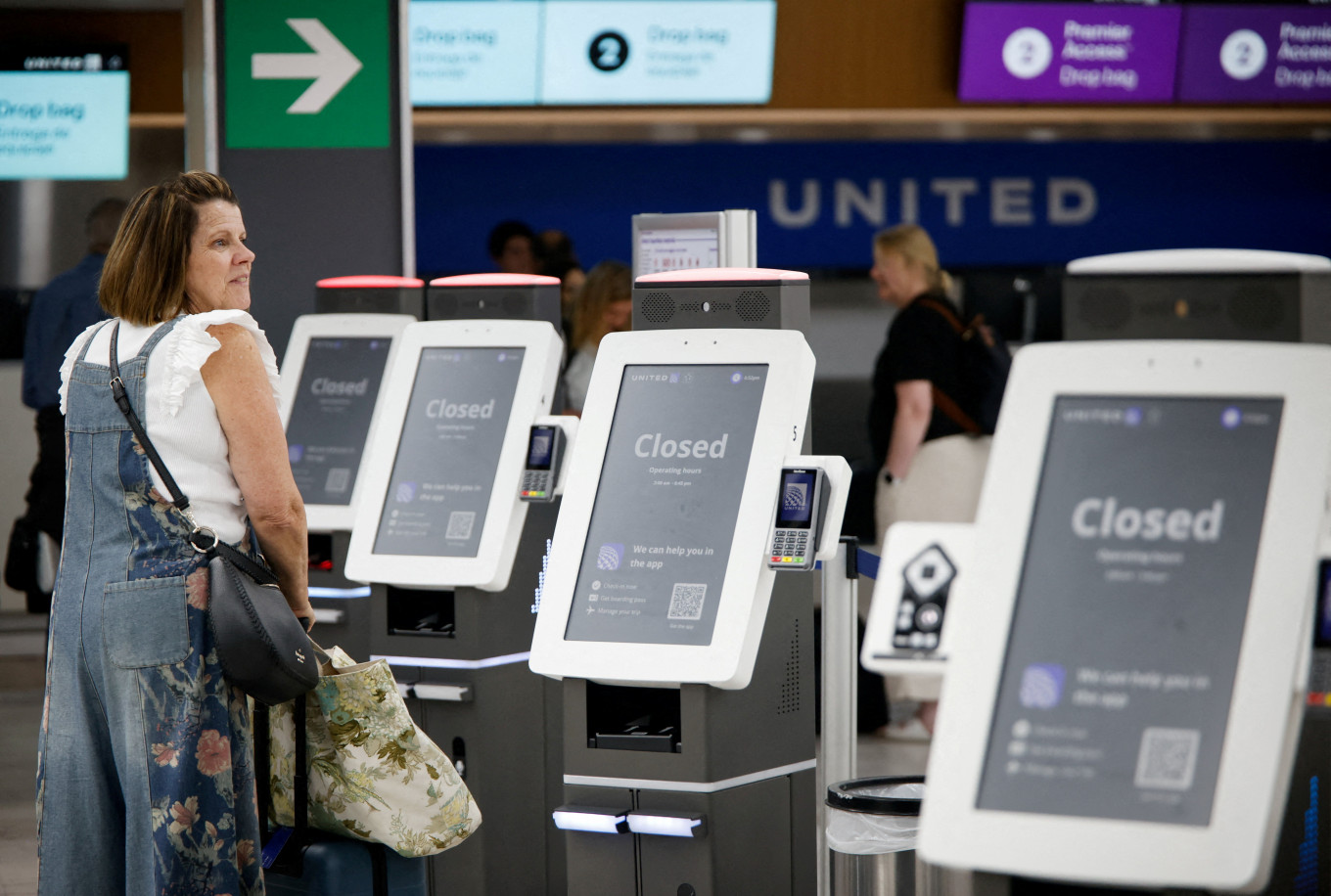
The cause was not a physical threat or a security breach, but something more invisible and perhaps more unsettling: telecommunications issues. Systems at various FAA facilities and Terminal Radar Approach Control (TRACON) centers—the specialized hubs responsible for managing aircraft in the immediate vicinity of busy airports—began to falter. When the communication lines that allow controllers to speak with pilots and track movement across the sky become unreliable, the only safe course of action is to stop everything.
When the order was issued, the scale of the potential crisis was immense. At the moment the ground stop took effect, more than 3,500 planes were already in the air, suspended in the high-altitude corridors of the national airspace. The suddenness of the halt created an immediate logistical nightmare: how do you land thousands of moving parts when the very systems meant to guide them are experiencing technical instability?
This surge of diverted traffic quickly overwhelmed the capacity of the nation's infrastructure.
Transportation Secretary Sean Duffy noted that the decision to halt all movement was a precautionary measure. The priority was to clear the skies and prevent a collision or a loss of control. The strategy worked, albeit through a period of intense tension. By 8:00 pm ET, the number of aircraft in the airspace had been drastically reduced from those thousands of soaring vessels to fewer than 400.

In case you missed how the FAA's longest nationwide shutdown since 9/11 impacted sports tonight: >✈️3:54pm ET: FAA stopped every departure in the US "for reasons of safety" >🏀The Nets were already on the plane in New Orleans & got stuck on the runway >🏈Texas got stuck on the tarmac heading to LSU & ended up getting off & going back to campus >🏈Tennessee's 4pm flight to A&M never left >🏈By 6pm, Utah, Texas, Tennessee, Ole Miss, Baylor, K-State, ASU, Minnesota & Washington were all still stuck >🏈Purdue, Auburn & North Texas gave up & got on buses >🏈ACC said all its road teams got there before the stop. Big Ten said all its refs were on site >🏈SEC said it could change this weekend's schedule if needed >✈️7:05pm: 827 flights had been diverted, 670 of them sent back where they took off >🏈Fresno State's flight got diverted from Austin to San Antonio >🏈Colorado State held a walk-through AT THE AIRPORT while waiting to fly to Pullman (pic in replies) >🏈19 of the 56 FBS teams playing on the road tomorrow got grounded & 8 had to drive, including Alabama >✈️8:15pm ET: FAA lifted the ground stop after 4+ hours >✈️Sec of Transportation Sean Duffy told stuck teams to call the FAA directly to book flight times so Saturday's games can happen >🏈Texas got a charter to Baton Rouge scheduled for 8:47pm CT >🏈Arizona State went home & is flying to Orlando tomorrow morning for UCF >✈️Duffy blamed old air traffic control tech & routers "overwhelmed by data". DHS said there's "no evidence" of a cyberattack >Let me know what I missed I just post quick sports recaps like this. Follow me if you like
While the ground stop effectively froze commercial travel, it did not mean the sky was entirely abandoned. The FAA confirmed that while telecommunications and radar systems were experiencing issues, they were not completely lost. This distinction was vital. Because certain critical systems remained functional, the agency was able to allow essential flights—specifically medevacs, or medical evacuation flights—to continue their missions. In a moment of national paralysis, these life-saving corridors remained open, providing a narrow but necessary exception to the total shutdown.
As the planes were held on the ground or forced to change course, the ripple effects were felt immediately at major transit hubs. The disruption was not merely a delay; it was a redirection of the entire national travel flow. At least 600 flights were diverted from their intended destinations as pilots and controllers scrambled to find alternative landing sites.
This surge of diverted traffic quickly overwhelmed the capacity of the nation's infrastructure. Ronald Reagan Washington National Airport, a critical node in the East Coast corridor, reached its limit. The airport eventually ceased to accept any further diversions, forcing more aircraft to seek landing strips even further afield. For the passengers caught in this shuffle, the certainty of their itineraries vanished, replaced by the uncertainty of being rerouted to unfamiliar cities.

UPDATE: US FAA lifts shutdown on flight grounding, ending the longest nationwide airspace shutdown since 9/11 attacks. https://t.co/JozCcamoC4
As the aviation system buckled, travelers instinctively turned to the next best thing: the rails. Amtrak, the nation's primary passenger rail service, saw an immediate and overwhelming surge in demand. As thousands of people realized they might not be flying, they flooded the rail agency with inquiries, looking for any way to move across the country.
This sudden spike in demand pushed Amtrak's infrastructure to its breaking point. The agency experienced higher-than-normal call volumes, leaving many travelers unable to reach a human being for assistance. The digital side of the operation struggled as well, with the agency eventually issuing a public apology for the technical failures that hindered their ability to serve the public during the crisis. "We apologize for the error messages on both our website and app, as well as the difficulty reaching a representative," Amtrak stated, acknowledging the friction caused by the sudden migration of travelers.
As night fell, the tension began to ebb. The nationwide ground stop was officially lifted at 8:15 pm ET, as confirmed by Secretary Duffy.
The lifting of the stop marked the end of the immediate emergency, but the cleanup of the logistical fallout would continue long into the night. The event served as a stark reminder of the fragility of the interconnected systems that allow a modern nation to move. For a few hours on a Friday in November, the most sophisticated airspace in the world was brought to a standstill by a failure of the very signals that keep it safe.

Flights across the US face operational shutdown for 4 hours, the longest since the 9/11 terror attack https://t.co/eXWvOu25gJ Here is what happened https://t.co/LRkJJ38Qmr