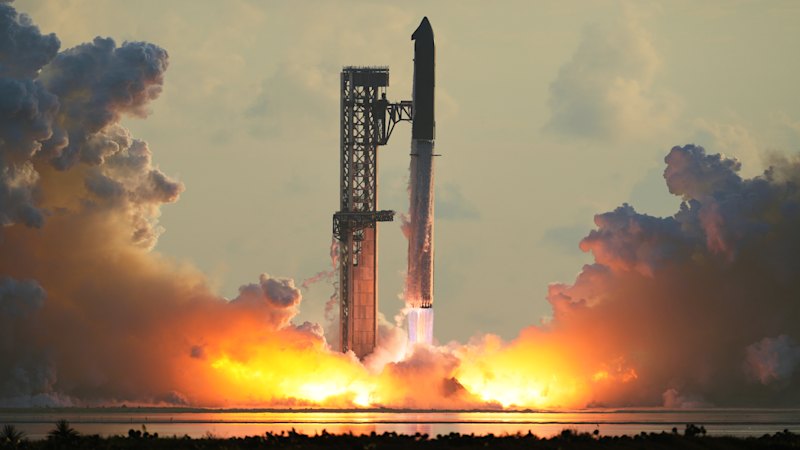
On November 15, 2026, the horizon at Launch Pad 2 in Texas became the stage for a feat of engineering that felt less like traditional rocketry and more like a choreographed dance. It did not land on a pad or splash down in the ocean; instead, it descended slowly over Starbase, maneuvering toward a pair of giant mechanical arms. In a moment of unprecedented precision, the spacecraft slipped smoothly between the 'chopstick arms,' marking the first time a Starship returning from space has ever been caught midair.
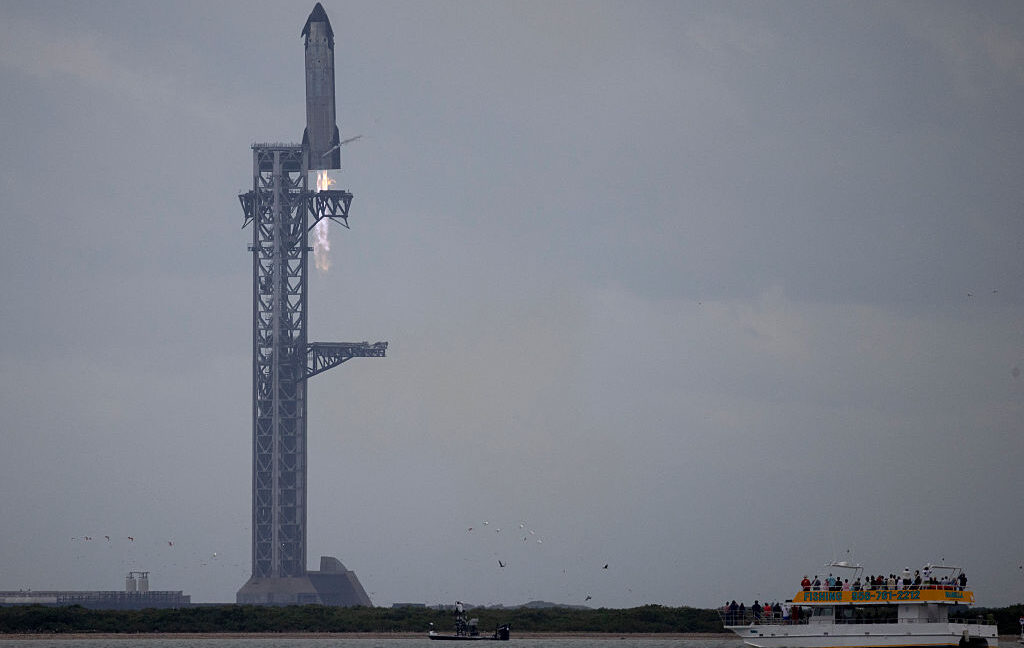
This was not merely a brief excursion. The spacecraft had completed 14 laps around the Earth, maintaining an altitude of 265 km as it orbited the globe. During this time, the vehicle proved its utility as a heavy-lift transport, separating neatly from its booster to soar into orbit. Once in position, the upper-stage spacecraft released 26 advanced Starlink satellites, demonstrating the system's capacity to deploy the next generation of global connectivity. The mission represented SpaceX's 15th full-scale Starship flight since 2023 and its second successful trip to orbit.

On Friday, November 13, Starship lifted off from Starbase, Texas on its 15th flight. On Saturday, November 14, Starship returned to Starbase, Texas, and changed everything → https://t.co/K5XRci6bnw https://t.co/smWs1qSDuZ
While the upper stage performed with remarkable stability—including the successful operation of its heat shield during the intense friction of reentry—the ascent was not without its casualties. The mission began with a violent disruption on the ground. The first-stage booster, intended to propel the massive vehicle toward the stars, failed shortly after liftoff. The engines stopped prematurely, triggering a guidance system-initiated self-destruction that resulted in an explosion. It was a stark reminder of the volatile nature of heavy-lift propulsion, even as the mission's ultimate goal remained within reach.
They noted that three previous booster catches had already served to validate the mechanical catching technique.
To the observers watching the explosion, the failure of the booster might have seemed like a setback to the entire program. However, SpaceX officials viewed the mission through a broader lens of iterative development. They noted that three previous booster catches had already served to validate the mechanical catching technique. Even with this specific booster failing, the successful midair capture of the upper stage provided the critical data necessary to refine the recovery of the spacecraft itself.
For the space agencies watching from afar, the sight of a massive spacecraft being caught by mechanical arms was more than just a technical achievement; it was a glimpse into the future of deep-space logistics. NASA, a key partner in the broader ecosystem of space exploration, welcomed the milestone. Jared Isaacman, the NASA Administrator, captured the collective awe of the industry, describing the sight of the successful capture as 'almost magic.'
The implications of this successful recovery extend far beyond the shores of Texas. The Starship system is a fundamental component for future lunar missions, serving as the heavy-lift architecture required to move humans and cargo toward the Moon. By mastering the ability to catch and reuse spacecraft, the path toward sustainable lunar presence becomes significantly more viable. The ability to recover hardware from orbit is the linchpin of a reusable space economy.

Mechazilla catches Ship 42 back at the launch site after ~22.5 hours on orbit! Captured using the #GoProMission1 Pro ILS https://t.co/oMK0S0heFu
As SpaceX celebrates this historic milestone, the focus is already shifting toward the next frontier of testing. The company is not content to remain solely in Texas. Plans are already in motion to begin launching Starships from the Kennedy Space Center in Florida within the next few months. This expansion will move the testing of this massive architecture to the historic launch sites of the American coast, continuing the rapid evolution of the Starship program.
