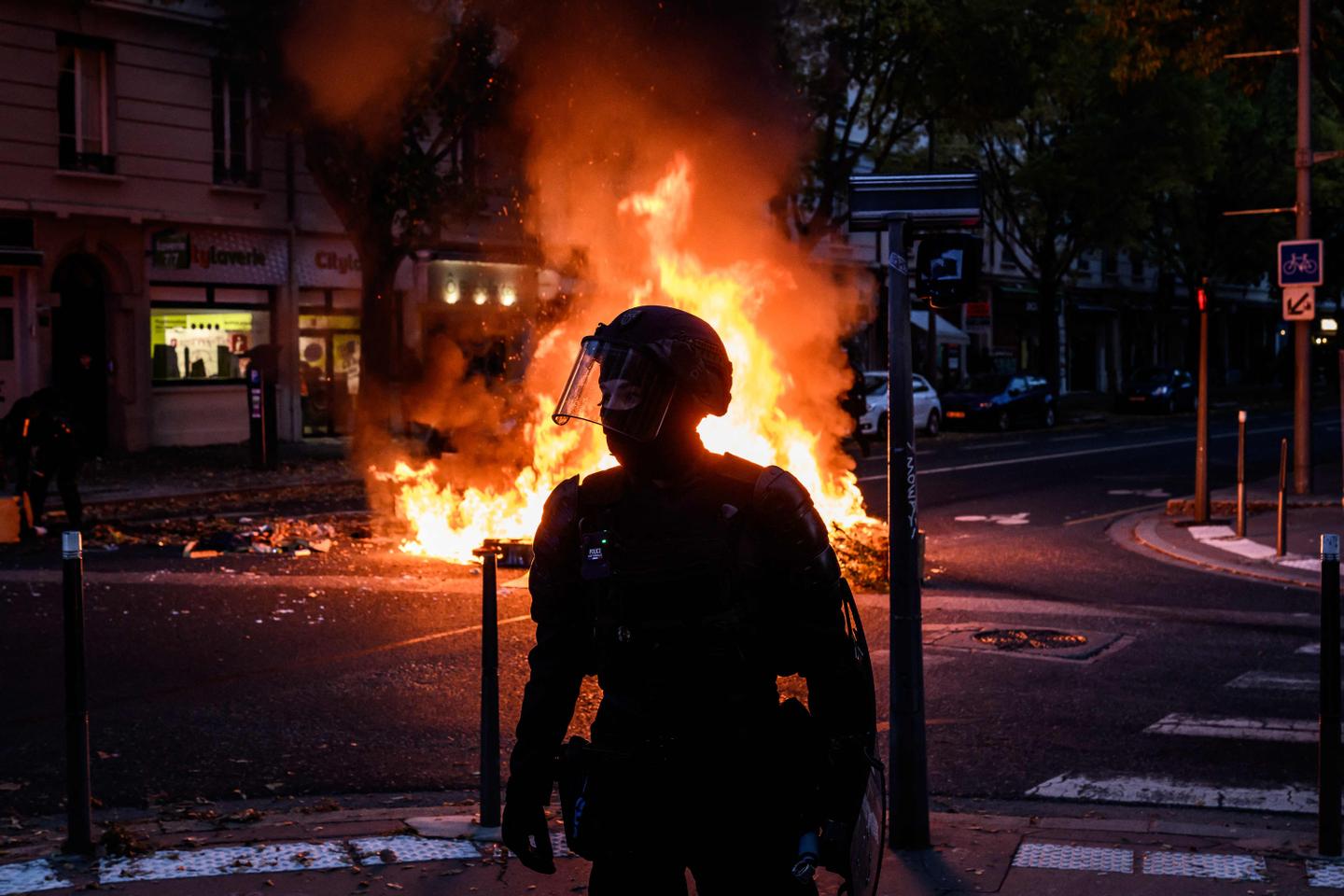
The moment a journalist’s camera is ripped from their hands, the story stops being about the protest and becomes about the reporter. This is what happened on the night of November 14 in Lyon, France, where a working team from the television channel BFMTV found itself in the crossfire of a large-scale demonstration. The incident did not occur in a quiet corner of the city but in the thick of a protest that drew approximately 8,000 participants through the streets. As the team moved to film the unfolding events, they were identified by a group of activists belonging to the black blocs, a loose coalition often associated with more militant tactics. What followed was not just a bump in the road or a heated argument, but a coordinated and violent assault that forced the channel and its staff into a legal and professional crisis.

For a cameraman whose primary job is to remain invisible and capture the action, being targeted as the primary subject of violence is a terrifying inversion of roles. The journalist who survived the night described the scene in stark terms. The team, which consisted of two journalists and two security agents, was chased by the black bloc group. The cameraman was violently thrown to the ground and beaten in front of his colleagues. The attackers did not stop at physical blows; the assault escalated when some members of the group shouted, “Burn him!”—a threat of extreme severity—before finally snatching his camera and fleeing. The impact of the attack was so significant that the cameraman required immediate medical attention, spending five hours in the emergency room dealing with the injuries sustained during the beating. This extended hospital stay underscores the physical danger posed to media professionals in such volatile environments.
The context of the attack was a major public protest that also resulted in friction between police and demonstrators. During the course of the event, seven people were arrested by law enforcement. The presence of police is a standard feature of such demonstrations, but the assault on the BFMTV crew highlights a specific layer of risk: the hostility directed specifically at those documenting the event. While the police dealt with the general public order aspect of the protest, the black bloc activists singled out the media team, turning the camera operator from an observer into a victim. This distinction is crucial for understanding the nature of the attack, as it was not incidental violence but a targeted effort to silence the coverage.
The Ministry of the Interior had suggested that arrests had already been made in connection with the assault on the journalists.
The legal aftermath of the November 14 incident began the very next day. On November 15, the Lyon prosecutor's office officially opened a judicial investigation into the assault. The specific charge in this inquiry is “willful violence in a group.” This legal classification is significant because it implies that the violence was not the act of a single, isolated rogue, but the result of a coordinated effort by a group acting with intent. This framework allows prosecutors to pursue the perpetrators not just for the physical harm inflicted, but for the collective nature of the attack, which is often a hallmark of black bloc operations.
In the immediate aftermath of a high-profile incident, information can become muddled. There was initial confusion regarding the status of the attackers. The Ministry of the Interior had suggested that arrests had already been made in connection with the assault on the journalists. However, the Lyon prosecutor's office had to step in to clarify the situation, stating firmly that no suspects related to the media assault are currently in custody. This clarification is a vital part of the journalistic record, ensuring that the public understands the current stage of the investigation. It means the authorities are still working to identify and charge the specific individuals who beat the cameraman and stole his equipment.
The attack on the BFMTV team was condemned by the channel’s own management, which called the behaviors “unacceptable” and emphasized that they endangered journalists in the exercise of their profession. This statement reflects a broader internal commitment to staff safety and a rejection of violence as a tool to impede media coverage. However, BFMTV was not alone in its response. Reporters Without Borders, a global watchdog organization dedicated to defending press freedom, also strongly criticized the incident. For RSF, the attack in Lyon was not an isolated blip but a data point in a worrying trend.
The perspective of Reporters Without Borders provides a wider lens through which to view the Lyon attack. According to RSF, the organization has recorded more than 70 cases of journalists being hindered in their coverage of demonstrations. These hindrances range from verbal abuse and physical intimidation to more severe forms of obstruction. The Lyon incident, with its severe physical violence and theft of equipment, sits at the dangerous end of this spectrum. By placing the BFMTV assault within this context of 70 other documented cases, RSF highlights a systemic issue: the growing hostility toward media professionals who cover public protests is not a one-off accident but a persistent and growing challenge for journalism in the public square. The investigation opened in Lyon is thus a legal step to address one specific attack, but it occurs against a backdrop of widespread pressure on press freedom.