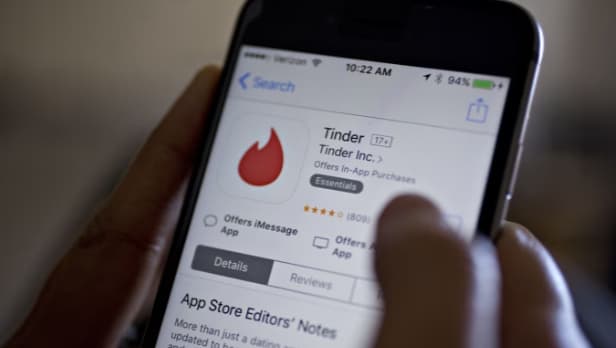
Imagine you’ve spent years building a digital life on an app, swiping, messaging, and refining your profile. Then, you click the button that says “Download My Data,” expecting to get the whole package: every chat, every interaction, every detail of your digital footprint. For millions of Tinder users, that expectation was quietly broken. The Irish Data Protection Commission (DPC) recently concluded that the popular dating app’s download tool didn’t deliver the full story. It often provided only generalized information, leaving out the very personal data users had the right to claim. This wasn't just a minor glitch; it was a fundamental failure of the European Union's General Data Protection Regulation (GDPR), resulting in an 11 million euro fine for Match Group, Tinder’s parent company.

The trouble began far before the fine made headlines. In January 2020, the DPC opened an investigation into Tinder’s data access practices. At the time, the tech world was buzzing with GDPR, a set of rules designed to give individuals control over their personal information. The core idea was simple: if a company holds your data, you must be able to retrieve it, understand it, and see exactly what they have. But as the DPC looked closer at Tinder’s “Download My Data” tool, a pattern emerged. The tool wasn't providing a complete archive. Instead of a comprehensive dump of personal records, users were sometimes receiving vague, summarized data. This raised a critical question: if a user can't see their full data trail, can they truly exercise their privacy rights? The investigation took its time, digging into the technical architecture of how Tinder handled user requests. It wasn't until July 21, 2023, that the DPC announced its findings and the subsequent 11 million euro penalty. For Match Group, the delay between opening the case and issuing the fine highlighted the sheer volume of evidence required to prove that a digital service was systematically failing its users’ privacy expectations.
An 11 million euro penalty is a significant sum, but in the context of global tech enforcement, it sits within a broader trend of regulators holding companies accountable for privacy shortfalls. The DPC isn't just slapping fines on companies at random; it is establishing a precedent. The violation here wasn't about selling data to third parties, a common concern in the privacy conversation, but about the inability of the user to access their own information. GDPR grants users the right to data portability, essentially the ability to take their data and move it to another service. If the download tool is broken or incomplete, that right is effectively hollowed out. By finding that the tool provided only generalized information, the DPC ruled that Match Group had failed to respect the transparency required by the regulation. The fine serves as a corrective measure, but more importantly, it signals to the entire tech sector that automated data access tools must be as robust as the platforms themselves.
The company expressed confidence in the reliability of the privacy mechanisms it had created for its users, arguing that their systems were fundamentally sound.
Following the announcement of the fine, the DPC didn't just hand over the penalty and walk away. On October 21, 2023, the commission issued a formal order requiring Match Group to bring its practices into full compliance with GDPR within three months. This deadline was not a suggestion; it was a strict requirement to fix the underlying issues with the download tool. The regulator wanted to see tangible changes, ensuring that when a user requested their data, they received a complete, unedited dataset. This timeframe allowed Match Group to adjust its technical systems and user-facing interfaces. The pressure was on to demonstrate that the company could not only understand the legal requirement but also engineer a solution that worked in practice. It turned a legal verdict into an operational challenge, forcing the company to align its internal data architecture with external privacy laws.
Throughout the process, Match Group maintained a consistent stance of cooperation. A representative for the company stated that Tinder had worked closely with the DPC throughout the investigation, a point that often softens the narrative of a rogue corporation stonewalling regulators. The company expressed confidence in the reliability of the privacy mechanisms it had created for its users, arguing that their systems were fundamentally sound. However, this confidence did not shield them from the penalty. The DPC’s findings stood, indicating that regardless of the company’s internal beliefs, the user experience did not meet the legal standard. Match Group has announced that it will appeal the decision, a standard legal maneuver that allows companies to challenge the severity or interpretation of a ruling. This appeal suggests that the company believes its interpretation of GDPR was more accurate than the DPC’s, a disagreement that could have implications for how similar data access tools are judged in the future.
The Tinder fine did not exist in a vacuum. It is part of a wider campaign by the Irish regulator against major digital platforms that struggle to meet privacy standards. Recently, the DPC has taken similar actions against other tech giants, including Shein and TikTok. Notably, TikTok received a 530 million euro fine for its own data handling violations. Comparing these numbers provides context: while 11 million euros is a substantial penalty for a company like Match Group, it is dwarfed by the fine imposed on TikTok, reflecting the massive scale of TikTok’s operations and data collection. This consistency in enforcement shows that the DPC is willing to pursue companies of various sizes and industries, from fashion e-commerce to social media to dating. The common thread is the failure to adequately protect user data or provide transparent access to it. For the public, this means that the promise of privacy rights is being actively policed, one fine at a time.
To understand why this matters, we have to look at the human element. Why does it matter if a dating app’s download tool is incomplete? For many users, their data on these platforms is a reflection of their identity, their choices, and their relationships. When that data is locked away or partially obscured, it creates a power imbalance. The company knows more about you than you know about your own digital footprint. GDPR was designed to shift that balance, giving individuals the power to audit their own data. Graham Doyle of the DPC captured this tension in a statement, noting that while automated tools are useful, they must be fair and transparent regarding the amount of data provided. Without transparency, the tool becomes a black box, and the user is left in the dark. The fine on Match Group is, in essence, a correction of that imbalance, forcing the company to open the box and show everything inside.
As Match Group prepares to appeal, the immediate focus shifts to the legal courts, but the operational changes have already begun. The three-month compliance order has likely forced a restructuring of how Tinder handles data requests. For users, the promise of a more complete data download may soon be reality. For the tech industry, the message is clear: privacy is not just a checkbox, but a core feature that must be built into the product from the ground up. The DPC’s continued oversight will determine whether this fine is the final word or just the beginning of a longer legal battle. Either way, the episode serves as a cautionary tale for all digital services: if you don’t respect the right to know, the regulators will come to collect the price.