For the residents of Kyiv, the sound of an air raid siren is no longer a novelty, but it remains a signal of profound uncertainty. It is a warning that the space between the clouds and the pavement has become a zone of kinetic conflict. On the day of the attacks, that uncertainty manifested in two distinct, violent episodes that illustrated the indiscriminate nature of drone strikes in an urban environment.

The day began with a strike that pierced the sanctuary of the home. In the Solomianskyi district, a Russian drone struck a residential building, transforming a private living space into a site of casualties. The impact was lethal; a 44-year-old woman was killed in the attack. Seven other people were injured, left to deal with the physical wreckage of a drone strike that did not distinguish between a military target and a bedroom.
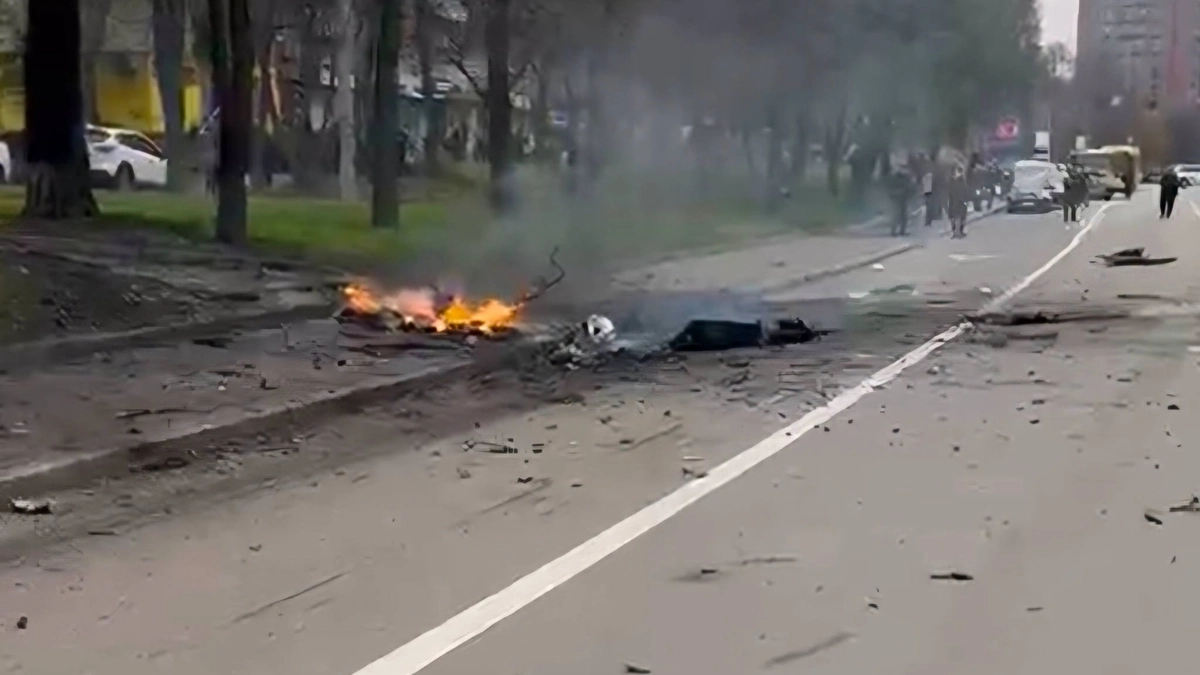
As the day progressed, the theater of conflict shifted toward the city's arteries. In the Shevchenkyi district, the danger arrived not as a direct hit, but as the violent byproduct of defense. During air defense operations—the desperate, high-speed effort to intercept incoming threats—debris from a downed drone plummeted toward the roadway. In the physics of modern aerial warfare, the interception of a drone does not make the threat vanish; it merely changes the trajectory of the falling metal.
Klitschko described the scene with the starkness of a municipal leader managing a crisis, noting that the UAV's fall had caused the fire to break out on the roadway.
When the debris struck the roadway, the result was immediate and combustible. Kyiv Mayor Vitaly Klitschko reported that the impact ignited a passenger car, turning a transit route into a scene of chaos. The violence of the crash extended beyond the car; a bus was also partially damaged in the incident. Klitschko described the scene with the starkness of a municipal leader managing a crisis, noting that the UAV's fall had caused the fire to break out on the roadway.
Amidst the smoke and twisted metal of the Shevchenkyi district, the human toll mounted. One person was injured during the roadway impact and required immediate medical attention. This individual became the latest addition to a growing list of civilians caught in the crossfire of a war where the frontline is often a city street or a residential hallway.
Responding to the inferno was the State Emergency Service (DSNS), the agency tasked with the grueling work of disaster management in a city under siege. The fire, which spanned an area of 20 square meters, presented a volatile hazard on a public road. The DSNS crews acted quickly to extinguish the flames, preventing the fire from spreading further into the urban infrastructure, though the damage to the vehicles remained.
In the wake of the fire, the DSNS issued a sobering reminder to the city's population. The agency urged citizens to heed all air raid warnings and to remain in safe locations. This plea highlights the precarious balance Kyivites must maintain: the need to keep a city functioning against the necessity of diving into shelters whenever the sirens wail, knowing that the sky can collapse at any moment.

The day left a trail of destruction across two districts. From the death of a woman in Solomianskyi to the scorched asphalt of Shevchenkyi, the events served as a grim reminder of the volatility of drone warfare. For Kyiv, the day was not defined by a single strategic shift, but by the relentless, grinding reality of surviving the descent of debris from a contested sky.