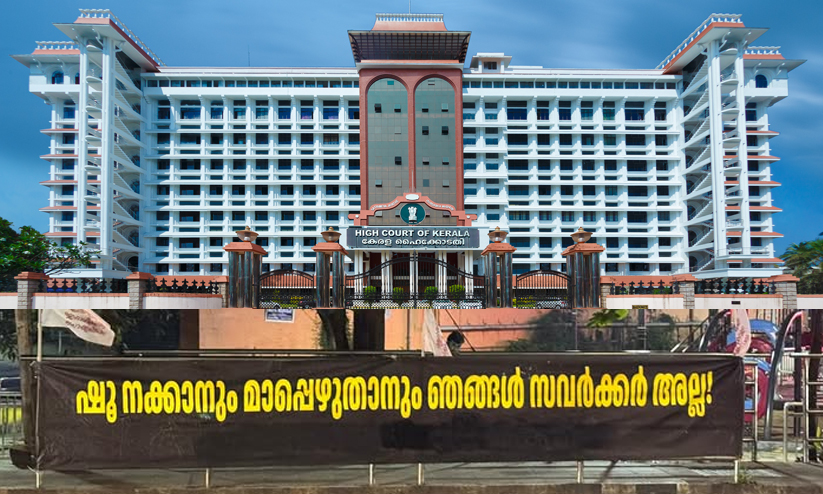
In the halls of academia, there is a delicate balance between maintaining order and fostering the very spirit of inquiry that defines student life. For the students of Kalady University, that balance has been tipped into a state of prolonged exclusion. For more than 60 days, a group of students has been kept outside the gates of their institution, suspended following campus protests. This period of forced absence has now moved from a matter of campus discipline to a matter of legal scrutiny, as the Kerala High Court steps in to ask a fundamental question: how long must a student pay for their dissent?

During a hearing on November 11, 2026, the court confronted the university with the reality of this timeline. The central tension lies in the duration of the punishment. With over two months having passed since the initial suspension, the court questioned what further apology the university was waiting for. The inquiry suggests a growing skepticism toward the institution's stance—asking whether the university's anger has simply failed to subside, even as the calendar turns.
At the heart of the legal dispute are two distinct criminal cases registered against the protesting students. While the first case stemmed from the initial unrest, the second case carries a different weight: it was registered following a specific complaint from the university's Vice Chancellor. It is this second instance that has drawn the sharpest scrutiny from the bench.
While the legal arguments unfold, the practical consequences for the students are mounting.
Justice P.V. Kunhikrishnan expressed significant doubt regarding the legal standing of this second case. The court’s skepticism touches on a vital principle of administrative law—the distinction between a legitimate disciplinary action and the use of legal machinery to settle grievances. By questioning whether the Vice Chancellor's complaint could legally hold up, the court is examining whether the university is using the police to extend a disciplinary measure that should have been resolved through academic channels.
In a moment that blended legal gravity with cultural resonance, the court invoked the wisdom of Kunchan Nambiar, a legendary figure in Malayalam literature. The court quoted the verse, "അതുകൊണ്ടരിശം തീരാഞ്ഞവനാ പുരയുടെ ചുറ്റും മണ്ടി നടന്നു," which speaks to a person whose grievances are never satisfied, wandering around the house in a state of perpetual discontent.
This literary allusion served as a metaphor for the university’s current posture. It paints a picture of an institution that, despite the passage of time and the potential for reconciliation, remains locked in a cycle of resentment. The court’s use of the verse suggests that the university's refusal to move past the incident may be less about justice and more about an inability to let go of the conflict.
To understand the broader implications of this case, the court looked beyond the immediate legal filings to the nature of student activism itself. There is a historical precedent for the very behavior that Kalady University is currently penalizing. The court noted that many of today’s political leaders were once students themselves, engaging in the same types of campus activities and protests that are now the subject of these FIRs.
This observation serves as a reminder that campus activism is often a training ground for civic engagement. By framing the students' actions within the context of political evolution, the court challenged the university to view the protest not merely as a disruption of order, but as a standard, albeit messy, part of the developmental journey of young citizens. The implication is clear: to suppress the student is to suppress the very activity that prepares them for leadership.
While the legal arguments unfold, the practical consequences for the students are mounting. The suspension is not merely a social exclusion; it is an academic blockade. Currently, 10 students are seeking permission to write their examinations, a request that hangs in the balance of the university's decision.
For these students, the 60-day suspension is not an abstract legal concept but a direct threat to their academic progression. The inability to sit for exams creates a ripple effect, potentially delaying degrees and altering career trajectories. The court’s intervention highlights this urgency, recognizing that the longer the suspension persists, the higher the stakes become for the individuals involved.
As the proceedings continue, the court has laid out a clear expectation for the university. It suggested that Kalady University should move toward a favorable decision regarding the revocation of the suspensions. This is not a suggestion to ignore the original protests, but rather an encouragement to find a resolution that allows the students to return to their studies.
The university now stands at a crossroads. It can choose to reconsider its stance and allow the students to reintegrate, or it can prepare to defend its actions on their merits. The court has indicated that if a favorable decision is not reached, the case will be heard more formally on Friday. For now, the students remain in a state of limbo, waiting to see if the university will finally allow the anger to subside and the gates to open.