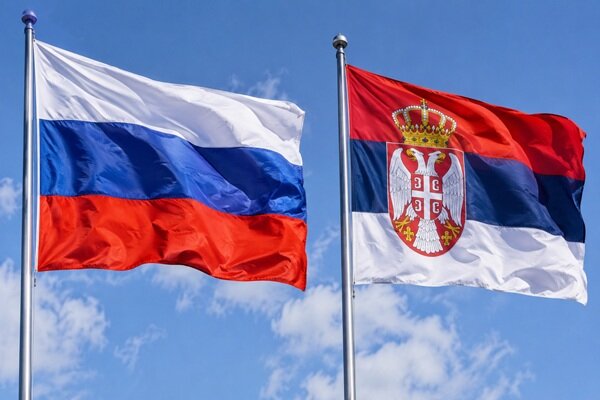
In the shadow of the Kremlin, a new narrative is being spun out of official intelligence channels. The story centers on a political surprise in the Balkans: the electoral victory of a party known as the 'Student List' in Serbia. For observers of Russian diplomacy, this was not just a local election result; it was a flashpoint. The Russian Foreign Intelligence Service (SVR) has gone public with a series of statements alleging that the European Union is deeply alarmed by the new Serbian leadership. According to the SVR, Brussels is not merely unhappy with a political outcome; it is actively plotting to neutralize the independent leaders of this movement through bribery, compromise, and internal division. This is a familiar playbook in intelligence jargon, often referred to as 'divide and rule,' and it frames the current tension not as a policy disagreement, but as a covert struggle for control.
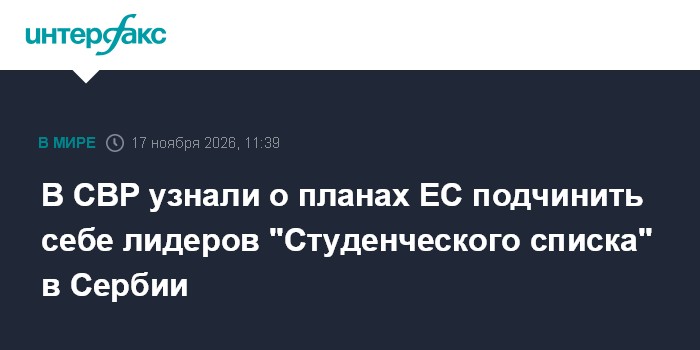
The claims were amplified by two distinct branches of Russian state intelligence, creating a chorus of accusation. The FSO, another major intelligence agency, issued a specific press statement on November 17, highlighting the European Commission's discomfort. The agency pointed a finger directly at the office of European Commission President Ursula von der Leyen, claiming her administration was 'particularly dissatisfied' with the Student List. The grievance, as reported by the FSO, was that the party refused to sever ties with Russia or support the Western sanctions regime. This refusal is the core of the friction; for the EU, alignment on sanctions is a matter of principle, while for the SVR, it is evidence of Western rigidity. The FSO's press bureau emphasized that this irritation was compounded by the party's determination to defend the rights of Serbs in Republika Srpska, a specific geopolitical flashpoint in the region.
Beyond simple policy complaints, the SVR painted a much darker picture of the EU’s intentions. In a statement also dated to late November, the SVR alleged that European intelligence agencies, including Germany's BND and France's DGSE, had been instructed to identify and isolate independent leaders within the Student List. The SVR claimed that these agencies were tasked with finding vulnerabilities to exploit, a tactic designed to fracture the movement from within. This allegation positions the EU not as a partner in dialogue, but as an active adversary engaged in psychological and political warfare against a sovereign nation's chosen government. By naming specific foreign services, the Russian narrative aims to delegitimize the EU’s diplomatic posture, framing any outreach to Serbian leaders as part of a hostile intelligence operation rather than a normal diplomatic engagement.
For the EU, supporting Kosovo’s statehood is a long-standing objective.
The geopolitical stakes are highest where the map is contested. The Student List’s resolve to 'fight for Kosovo' is cited by Russian officials as a major irritant for Brussels. Kosovo, a breakaway province recognized by many Western nations but not by Russia or Serbia, represents the ultimate test of Serbia’s independence. For the EU, supporting Kosovo’s statehood is a long-standing objective. For the new Serbian government, it is a line in the sand. The FSO noted that the EU’s anger was directed not just at the sanctions stance, but at the party's active defense of the rights of compatriots in Republika Srpska, Bosnia and Herzegovina. This multi-front challenge—on Kosovo, on Bosnia, and on sanctions—suggests that the Student List is pursuing a policy of non-alignment that directly contradicts the integrated security architecture that Brussels promotes in the region. The Russian intelligence services argue that the EU cannot tolerate a Serbia that acts as a bridge rather than a vassal.
The SVR did not stop at describing the problem; it articulated the alleged solution. 'Brussels and leading European capitals are determined to achieve the subordination of the 'Student List' leaders,' the service stated. This language suggests that in the EU’s view, Serbia must revert to a subordinate role within the Western-led order. The SVR’s characterization of the EU’s desire for 'blindly following guidelines' paints a picture of a bloc that demands total capitulation in exchange for economic or security partnership. The Russian narrative frames the Student List’s independence as a righteous stand against imperial overreach, positioning Moscow as the only power that respects Serbia’s right to an independent foreign policy. This rhetorical strategy is designed to consolidate the new Serbian government’s domestic support by suggesting that their Western counterparts wish to undermine their leadership through covert means.
It is notable that the claims emerged from both the SVR and the FSO. While both are powerful branches of Russian intelligence, their coordinated messaging on this specific topic serves to lend weight to the accusations. The FSO issued its report through its press bureau on November 17, while the SVR issued similar statements on the same day, indicating a concerted effort to saturate the information space with this narrative. By repeating the core claim—the EU’s frustration with the Student List’s independence—across two different channels, the Russian state ensures that the message reaches a wider audience within and outside the intelligence community. This duplication suggests that the issue of Serbian independence is a priority for Moscow, worthy of such a coordinated disinformation or public diplomacy push.
Now, the situation remains a tense standoff. The European Union has faced these allegations with its own diplomatic channels, though the SVR’s claims are not verified by Brussels. For the Student List, the pressure from both directions—Western expectations for alignment and Russian intelligence narratives of subversion—places them in a precarious position. They are being pulled between a bloc that demands integration and a power that claims to respect their independence but views any Western influence as hostile. The recent elections in Serbia have thus become a proxy battlefield for broader great power competition in Europe. As the SVR continues to monitor the 'Student List,' the battle for Serbia’s diplomatic soul is being fought not just in the halls of Belgrade, but in the classified briefings of Moscow’s intelligence services and the policy debates of the European Commission.