
On Wednesday, the rhythmic flow of the morning commute in South Korea's Bundang district was abruptly severed. At approximately 7:34 am local time, what began as a standard start to the day for thousands of residents south of Seoul transformed into a chaotic scene of twisted metal and emergency sirens. The quiet of the early hour was replaced by the violence of a multi-vehicle collision that would involve dozens of commuters and nearly every type of vehicle on the road.
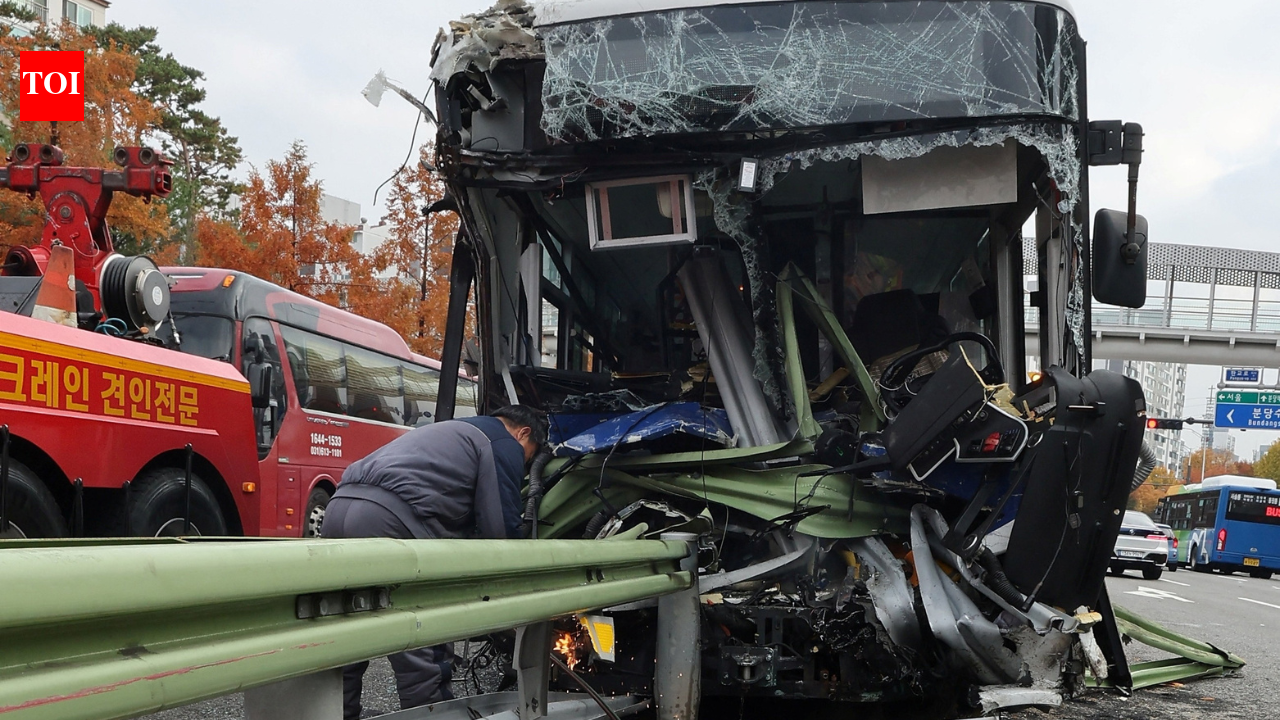
According to reports from the National Fire Agency, the incident centered on a bus that struck a traffic signal, triggering a massive chain reaction. The bus did not merely clip a single car; it plowed into a succession of vehicles, eventually coming to a violent halt after crashing into a median barrier. This final impact served as the anchor for a wreckage field that stretched across the intersection.
The sheer scale of the accident is reflected in the numbers. The collision was not a simple two-car fender bender, but a massive pileup involving 32 vehicles in total. The wreckage included a diverse array of transport: four buses, one truck, and 27 passenger cars. The presence of so many passenger vehicles suggests that the collision caught a high volume of commuters mid-transit, turning the intersection into a bottleneck of accidents and debris.
The district of Bundang, part of Seongnam city, became the immediate focus of regional emergency services.
As emergency responders arrived on the scene, the true cost of the collision became clear through the injuries sustained by those caught in the path of the bus. The National Fire Agency reported that a total of 57 people were injured in the crash. The severity of the impact was evident in the medical triage required: nine individuals sustained serious injuries, while another 48 people suffered minor injuries.
The district of Bundang, part of Seongnam city, became the immediate focus of regional emergency services. With 57 people requiring medical attention, the scale of the incident demanded a significant mobilization of resources.
To understand the physics of the event, one must look at the path of the bus. The bus crashed into multiple vehicles at a traffic signal before its journey ended at the median barrier.
For the residents of Seongnam and the commuters traveling through the Bundang district, the event serves as a stark reminder of the fragility of the morning routine. The intersection, usually a place of regulated movement governed by traffic signals, became a site of sudden, unmanaged chaos. The intersection of heavy transit vehicles and private passenger cars created a scenario where the margin for error was non-existent.
As the immediate crisis subsided, the focus shifted to the medical recovery of the 57 injured individuals. While the specific long-term outcomes for the nine seriously injured remain a matter of ongoing concern, the event has left the Bundang district to reckon with the suddenness of the collision. The wreckage of 32 vehicles serves as a physical testament to a morning that, for many, began with a routine drive and ended in a massive, multi-vehicle catastrophe.