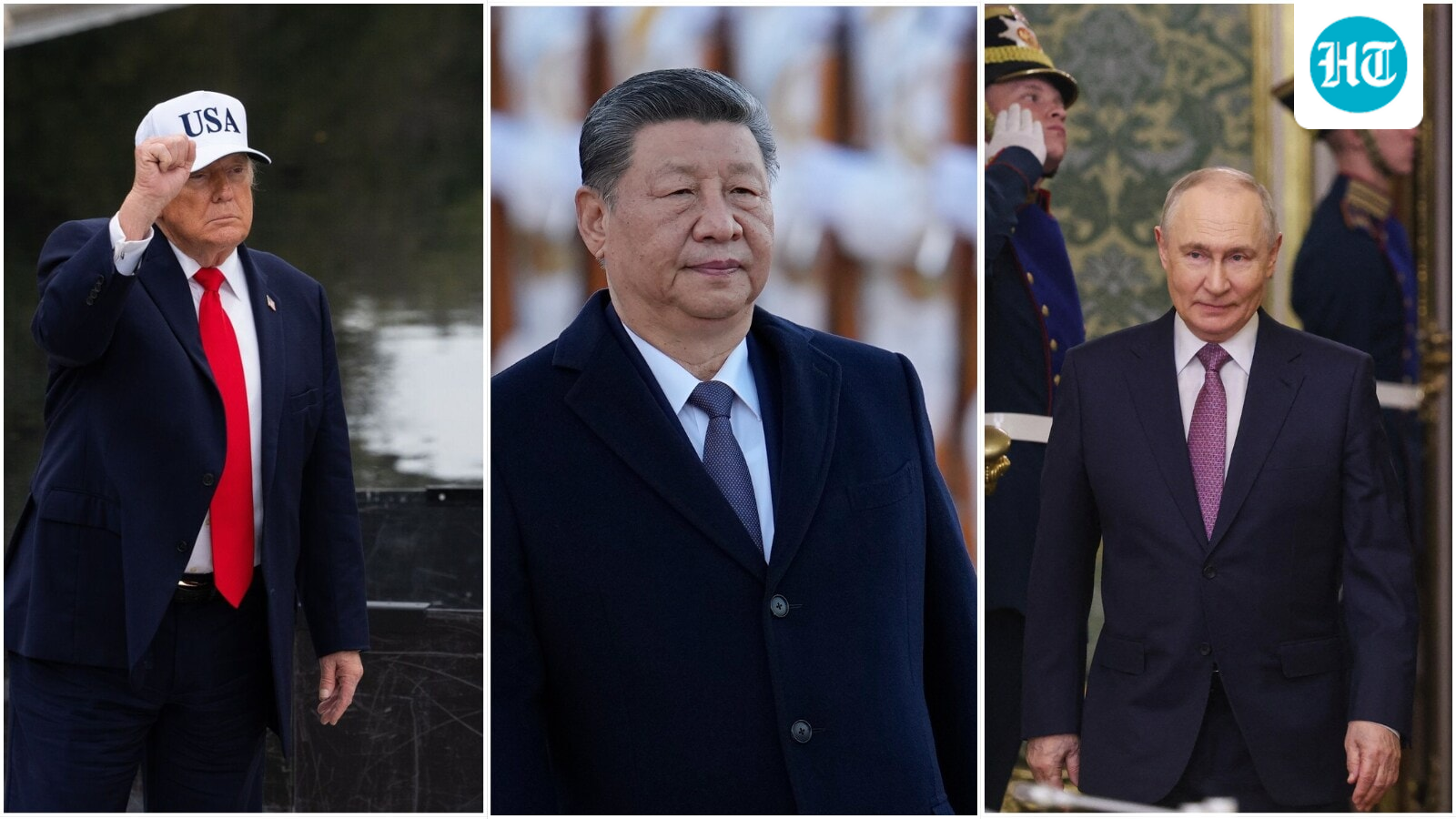
When the leaders of the world’s three premier nuclear and economic powers sit down in the same room, every chair, agenda item, and diplomatic gesture carries structural weight. The Chinese Foreign Ministry has announced that the first-ever trilateral summit bringing together US President Donald J. Trump, Chinese President Xi Jinping, and Russian President Vladimir Putin will take place in Shenzhen. Scheduled for November 19, the gathering marks an unprecedented alignment of leadership on the international stage.

The logistics behind such a summit require meticulous planning and high-level confirmation across three capitals. The Kremlin confirmed on November 14 that an agreement had officially been reached to hold the historic meeting. The White House has likewise confirmed plans for President Trump to participate alongside President Xi and President Putin.
The venue chosen for this momentous encounter is the Kylin Villa resort in Shenzhen, China. The summit is set to begin at 2:30 p.m. local time on November 19. The event unfolds on the sidelines of the APEC summit, drawing international attention to the host city.
The White House has indicated President Trump's interest in discussing nuclear arms reductions, citing concerns over global nuclear proliferation.
At the top of the agenda is the delicate issue of nuclear arms control, a topic rendered increasingly urgent by recent treaty expirations. The New START treaty between the United States and Russia expired in February, leaving the world’s two largest nuclear powers without a foundational bilateral arms control framework.
Washington has signaled a strong desire to address this security void directly during the Shenzhen talks. The White House has indicated President Trump's interest in discussing nuclear arms reductions, citing concerns over global nuclear proliferation.

JUST IN: 🇨🇳🇺🇸🇷🇺 China says its upcoming meeting between President Xi Jinping, Trump, and Putin is "significantly groundbreaking."
While the White House has highlighted nuclear reductions as a priority, Beijing views trilateral arms control through a markedly different lens. The Chinese leadership has shown limited enthusiasm for entering into a formal trilateral nuclear framework.
China’s reluctance stems from two primary factors: its current nuclear arsenal is significantly smaller than those maintained by Washington and Moscow, and Beijing maintains a long-standing diplomatic position opposing great power co-governance of world affairs. For President Xi, negotiating nuclear bounds in a three-way format risks codifying an imbalance while endorsing a framework China explicitly rejects.

Beyond traditional warheads, the three leaders are expected to wade into the governance of modern security technology. Reports suggest the talks may explore regulating artificial intelligence within nuclear arsenals, a crucial intersection where rapid technological advancement meets existential risk.
At the same time, global conflicts—most notably the situation involving Iran—are slated to take up significant bandwidth in the room. Here, economic interdependencies heavily shape the diplomatic landscape. China remains Iran’s largest trading partner and the biggest buyer of its crude oil, giving Beijing substantial economic stakes in any broader geopolitical resolution discussed at Kylin Villa.
As November 19 approaches, the gathering in Shenzhen presents a rare test of whether three competing superpowers can forge common ground across global conflicts, emerging technologies, and a shifting nuclear order.

The center of global diplomacy is shifting to China. For the first time ever, Xi Jinping, Vladimir Putin and Donald Trump are set to sit at the same table for a trilateral summit in Shenzhen on November 19. The three leaders of the world's biggest nuclear powers, under one roof, in China. https://t.co/oUZOoc8Enb