On the night of June 21, 2024, the quiet of the Polish border was interrupted not by a physical strike, but by a violation of sovereignty that sent ripples through the corridors of power in Warsaw. It was a moment that transformed the abstract concept of border security into a tangible, immediate threat. Three distinct objects, cutting through the darkness, crossed into Polish airspace, marking a sudden and sharp escalation in the friction between the West and the Russian Federation.

For Poland, a nation positioned on the front lines of European security, these were not mere technical glitches or navigational errors. They were incursions. The nature of the objects involved suggested a sophisticated and potentially lethal intent, turning a routine night into a high-stakes intelligence puzzle for the Polish military.
As the details emerged during a press conference on Friday, the gravity of the breach became clear. Wladyslaw Kosiniak-Kamysz, Poland's Defence Minister, provided the technical breakdown of what had crossed the line. The intrusion was not a single event, but a multi-layered breach involving three separate objects.
This perspective shifts the narrative from a border mishap to a strategic maneuver, one designed to probe the defenses and the political will of the alliance.
Among them was a Kh-101, a long-range cruise missile capable of significant destruction. The Minister's assessment of the other two objects pointed to a similar level of danger: one appeared to be another missile, while the third was identified as most likely being a jet-powered drone. The presence of such varied hardware—from high-speed missiles to reconnaissance-capable drones—suggests a complex movement through the skies that demands a serious response.

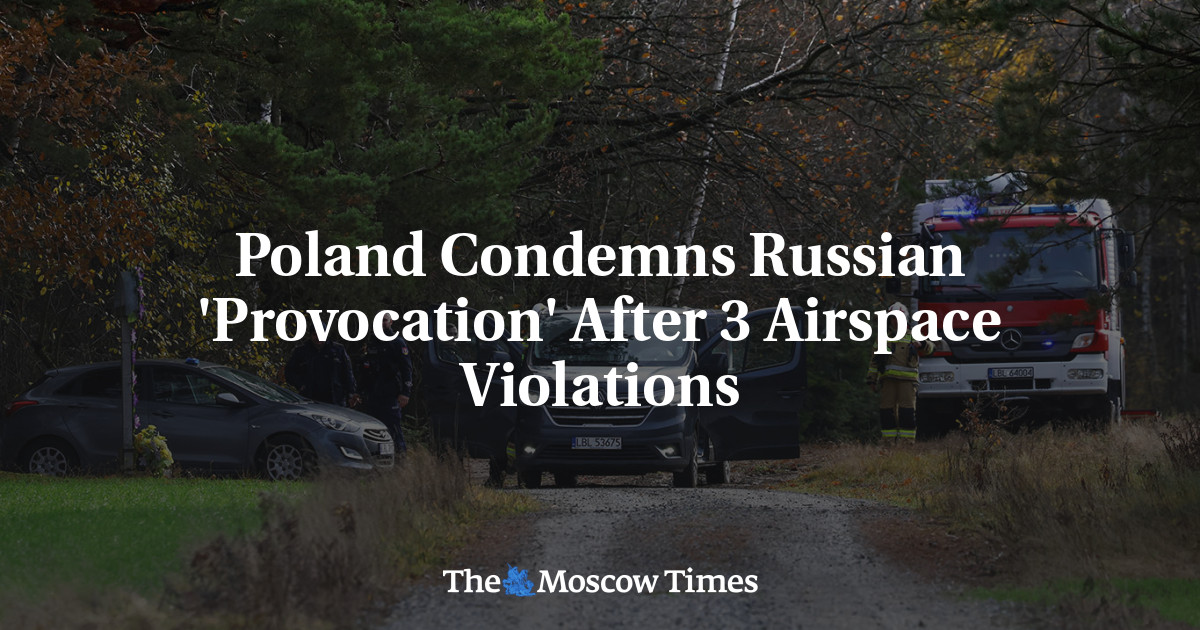
Poland condemns Russian 'provocation' after three airspace violations https://t.co/9yaRqjJm2W
In the wake of the violation, the political response in Warsaw was swift and uncompromising. Prime Minister Donald Tusk did not mince words regarding the character of these flights. To the Polish leadership, the timing and the nature of the objects suggested something more calculated than a simple mistake.
"It seems we are dealing with an intentional provocation," Tusk stated, framing the incident as a deliberate test of Polish and NATO resolve. This perspective shifts the narrative from a border mishap to a strategic maneuver, one designed to probe the defenses and the political will of the alliance. It is a move that forces every neighbor of the Russian Federation to look upward with renewed vigilance.
What makes the timing of this breach particularly striking is the context of the surrounding military activity. On June 21, the very same day the objects violated the airspace, Poland was already engaged in military exercises with the Coalition of the Willing.
These exercises, designed to bolster readiness and interoperability among allied forces, were occurring just as the Russian objects made their transit. The intersection of large-scale military drills and a direct violation of airspace creates a volatile atmosphere, where every movement is scrutinized and every error could be interpreted as a signal of intent.

Poland condemns Russian 'provocation' after three airspace violations https://t.co/ZhkzgMBN7Y
For Poland, these incursions are a catalyst for a broader demand for agency within the European security architecture. The Prime Minister has used the incident to underscore a fundamental shift in how the nation views its role in the ongoing conflict in Ukraine and the wider stability of the continent.
"Today, it is clearer than ever before that Poland must participate in decisions and discussions regarding the future of Ukraine and security in Europe," Tusk remarked. The message is clear: Poland is no longer content to be a recipient of security decisions; it intends to be a primary architect of them, especially as the threats on its doorstep become increasingly physical.
As the dust settles on the immediate violation, the focus has turned to the response from the North Atlantic Treaty Organization. Poland has signaled its intent to seek increased NATO support for its eastern flank, viewing the breach as a reason to harden its defenses and tighten the collective shield.
In a move that underscores the alliance's attention to the situation, NATO Secretary General Mark Rutte is scheduled to visit Warsaw on Saturday. The visit serves as a critical diplomatic touchpoint, as the Polish government seeks to translate its concerns into concrete security guarantees and enhanced presence on the ground.

Poland condemns Russian 'provocation' after three airspace violations. https://t.co/AtSh83fBZc
As the weekend progresses, the eyes of the international community remain fixed on the Polish-Russian border. The visit from Secretary General Rutte represents a moment of reckoning for the alliance, testing whether the rhetoric of solidarity can be matched by the practicalities of defense. For Poland, the night of June 21 was a reminder that the security of the eastern flank is not a static condition, but a constant struggle against the provocations of a neighbor that continues to test the boundaries of international law.