
Recent floods swept across the Gaza Strip, causing further suffering and turning the fragile shelters that many families had managed to erect after years of conflict into sources of additional danger. The floods claimed the lives of at least four Palestinians, who were killed in damaged tents. The tragedy underscored how quickly the region’s precarious humanitarian balance could tip into catastrophe, highlighting the immediate need for structural support as the weather deteriorated.
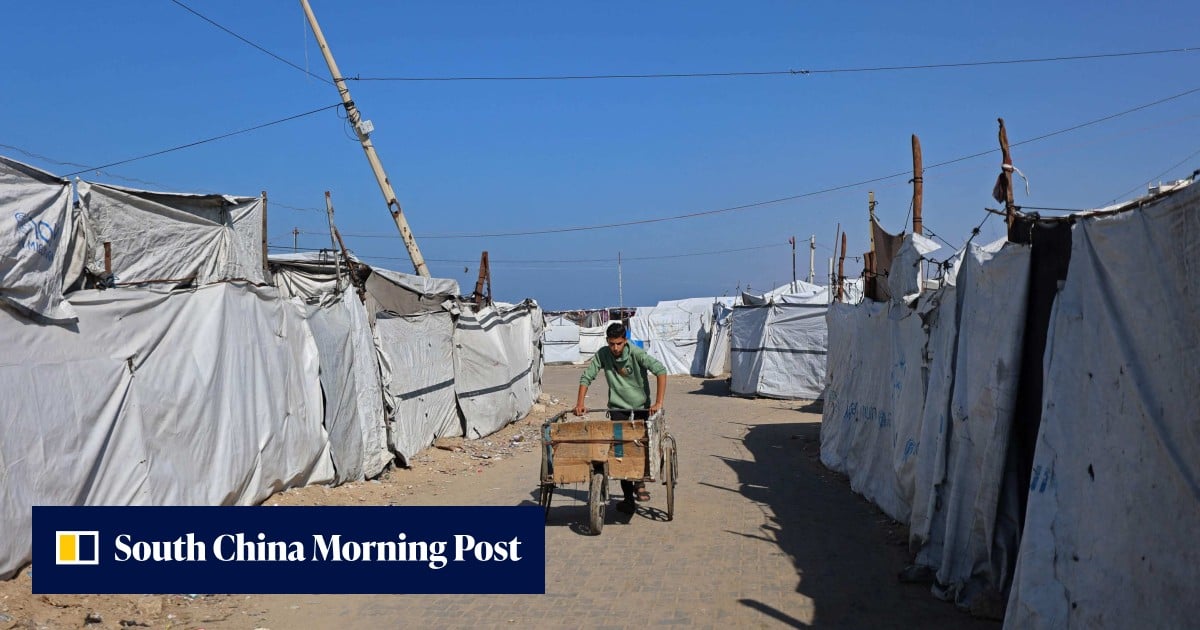
The rains arrived just as the season turned toward winter, a period that brings colder temperatures and a heightened need for shelter. In Gaza, where the civilian population lives under difficult conditions, the prospect of winter without adequate shelter is a looming disaster. Aid efforts are currently hampered by logistical challenges, with critical supplies waiting to be deployed to those in need of protection from the elements.

The humanitarian situation in Gaza is dire. Today the UK and our partners send a simple message to the Israeli government: let the aid in. There must be no more delays. Israel must allow rapid and unimpeded humanitarian access to let vital shelter and supplies into Gaza. https://t.co/1GQ1qGdwx6
Within days of the floods, foreign ministers from Australia, Canada, Italy and the United Kingdom convened a coordinated diplomatic response. Their joint statement was not a routine release; it represented a rare convergence of four Western capitals on a single humanitarian plea. The ministers pooled their authority to amplify a message that highlighted the urgency of the situation, ensuring that international attention remained fixed on the plight of civilians in Gaza.
The ministers framed the delay as a reversible situation, implying that Israel still possesses the capacity to act before the full force of winter sets in.
"We, the Foreign Ministers of Australia, Canada, Italy and the United Kingdom, are clear that as winter takes hold in Gaza, the humanitarian situation on the ground is dire," the statement read.
At the heart of the communiqué lay a specific request: Israel should allow the immediate entry of 150,000 tents that are currently held at the border. These tents, earmarked for families whose homes have been destroyed or rendered uninhabitable, represent a tangible lifeline. By quantifying the need, the ministers turned abstract concern into a logistical target—one that could be measured, delivered, and, in their view, swiftly deployed to mitigate the effects of the coming cold.
"The recent floods have brought further suffering – and this was only the first storm of the winter. People in Gaza desperately need shelter and humanitarian assistance," the ministers added.

In a joint statement, Australia, Canada, Italy, and the United Kingdom have called on the Israeli government to allow immediate and unimpeded humanitarian aid into the Gaza Strip, warning of worsening humanitarian conditions as winter sets in. The statement noted that around 150,000 tents, along with other essential supplies, remain held up at the closed border by Israel.
The joint statement did not shy away from assigning responsibility. It accused Israel of postponing the delivery of humanitarian aid, a charge that reflects criticism for controlling border crossings and the movement of supplies. The ministers framed the delay as a reversible situation, implying that Israel still possesses the capacity to act before the full force of winter sets in. They emphasized that time remains to address the crisis but urged immediate action to prevent further loss of life.

"This situation is entirely reversible … we today urge the government of Israel to stop the delays now and allow immediate, rapid and unimpeded humanitarian access throughout Gaza," the diplomats declared.
The statement also invoked the broader framework of the Gaza plan—a set of agreements intended to regulate the flow of aid and security arrangements. By urging all parties to respect the ceasefire and implement the plan, the ministers linked the immediate request for tents to a longer-term vision of stability. Their language suggested that the window for decisive action remains open, but it is narrowing as winter deepens and the need for humanitarian access grows.
Australian Minister Madeleine King, who helped craft the statement, explained the diplomatic calculus: "This particular group has been working on this kind of statement for a little while to make sure that people that are affected by the war in the Middle East can receive the assistance they need." Her comment highlights how the four nations coordinated behind the scenes, aligning their messaging to present a united front in support of those affected.

🇵🇸🇦🇺🇨🇦🇮🇹🇬🇧⚔️🇮🇱In a joint statement, Australia, Canada, Italy, and the United Kingdom have called on the Israeli government to allow immediate and unimpeded humanitarian aid into the Gaza Strip, warning of worsening humanitarian conditions as winter sets in. The statement noted that around 150,000 tents, along with other essential supplies, remain held up at the closed border by Israel. QNN
As the Gaza Strip braces for colder nights, the joint appeal remains a stark reminder that humanitarian relief hinges on political will. The 150,000 tents sit at the border, awaiting clearance; the lives lost in the recent floods serve as a somber tally of what is at stake. While the statement places the onus squarely on Israel to act swiftly, it also signals that the international community—represented here by Australia, Canada, Italy and the United Kingdom—will continue to monitor the situation and press for compliance.
The coming weeks will test whether the appeal translates into concrete movement of aid. If Israel opens the crossing, the tents could provide shelter for thousands, turning a diplomatic pronouncement into a lifeline. If delays persist, the winter season could deepen the humanitarian crisis, turning the “dire” description into an irreversible tragedy.
The joint statement, therefore, stands as both a plea and a warning: the clock is ticking, the need is measurable, and the world’s eyes are fixed on a narrow corridor that could either deliver hope or seal a fate of further suffering.