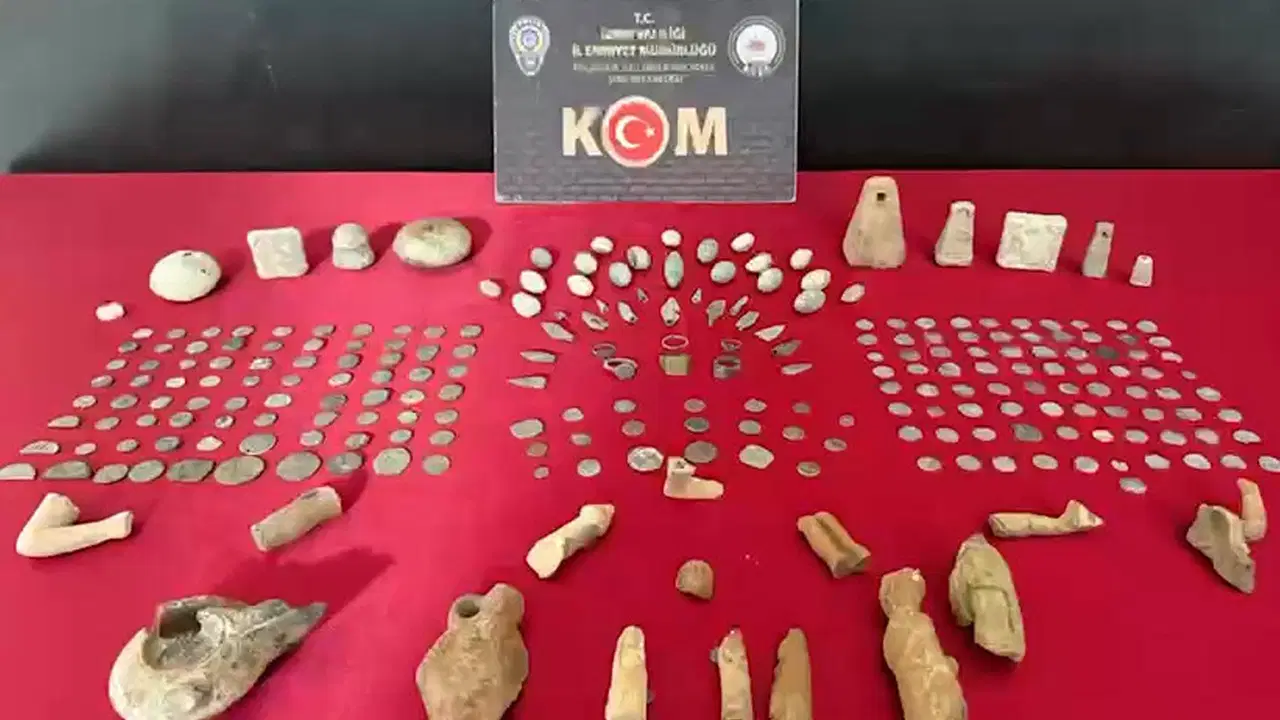
In the coastal city of İzmir, a joint operation by the Aliağa Cumhuriyet Başsav+-+-lık and the İl Emniyet Müdürlüğü targeted artifact smuggling and resulted in the recovery of 525 historical artifacts.

The artifacts seized included 284 objects from the Archaic, Roman, and Byzantine periods, each piece a testament to the rich history of İzmir. Among these were intricate rings, arrowheads, and figurines. Additionally, 226 coins from the Islamic, Roman, and Byzantine periods were recovered, providing a monetary timeline of the region's past. A 10-toothed tool from the Roman period and five human figures used in religious rituals were also among the items seized.
A suspect was taken into custody under the Law No. 2863 on the Protection of Cultural and Natural Heritage. This law safeguards Turkey's cultural treasures, underscoring the seriousness with which the Turkish government views the protection of historical artifacts. The suspect, now under investigation, is believed to have been involved in the illegal trade of these valuable items.
The recovery process was meticulous, ensuring that each item was properly documented and preserved for future study and display.
The operation in Aliağa is part of a broader effort to combat the illicit trade of historical artifacts. Turkey, with its rich and diverse history, faces significant challenges in protecting its cultural heritage. The country has a long-standing tradition of smuggling and trafficking of antiquities, often driven by the lucrative black market for these items.
The operation was a coordinated effort involving multiple agencies. The İl Emniyet Müdürlüğü and the Kaçakçılık Suçlarıyla Mücadele Şube Müdürlüğü (Anti-Crime Operations Directorate) worked together to identify and recover the artifacts. The recovery process was meticulous, ensuring that each item was properly documented and preserved for future study and display.
The seizure of these 525 artifacts is not just a victory for law enforcement but also a significant step in the preservation of Turkey's cultural heritage. Each piece, whether a coin or a figurine, offers a glimpse into the past and helps to fill in the gaps in the historical narrative. The recovery of these items also serves as a deterrent to potential smugglers, reinforcing the importance of protecting Turkey's rich cultural legacy.
The operation was carried out under the Cultural and Natural Heritage Protection Law (Law No. 2863), a legal framework designed to protect and preserve Turkey's cultural and natural resources. This law provides a comprehensive approach to the protection of cultural heritage, including the establishment of protection zones, the regulation of excavations, and the criminalization of the illegal trade of artifacts.

The recovery of these 525 artifacts marks a significant milestone in the ongoing battle to protect Turkey's cultural heritage. As the country continues to grapple with the challenges of artifact smuggling, initiatives like this operation will play a crucial role in ensuring that future generations can continue to learn from and appreciate the rich history of İzmir and beyond. The success of this operation serves as a reminder of the importance of collaboration and the commitment to preserving our shared cultural legacy.