
On November 14, 2026, the Al Amarat Ground in Oman became the stage for a contest that would be remembered not for its dominance, but for its sheer, heart-stopping resilience. The U-19 Asia Cup final pitted two cricketing rivals against each other, but the script written on the field suggested a foregone conclusion before the ink was even dry. Pakistan batted first, posting a formidable 337/9 in their allotted 50 overs. It was a score that demanded perfection from any chasing side, let alone a young team facing the pressure of a continental final.

India's response began with promise but quickly turned into a nightmare. By the time they reached 252/8, the dream seemed to have evaporated. They were eight wickets down, needing 86 runs from the remaining overs to complete the impossible task of chasing down 338. The margin of victory appeared to be a mathematical certainty for Pakistan; the gap between the scores was too wide, the wickets too many. In the high-stakes world of youth cricket, such collapses are often fatal. Yet, as the match moved toward its climax, the narrative shifted from despair to a desperate, aggressive fightback.
The path to this precipice was paved by the efforts of Rajesh Raj Chandan, who top-scored for India with 80 runs, and Aryavir Sehwag, who contributed a vital 58. Manan Choudhary also played a crucial role, scoring 47 runs to keep the momentum alive when it mattered most. Despite these individual heroics, the team found itself in a precarious position. The scoreboard told a grim story: 252/8. With only two wickets remaining and a massive target looming, the tension on the field must have been palpable. The crowd, witnessing a potential historic collapse, held its breath. Pakistan had built a fortress of runs, and now India needed to breach it with nothing left to lose.
The atmosphere was electric, charged with the anticipation of what could go wrong or right in the span of seconds.
It was in this crucible of near-defeat that the final chapter began to unfold. The game did not end with a whimper or a surrender; it ended with a roar. The final overs required a level of aggression that defied the odds. Every run became a battle, every ball a potential turning point. The pressure was absolute. To win, India needed to clear the boundary with precision while managing the risk of losing the remaining wickets. The math was unforgiving: three runs off the last ball were all that stood between a loss and a legendary victory.
As the clock ticked down in the 50th over, the situation remained razor-thin. The requirement was tight, the stakes were at their peak, and the outcome hung on the next delivery. Mohit Uppal stepped up to the crease, tasked with the heaviest burden imaginable. He had to navigate the final moments of the match, ensuring his team did not falter in the dying embers of the game. The atmosphere was electric, charged with the anticipation of what could go wrong or right in the span of seconds.
When the final ball arrived, the entire stadium seemed to lean forward. Mohit Uppal struck the ball with the force and timing of a player who knew there was no room for error. The ball raced away for a boundary. It was the shot that silenced the doubt and ignited the celebration. As the four runs flew across the outfield, the realization hit the Indian players instantly. They had done the impossible. They had chased down 338 runs in exactly 50 overs, winning the match by a single wicket.
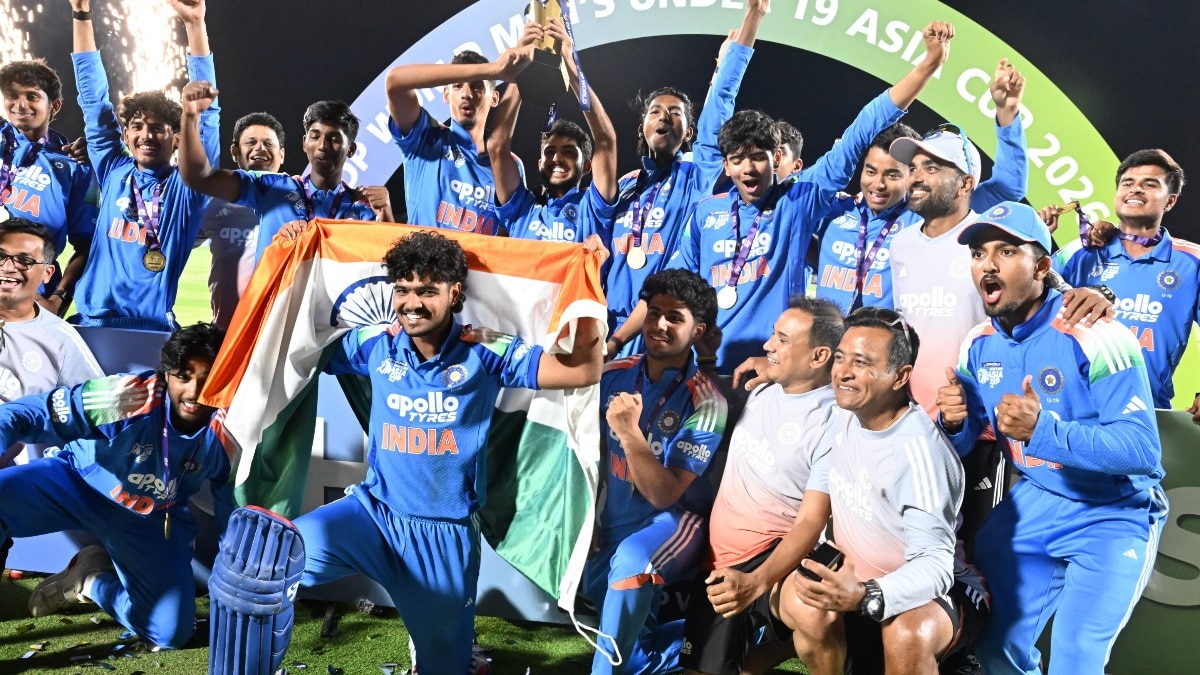
Mohit later described the moment simply, noting the significance of the "boundary on the final ball." It was a stroke that defined the match, turning a near-disaster into a triumph. The victory was not just about the runs; it was about the nerve to face the final delivery without flinching. The celebrations that followed were raw and unbridled. Players rushed onto the field, embracing each other in a chaotic display of joy. The relief of escaping defeat transformed into the euphoria of securing the trophy.

#WATCH | Rajkot, Gujarat: Family members of India U-19 all-rounder Aryan Savsani celebrate India's last-ball victory over Pakistan in the ACC Men’s U-19 Asia Cup 2026 final His father, Dineshbhai Savsani, said, "There was a wonderful atmosphere. When Mohit hit a four on the last ball, and India won, there was an atmosphere of complete joy; around 25 to 30 people were watching the match at my house, and the mood was full of happiness. Aryan is a very good all-rounder; he occasionally gets opportunities higher up in batting, while his bowling has been naturally good since birth. He has been playing cricket with a clear goal from the very beginning for the last 10 years..."
This victory marked a significant milestone for the Indian Under-19 team. It was their ninth title in the tournament, cementing their status as a powerhouse in youth cricket. The journey from 252/8 to a 1-wicket victory is a testament to the mental fortitude of these young athletes. They refused to accept the narrative of failure that the scoreboard had painted for them. Instead, they rewrote the story in the final over, proving that in cricket, as in life, the game is never truly over until the final ball has been bowled.
The reaction from observers captured the magnitude of the feat. Johns, writing under the handle @CricCrazyJohns, noted the historical weight of the performance: "CHASE DOWN 338 RUNS IN THE ASIA CUP FINAL WITH 9 DOWN. THIS IS HISTORY, RAW CELEBRATION, WHAT A MOMENT." The phrase "with 9 down" highlights the improbability of the scenario, acknowledging that losing nine wickets usually signals the end of a chase. Yet, India managed to defy the odds, finishing with one wicket in hand.
The match will be remembered for the specific contributions of the batsmen who kept the dream alive. While Rajesh Raj Chandan's 80 and Aryavir Sehwag's 58 laid the foundation, and Manan Choudhary's 47 provided stability, it was the collective effort in the death overs that sealed the deal. The victory was a masterclass in resilience, showing that even when the numbers suggest defeat, the spirit of the game can find a way through.
As the dust settled on the Al Amarat Ground, the Indian team stood tall, holding the trophy that represented nearly a decade of excellence. The final ball boundary was more than just a scoring shot; it was a declaration that India's youth system remains robust, capable of producing players who can perform under the most extreme pressure. For the fans and the players alike, the memory of that final over in Oman will remain etched forever—a moment where history was made not by avoiding danger, but by walking straight into it and emerging victorious.