
The Mediterranean sun had just set over the Ligurian coast when the control tower at Genoa Airport noticed something unusual in the darkening sky. It was not a bird, nor was it a scheduled flight. Instead, several small objects glided near the runway, glowing with red lights. Within moments, the entire airport came to a halt. This was not just a delay; it was a full two-hour closure of one of northern Italy’s key aviation hubs, triggered by drones that no one could immediately identify or stop.
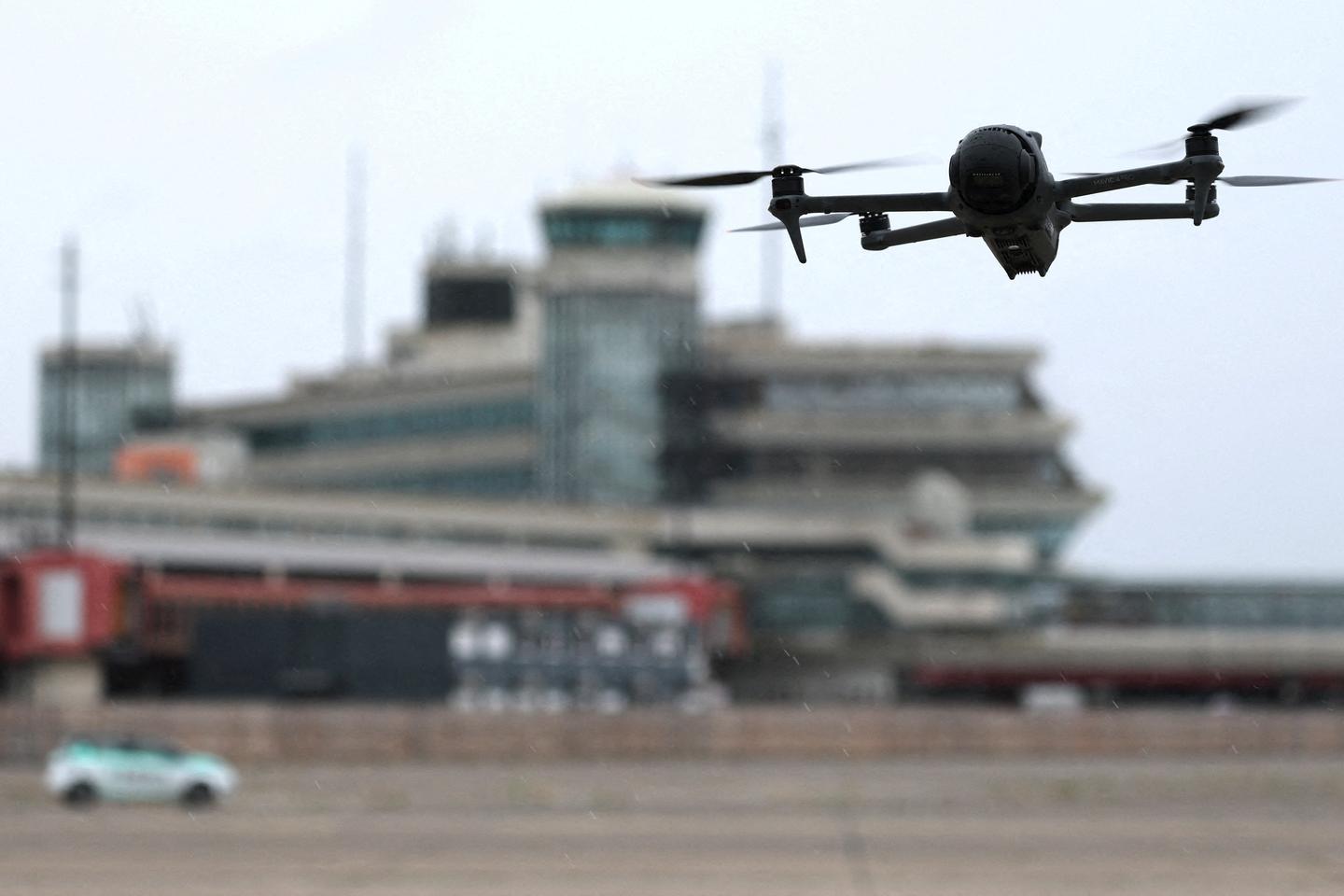
For travelers and pilots, the immediate experience was one of confusion. The airport operator, the local prefecture, and various officials quickly moved to manage the chaos, but the core question remained unanswered by the authorities. A spokesperson for the Prefecture of Genoa admitted the uncertainty plainly: "We do not know where they come from or what type of drones they are." This lack of information is the defining feature of this incident. The airport spokesperson confirmed that drone activity was detected on both the east and west sides of the landing strip, but neither side offered a clue as to who was controlling them or why they were there.
The visual evidence provided by the control tower was sparse but striking. The prefecture noted that "a certain number of drones, perhaps three or four, with their red lights, were seen from the control tower." In the world of aviation, red lights on drones often serve as position indicators to alert other aircraft. However, in this case, these lights were a warning of an intrusion, not a beacon for safe passage. The officials struggled to verify exactly how many drones were present, oscillating between "several" and a rough estimate of three or four. This ambiguity highlights a fundamental weakness in current air traffic management: the systems designed to keep the skies safe are not always equipped to track small, unidentified craft that do not follow the standard protocols.
While the tower searched for answers in the sky, officials on the ground searched the tarmac.
Despite the visual sightings, the technical infrastructure of the airport failed to provide a clear picture. The prefecture confirmed that while the drones were visible to the human eye, they were not picked up by radar. This is a common and frustrating feature of drone operations. Many small drones have a low radar cross-section, meaning they can physically be present in an airspace without appearing on the screens that air traffic controllers rely on to manage heavy traffic. For the controllers in Genoa, this meant operating in the dark, relying on visual confirmation rather than the continuous data streams they usually use to maintain separation between commercial flights.
The decision to close the airport was a precautionary measure, but it had immediate human consequences. The safest course of action when a foreign object is in the flight path is to stop all operations. As the hours passed, the closure began to ripple out. A flight bound for Rome, which should have been en route, was forced to take an unusual step. The passengers on that plane were disembarked before the runway could be safely reopened. This is not a standard part of travel. Passengers are not routinely asked to step off an aircraft that is simply grounded; they are usually kept on board until the issue is resolved. In Genoa, the uncertainty was so high that the only option was to clear the passengers entirely, a decision that turned a technical airspace issue into a logistical one for everyone involved.
While the tower searched for answers in the sky, officials on the ground searched the tarmac. Customs officials were dispatched to the end of the runway to investigate if the drones had landed or been deployed from that specific location. Their search yielded nothing. The officials found no traces of the aircraft, no debris, and no operators waiting at the edge of the apron. This negative result was as significant as the sightings themselves. It confirmed that the drones had likely flown over the airport from a distance, rather than taking off from the runway itself. The investigation into the origin of the drones, therefore, had to move beyond the physical boundaries of the airport.
The incident was formally confirmed by the airport operator and the local prefecture on Friday, the day after the two-hour standstill on Thursday evening. This delay in official confirmation is typical for security-related events, where authorities first prioritize stability and then move to public communication. Once the runway reopened shortly after 10 PM, the airport returned to its normal rhythm. But the event has a larger context that extends beyond Genoa. This closure adds to a rising list of similar disruptions at European airports. In recent times, events in Brussels, Munich, and Leipzig have shown that unidentified drone sightings are no longer isolated incidents but a recurring theme across the continent.

As the dust settled over the Mediterranean, the mystery of the Genoa drones remained unresolved. The red lights in the sky had served their purpose, forcing a shutdown that prioritized safety over schedule. Yet, the lack of an identified responsible party means that the question of who was up there remains open. For the authorities in northern Italy, the incident is a reminder that the airspace above Europe’s cities is no longer just the domain of commercial jets. It is a space that can be suddenly, and silently, contested by technology that the current systems are not fully equipped to see or control. Until those gaps are closed, the skies over Genoa—and likely others—will remain a frontier where uncertainty lingers long after the closure ends.