
For much of recorded history, the global religious map has been defined by a single, dominant feature: the widespread presence of Christianity. But the contours of faith are beginning to shift. According to a forecast by the US-based Pew Research Center, the long-standing era of Christian numerical primacy is approaching a turning point. By 2035, Muslims are expected to outnumber Christians globally, marking a reversal of historical trends.
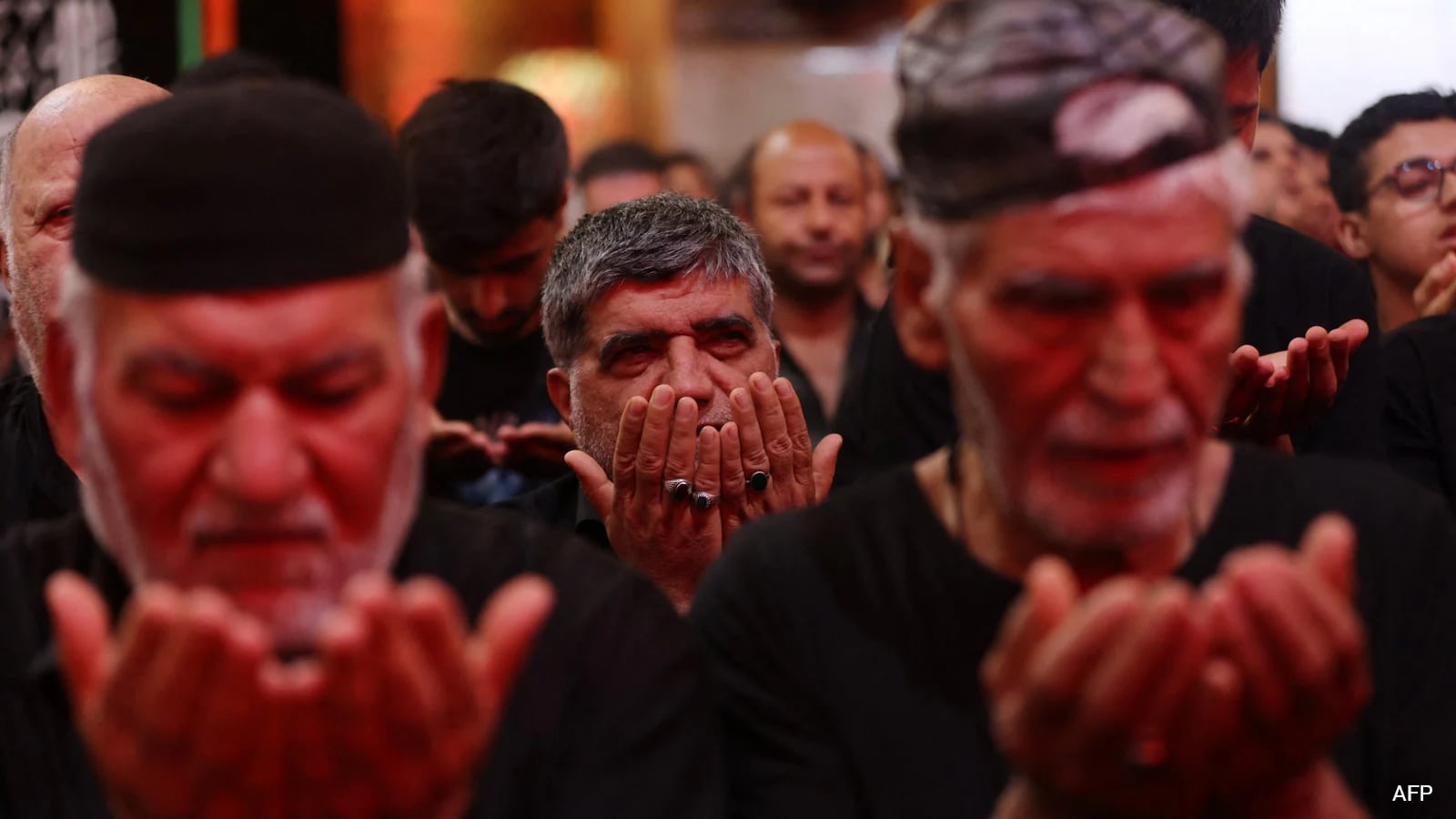
The scale of this transition is immense. The Pew Research Center projects that by 2035, the Muslim population will reach 2.57 billion people, narrowly surpassing the 2.52 billion Christians expected at that same time. To understand the magnitude of this change, one must look back at the baseline established in 2020. In that year, the global religious landscape featured approximately 2.27 billion Christians and 2.02 billion Muslims. While the gap was significant, the momentum of the last few decades has set the stage for a crossover that will redefine the religious demographics of the planet.
This is not merely a temporary fluctuation but a sustained trajectory. If current trends continue, the divergence between the two groups will only widen as the century progresses. By 2070, the projections suggest there will be more than 3.6 billion Muslims and just under 3 billion Christians worldwide.
As the total human population expands, the relative weight of different religious groups is also shifting.
Demographic shifts of this magnitude are rarely accidental; they are driven by the fundamental mechanics of population growth. The primary engine behind the rise of Islam is a higher fertility rate. On average, Muslims are expected to have 3.1 children per woman, a figure that stands in contrast to the 2.0 average seen among non-Muslims. This difference in reproductive rates acts as a powerful multiplier over several decades.
This growth is not evenly distributed across the globe. Instead, it is concentrated in specific regions, particularly in Muslim-majority countries. Nigeria serves as a striking example of this localized surge, with its Muslim population projected to reach 282 million people. Much of the 21st century's global population growth is expected to occur in Africa, a continent that will play a central role in these changing numbers.
As the total human population expands, the relative weight of different religious groups is also shifting. Between 2020 and 2070, the global population is projected to grow by 29%. Within this growing total, the proportion of people identifying as Muslim is expected to rise from 26% in 2020 to 36% by 2070. In contrast, Christians are projected to remain relatively stable as a share of the total, hovering around 29%.
While Islam experiences a projected 80% increase in its population by 2070, Christianity is expected to grow at a more modest rate of 30%. Other groups are seeing different trajectories: Hindus and Jews are projected to decline as a share of the global population, while Buddhists are expected to shrink in both absolute numbers and proportion. Even the religiously unaffiliated are seeing a downward trend, with their share of the global population projected to drop from 24% in 2020 to 17% in 2070.
When discussing such massive shifts, it is easy to fall into the trap of viewing religious growth as a zero-sum game—the idea that one group can only grow if another shrinks. However, the data suggests a more complex reality of simultaneous expansion. Conrad Hackett notes that a common misconception is the idea that if Muslims become the largest group, it must come at the expense of Christians.
In reality, much of this growth is happening within existing religious strongholds. "But 74% of Muslim population growth will happen in countries that are already Muslim-majority," Hackett explains. "And most Christian growth is in places where there are already Christian majorities."
This means the world is not necessarily becoming less Christian, but rather that Islam is expanding more rapidly within its own established geographic and demographic spheres. The global population is growing overall, and different faiths are claiming their share of that new growth at different speeds.
As we look toward the mid-century mark, the religious identity of the human race will look increasingly different from the one we recognize today. The rise of Islam to the position of the world's most popular religion by 2035 is a reflection of deep-seated demographic trends that are already well underway.
While the specific nuances of how these populations live and practice will continue to evolve, the broad strokes of the census are becoming clear. The world is growing, its religious proportions are shifting, and the era of Christian numerical dominance is preparing to give way to a more pluralistic, and increasingly Muslim, global demographic.