For a young entrepreneur in Pakistan, the gap between a viable business plan and a functioning storefront has often been a chasm of capital. For years, the ceiling for individual support through the Prime Minister’s Youth Business and Agriculture Loan Schemes remained fixed at Rs7.5 million—a sum that might suffice for a small shop, but falls tragically short for the large-scale commercial or agricultural ventures required to move the needle on a national economy. On November 8, 2026, that ceiling was shattered.

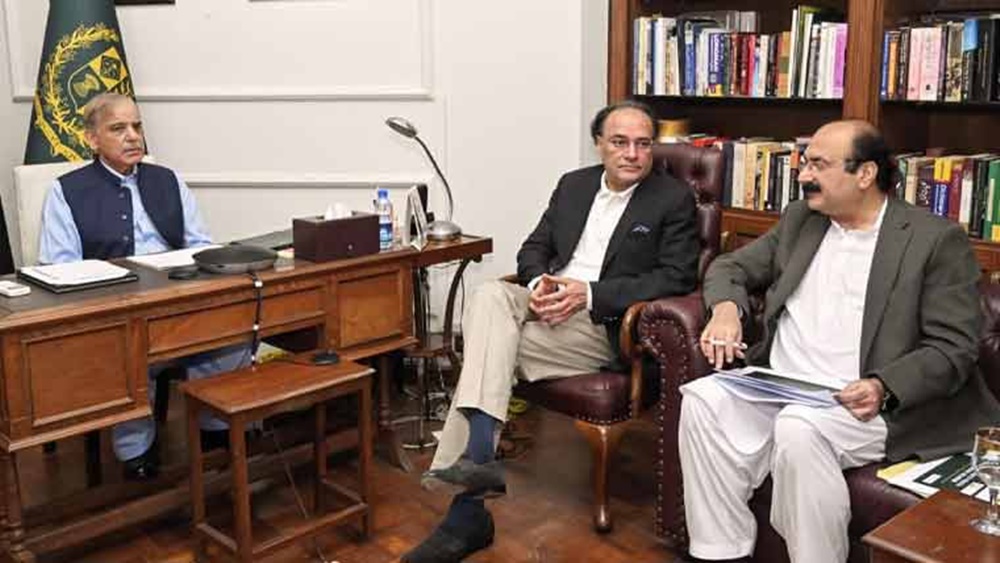
During a high-level meeting held on November 8, 2026, Prime Minister Muhammad Shehbaz Sharif chaired a review of the nation's primary youth-focused financial instruments. The central outcome of this session was a dramatic expansion of the personal loan limit. The previous cap of Rs7.5 million has been replaced by a new limit of Rs25 million. This shift is not merely a mathematical adjustment; it is a strategic pivot toward supporting more substantial, large-scale projects in both the commercial and agricultural sectors.
By increasing the available capital per individual, the government is signaling a move away from micro-scale survivalism toward robust enterprise. This expanded capacity is backed by a massive fiscal commitment: a total of Rs292 billion has been allocated for these schemes throughout this year. This fund represents the government's attempt to provide the liquidity necessary for a generation to transition from job seekers to job creators.
This directive aims to foster financial independence among women, ensuring that the expansion of credit reaches beyond traditional male-dominated sectors.
While the increase in loan amounts targets the scale of business, a simultaneous change in eligibility targets the timing of opportunity. Previously, the minimum age for applicants was set at 21, a threshold that often meant young people had to wait until they had completed significant portions of their education or entered the workforce before they could even consider entrepreneurship.
Under the new directives, the minimum age has been reduced from 21 to 18. This change is designed to allow the youth to begin building their business foundations alongside their education or immediately upon finishing it. The goal is to capture entrepreneurial energy at its earliest stage, preventing the loss of momentum that often occurs during the transition from student life to adulthood.
Recognizing that economic growth is stunted when half the population is sidelined, the Prime Minister has introduced a specific mandate for gender equity within the program. He directed that 30 percent of the loans under these schemes be specifically allocated to women.
This directive aims to foster financial independence among women, ensuring that the expansion of credit reaches beyond traditional male-dominated sectors. By carving out this specific portion of the Rs292 billion allocation, the government is attempting to institutionalize female participation in the nation's commercial and agricultural landscapes.
Capital alone, however, does not guarantee success. A loan without a plan is often a debt without a destination. To mitigate the risks associated with such a massive infusion of credit, the government is integrating technical support into the financial rollout. The Small and Medium Enterprises Development Authority has been tasked with providing both consultancy and technical assistance to those receiving funds.
This layer of support is intended to bridge the gap between having money and knowing how to manage it. To ensure these resources are actually utilized, the Prime Minister has also ordered a nationwide awareness campaign. The objective is to ensure that the young people in every corner of the country are aware that the barriers to entry—both in terms of age and capital—have been fundamentally altered.
At its core, this policy shift is a recognition of the demographic reality facing the country. The Prime Minister framed the expansion not just as a fiscal policy, but as a moral and economic imperative. He emphasized that the government's commitment is rooted in the belief that the country's potential is tied directly to the empowerment of its youngest citizens.
As the new limits and age requirements take effect, the success of the Rs292 billion allocation will depend on whether these newly empowered entrepreneurs can turn high-limit loans into sustainable industries. For now, the framework is set: the money is allocated, the age is lowered, and the mandate for women is clear.