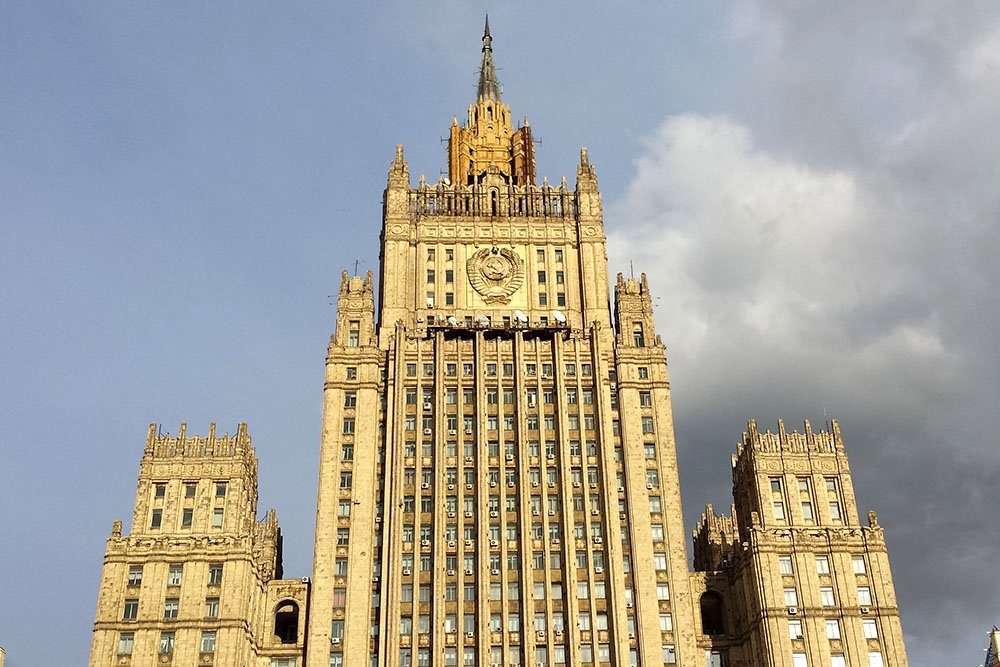
In the high-stakes diplomatic theater of the post-Soviet space, few silences are as deafening as the one that existed between Moscow and Tbilisi. For nearly two decades, the relationship was defined by tension, isolation, and a lack of direct communication channels. Yet, on November 16, 2026, that long-standing impasse began to crack. The Russian Ministry of Foreign Affairs announced the restoration of direct dialogue with Georgia, a declaration that sent ripples through regional diplomatic circles. It was not merely a statement of intent; it was a prelude to a concrete step that would physically bring the two sides back to the table.
The logistics of such a meeting are rarely straightforward. When two neighbors have spent years building walls, the location of their first conversation is as politically charged as the content itself. In this instance, Belarus served as the critical facilitator. The choice of Minsk as the venue for the November 19 meeting was no accident. Belarusian officials played a supportive role in arranging the encounter, bridging the gap between the two delegations. Both the Russian and Georgian sides expressed gratitude to Belarus for enabling this contact. For a newcomer to these geopolitical dynamics, it is important to understand that in a fractured region, neutral or semi-neutral ground becomes a commodity in itself. By hosting the talks, Belarus demonstrated its continued relevance as a diplomatic broker, while simultaneously showing that it can accommodate interests that do not always align perfectly with Russia’s own, even in this context.
The individuals who walked into the Minsk room represented specific, carefully calibrated roles. On the Russian side was Mikhail Galuzin, Deputy Foreign Minister. His presence signaled a serious engagement from Moscow, not just a peripheral exchange. Facing him was Giorgi Zurabashvili, the Georgian Prime Minister’s Special Representative for Relations with Russia. The title is a clue in itself; Georgia had not appointed a full ambassador, but rather a special representative, reflecting the unique and limited status of their diplomatic ties. Zurabashvili’s job is to navigate the narrow corridors of possibility between Tbilisi and Moscow.
It is a bottom-up approach to diplomacy, bypassing the thornier issues of territorial dispute for now in favor of economic and social engagement.
The initial reaction to the announcement was cautious. However, the substance of the discussion moved quickly past general platitudes. The two delegations engaged in what the Russian Foreign Ministry described as a "substantive exchange of views." This was not a symbolic photo-op. The agenda was dense and focused on the ground-level realities of two nations that share a border but have often ignored each other’s economic needs. The talks centered on bilateral cooperation, specifically in the realms of trade, economics, and cultural-humanitarian areas.
What emerged from these discussions was not a grand treaty or a formal recognition of sovereignty, but something more modest and arguably more significant in the short term: a series of practical agreements. These deals represent the scaffolding upon which a future, more complex relationship might be built. They address the immediate, tangible concerns of citizens and businesses on both sides of the border. By agreeing to these practical measures, both countries are acknowledging that their populations want connections, whether through trade routes or cultural exchanges, regardless of the political chasm that separates their governments. It is a bottom-up approach to diplomacy, bypassing the thornier issues of territorial dispute for now in favor of economic and social engagement.
To understand the magnitude of this 2026 step, one must look back to 2012. That was the year the two countries initially initiated this specific format of direct communication, which later fell into disrepair. The current meeting in Minsk is explicitly framed by Russian officials as a return to that 2012 model. This is not a new invention; it is a revival of a previous diplomatic language. For a reader new to the subject, this continuity matters. It suggests that the institutional memory of these talks has not been lost, and that there is a precedent for this kind of engagement. The break in relations did not erase the framework; it merely suspended it. Now, the suspension is ending.
The timing of these agreements in late 2026 carries its own weight. As regional security dynamics shift, the ability to maintain open channels of communication with neighbors becomes a matter of stability, not just preference. The discussions included regional security, indicating that the dialogue is not strictly confined to friendly, non-controversial topics like cultural exchange. By including security in the agenda, the two sides are acknowledging that the border is not just a line on a map, but a place where tensions can spike. Addressing these issues head-on, even at the deputy ministerial level, is a risk. It requires trust. The fact that both sides took that risk in Minsk suggests a shared desire to de-escalate, however small the step may appear from a distance.
As of November 2026, the situation stands at a turning point. The direct dialogue is restored, the gratitude to Belarus has been registered, and the practical agreements have been signed. The immediate next steps will be determined by the implementation of these trade and cultural deals. For now, the silence between Moscow and Tbilisi has been broken, replaced by the noisy, complex, and often frustrating work of rebuilding a relationship that was shattered long ago. The meeting in Minsk was not the end of the dispute, but it was the beginning of a new chapter in which communication is possible again.