On November 27, 2026, the quiet stability of Kuwait was shattered not by a storm, but by the mechanical hum of drones. What began as a series of strikes against critical facilities quickly transformed into a humanitarian tragedy and a profound diplomatic crisis. The air, once calm, became heavy with the weight of violated borders and the sudden, violent loss of life. In the aftermath of the strikes, the true cost of the aggression became clear: four people were injured, caught in the crossfire of a conflict that had breached the very sanctity of Kuwaiti soil.

The immediate impact of the drone attacks was measured in human suffering. Among those wounded were a Kuwaiti national and a Pakistani national, both caught in the chaos of the strikes. However, the most devastating toll was felt by the international community. Two Italian nationals were injured in the attacks, and in a tragedy that has cast a dark shadow over the region, both of those Italian citizens later succumbed to their injuries. Their deaths have transformed a localized security breach into an international incident, turning a matter of territorial integrity into a matter of profound human loss.
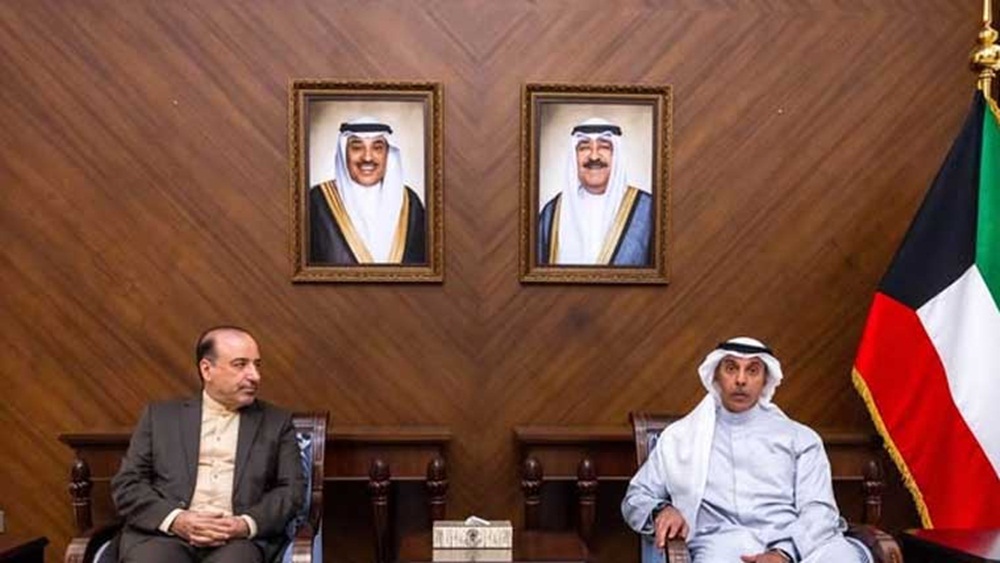
In the wake of the violence, the Kuwaiti government moved swiftly to address the source of the aggression. On November 27, 2026, the Ministry of Foreign Affairs took the decisive step of summoning the Iranian Ambassador, Mohammed Tutunci. This was no routine diplomatic meeting; it was a formal confrontation. The purpose was to deliver a protest note, a stern and official condemnation of the drone attacks conducted by Iran that had struck within Kuwait's borders.
The language used by Kuwait in its protest was not merely emotive; it was deeply rooted in the architecture of international governance.
The language used by Kuwait in its protest was not merely emotive; it was deeply rooted in the architecture of international governance. The Ministry of Foreign Affairs did not just describe the attacks as acts of aggression, but as clear violations of Kuwait's sovereignty and regional stability. By targeting critical facilities, the strikes were framed as a direct assault on the nation's ability to function and protect its own people. The Kuwaiti government asserted that these actions constituted a breach of international law and the UN Charter, signaling that the world's established rules of engagement had been disregarded.
To bolster its position, Kuwait pointed to specific pillars of international law that had been trampled by the drone strikes. The Ministry cited UN Security Council Resolution 2817, underscoring that the attacks were not just a bilateral issue between two neighbors, but a violation of the collective security framework established by the United Nations. The Kuwaiti Deputy Foreign Minister reinforced this stance, stating that "the Iranian attacks are serious violations of international law and the UN Charter."
As the diplomatic tension escalated, Kuwait made it clear that its response would not be limited to words on parchment. The nation explicitly reserved its right to legitimate self-defense. By invoking Article 51 of the UN Charter, Kuwait signaled to the international community and to Tehran that it maintains the legal and moral authority to take all necessary measures to protect its citizens and residents. This invocation of Article 51 is a significant step, as it serves as the legal foundation for a nation to respond to an armed attack to ensure its own survival and safety.
The strikes and the subsequent diplomatic fallout have left the region in a state of heightened tension. What was once a violation of a single nation's sovereignty has become a test of the international community's commitment to the UN Charter and the sanctity of borders. As Kuwait stands firm in its protest, the world watches to see how the principle of self-defense will be applied in the face of such direct and lethal aggression.