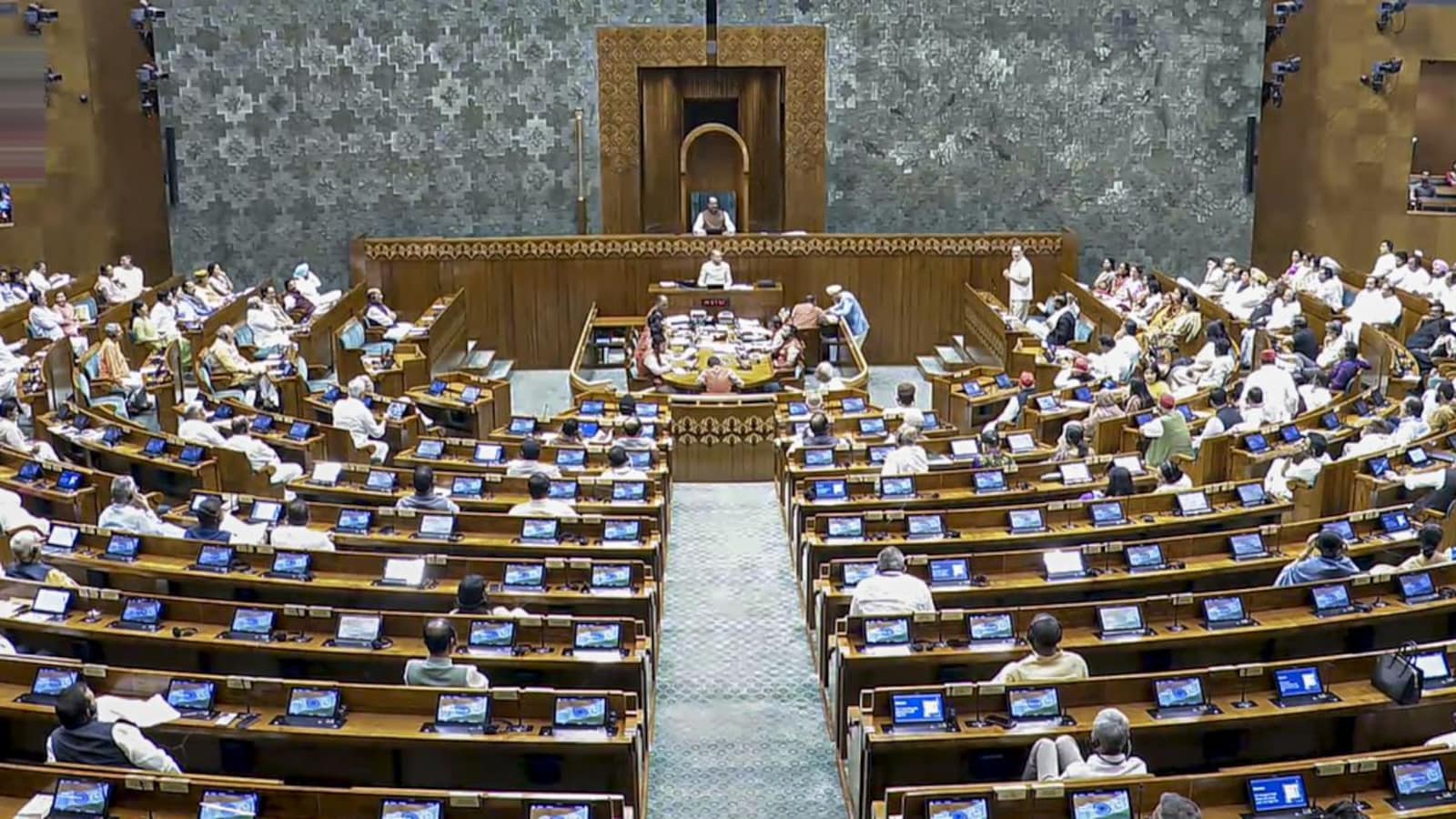
In the quiet corridors of Indian governance, the math of democracy is about to undergo a massive recalibration. At 1 PM, Prime Minister Narendra Modi is set to chair a Union Cabinet meeting at 'Sewa Tirth,' a gathering that carries more than just the weight of routine administration. With all ministers instructed to attend, the agenda points toward a transformation of the very foundation of the Lok Sabha—the lower house of India's Parliament.

The core of the discussion involves a proposed amendment to the women's reservation bill, but the implications reach far beyond gender parity. The amendment is inextricably linked to the process of constituency delimitation—the periodic redrawing of electoral boundaries to ensure that each representative serves a roughly equal number of citizens. At the heart of this legislative movement is a staggering numerical shift: the potential expansion of the Lok Sabha from its current 543 members to a maximum of 850 seats.
To understand the scale of this, one must look at the current structure. For years, the 543 seats have defined the limits of direct representation in the house. Moving toward a ceiling of 850 would not merely be an incremental change; it would be a structural overhaul, altering how political power is distributed across the vast and diverse geography of the nation.
This four-day window represents a high-stakes sprint in the parliamentary calendar.
The timing of this cabinet discussion is critical, as it seeks to weave together two massive pillars of legislative reform. By linking the women's reservation bill to the delimitation process, the government is addressing the complex reality that you cannot easily implement gender-based quotas without first deciding where the boundaries of the constituencies lie. If the number of seats increases, the map of India's political representation must be entirely reimagined to accommodate the new math.
This connection suggests that the debate is not just about how many women will sit in Parliament, but about the fundamental geometry of the constituencies themselves. A larger house requires a new way of drawing lines on a map, ensuring that as the number of members climbs toward that 850 mark, the principle of fair representation remains intact.
The gravity of these potential changes has set the stage for a concentrated period of legislative activity. A special session of Parliament has already been scheduled, providing a dedicated window for these transformative proposals to be brought before the nation's lawmakers. This session is set to run from November 30 to December 3.
This four-day window represents a high-stakes sprint in the parliamentary calendar. It is the period where the theoretical discussions held within the Union Cabinet will meet the practical, often contentious, realities of parliamentary debate. The brevity of the session underscores the urgency with which the government is approaching these amendments, signaling that the decisions made during these few days could dictate the trajectory of Indian representation for years to come.
When one considers the leap from 543 to 850, the logistical and political magnitude becomes clear. Each new seat represents a new constituency, a new set of local concerns, and a new voice in the national discourse. The delimitation process is never merely a clerical exercise; it is a high-stakes negotiation of influence. As the boundaries shift and the number of members grows, the balance of power between different regions and demographics will inevitably be tested.
As the ministers gather at 'Sewa Tirth,' the focus remains on how this expansion will be managed. The proposed maximum of 850 seats suggests a vision of a much larger, more expansive legislative body, one designed to reflect a changing nation, even as it introduces unprecedented complexity into the mechanics of the Lok Sabha.