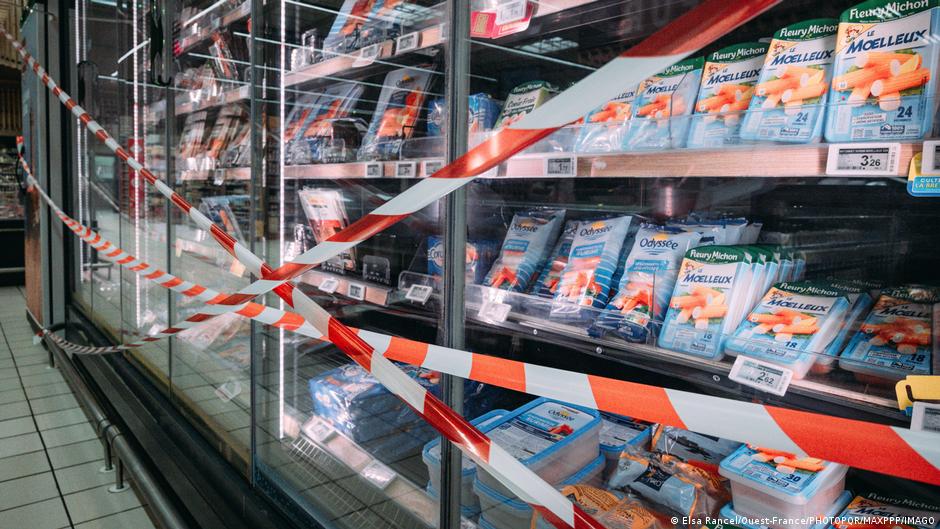
The story of modern supply chains is usually one of invisible efficiency. Trucks move goods from farms to shelves while sensors track temperature and humidity, ensuring that milk stays cold and produce remains crisp. But on the night of October 11-12, that invisible infrastructure was severed in France. In a coordinated digital assault, hackers disabled the cooling systems of approximately 700 supermarkets out of the country's total of 10,000. The result was not just empty shelves; it was spoiled food and, in some cases, fires ignited by malfunctioning refrigeration units.

What began as a technical glitch quickly escalated into a national security incident. Jean-Noel Barrot, France's Foreign Minister, described the operation as unprecedented in both its scale and its level of aggression. While the cyberattack itself was noted as comparatively simple in its execution, the physical fallout was severe. The disruption caused large quantities of perishable goods to spoil overnight, turning a routine logistics failure into a crisis of public safety and economic loss. Barrot emphasized that this marked the first large-scale cyberattack aimed at sabotage on French soil, representing a serious threat to the country's interests and public safety.
As authorities scrambled to understand the scope of the breach, the focus turned to who might have orchestrated such a disruptive event. France has officially blamed Iran's Revolutionary Guard for the cyberattacks on supermarket refrigeration systems. This attribution was not merely a diplomatic accusation but the precursor to legal action. Laure Beccuau, a prosecutor, announced that a judicial investigation had been opened against the head of the Iranian group Shahid Kaveh, an offensive cyber unit affiliated with the Electronic and Cyber Center of the Islamic Revolutionary Guard Corps, along with his two deputies. The investigation also targets any other individuals who may be identified as responsible for the intrusion.
The targeting extended beyond commercial infrastructure; a failed attempt to hack cooling units at blood banks was also recorded.
The supermarket attacks were not isolated incidents in a vacuum. Authorities reported similar security breaches occurring the previous week, suggesting a sustained campaign rather than a single opportunistic strike. The targeting extended beyond commercial infrastructure; a failed attempt to hack cooling units at blood banks was also recorded. These parallel attempts highlight a strategic intent to disrupt critical services that rely on precise temperature control. The convergence of these events painted a picture of an adversary testing the limits of French resilience, moving from retail environments to life-saving medical facilities.
The response from Paris was swift and unequivocal. Following the revelation of the attackers' identity, the Iranian ambassador was summoned in protest. France condemned the attacks in the strongest possible terms, signaling that the act of sabotage would carry significant diplomatic costs. Beyond the immediate condemnation, the government pledged to implement sanctions at the European level against all those responsible for the attack. This move underscores the intention to treat the incident not just as a crime within France, but as a transnational threat requiring a unified continental response.
While the specific details of the French operation remain under investigation, similar security breaches have been reported in other European countries and the United States. Although it remains unclear if these are connected to the French supermarket attacks, the pattern suggests a growing trend of state-sponsored cyber operations targeting civilian infrastructure. The fact that the French system was compromised despite the relative simplicity of the code used serves as a stark reminder of the vulnerabilities inherent in interconnected industrial systems. The attack demonstrated that even basic digital intrusions can trigger catastrophic physical failures when they target the very mechanisms that preserve food and medicine.
As the judicial investigation continues, the focus remains on holding the architects of the attack accountable. The opening of the case against Shahid Kaveh and his deputies marks a shift from diplomatic posturing to active legal pursuit. For the French public, the incident serves as a sobering lesson in the fragility of modern convenience. What once seemed like an immutable guarantee of fresh food arriving on shelves has been revealed to be a system vulnerable to remote manipulation. With sanctions looming and a full-scale investigation underway, France is signaling that the era of unchecked cyber aggression against its domestic infrastructure is over.