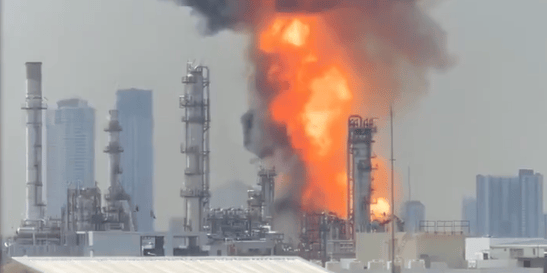
On November 26, 2026, the familiar rhythm of Bangkok’s urban landscape was shattered by a violent event at the Bangchak oil depot. Located on Sukhumvit 62 in the Phra Khanong district, the facility—a critical artery of Thailand’s energy infrastructure—became the epicenter of a massive fire following a powerful explosion. The blast sent plumes of thick, black smoke billowing into the sky, a stark and alarming visual that signaled an immediate threat to the surrounding neighborhoods. For those living and working in the shadow of the depot, the industrial hum that usually defines the area was replaced by the chaotic urgency of a disaster unfolding in real-time.

As the fire intensified, the response from local authorities was swift and unambiguous. The Bangna District Office, recognizing the potential peril posed by the blaze, turned to social media to disseminate a critical directive. In an urgent warning posted to Facebook, officials addressed the public directly: "An explosion has occurred at the Bangchak oil depot. For their own safety, members of the public in the vicinity are urged to evacuate the area immediately." This call to action was not merely a suggestion; it was a necessary precaution for residents and students in the immediate radius of the facility, where the risk of secondary explosions or toxic inhalation remained an unknown but looming danger.
The Bangchak oil depot is no minor facility; it is a cornerstone of the nation’s energy supply, holding the title of the fifth-largest oil depot in Thailand. With a listed capacity of 120,000 barrels per day, the site plays a vital role in the movement of fuel across the country. However, its location on Sukhumvit 62 makes it a unique and controversial outlier. It is the only major oil facility in Thailand situated within a densely populated urban area, a design choice that, while perhaps practical for distribution, has now brought the realities of industrial risk directly to the doorsteps of Bangkok’s citizens.
However, its location on Sukhumvit 62 makes it a unique and controversial outlier.
In the wake of the explosion, the scene was quickly flooded with emergency responders. Firefighters and rescue teams were dispatched to the site, tasked with the perilous job of containing a fire at a facility designed to store vast quantities of flammable liquid. The scale of the blaze necessitated a coordinated effort to prevent the fire from spreading further into the surrounding district. While the responders worked to gain the upper hand, the primary focus remained on the safety of the populace, with the evacuation order serving as the first line of defense against the unpredictable nature of the chemical fire.
As of November 26, 2026, the situation remains fluid. Authorities have yet to confirm the definitive cause of the explosion, nor have they provided a full assessment of the structural damage to the depot. Perhaps most pressingly, there have been no immediate casualty figures reported, a fact that provides a small measure of relief as the city waits for more information. The lack of clarity regarding the cause leaves a vacuum of information that the Bangna District Office and other local authorities are working to fill, even as they manage the immediate logistics of the evacuation.
This event serves as a stark reminder of the precarious balance between industrial necessity and urban safety. The Bangchak oil depot has long operated as a quiet neighbor, but the events of this day have forced a confrontation with the reality of its location. As the smoke eventually clears, the city will undoubtedly be forced to reckon with the risks inherent in maintaining such a high-capacity facility in the heart of a bustling metropolis. For now, the priority remains the safety of those displaced and the successful containment of the fire, as Bangkok watches the horizon, waiting for the all-clear.