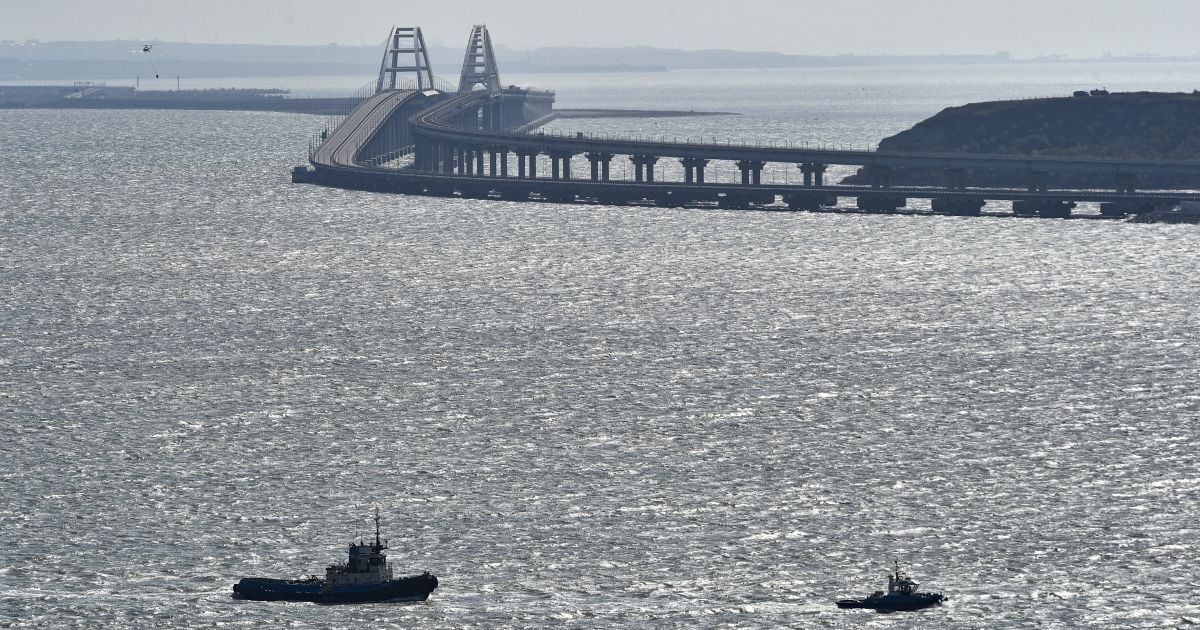
On the night of November 19, the quiet coastal city of Kerch was jolted awake by a series of powerful explosions. Residents who had settled into their evening routines found themselves suddenly alert, their nights interrupted by the unmistakable sound of detonations echoing across the Black Sea. What began as a normal Sunday night quickly transformed into a scene of confusion and concern as reports began circulating about unusual activity near one of the most strategically important structures in the region—the Kerch Bridge.

The Kerch Bridge, which connects mainland Russia to the Crimean Peninsula, has stood as a potent symbol of Russian control over the region since its completion in 2019. Spanning the Kerch Strait, this engineering marvel serves not only as a vital transportation link but also as a political statement, physically connecting Crimea to Russia in the wake of the 2014 annexation. For years, the bridge has been both a lifeline for Russian military operations in Crimea and a target for Ukrainian resistance forces seeking to challenge Moscow's grip on the peninsula.
As the clock struck 11:50 PM, the first explosion shattered the night's silence. According to the Telegram channel Kerch Wind, subscribers reported hearing at least eight distinct explosions and witnessing a missile flight in the vicinity. "Было слышно как минимум восемь взрывов и пролет ракет," the channel reported, translating to "At least eight explosions and a missile flight were heard." This initial account would soon be corroborated by multiple sources, though the full picture remained unclear in the chaotic aftermath of the blasts.
While initial counts suggested at least eight blasts, later reports would tally between 15 and 16 separate detonations.
While Kerch Wind provided the first public reports, other independent sources quickly added their observations to the growing narrative. OSINT researchers Exilenova+ and the guerrilla movement ATESH both confirmed hearing loud explosions in the area, though their initial assessments varied in detail. Some witnesses described seeing bright flashes lighting up the night sky, while others reported feeling the ground shake beneath their feet. The confusion was understandable—without official confirmation from Russian authorities, citizens were left to piece together what had happened based on fragmented accounts and their own experiences.
Among the most concerning reports was the claim that two shells had specifically struck the railway portion of the Kerch Bridge. This detail, shared by subscribers of Kerch Wind, suggested a deliberate targeting of the bridge's infrastructure rather than random explosions. The railway component of the bridge has particular strategic importance, as it facilitates the movement of military equipment and supplies to and from Crimea. If confirmed, such an attack would represent a significant escalation in efforts to disrupt Russian logistics in the region.
As the night wore on, the number of reported explosions continued to climb. While initial counts suggested at least eight blasts, later reports would tally between 15 and 16 separate detonations. This discrepancy highlighted both the intensity of the attack and the challenges of accurately documenting events in real-time, especially when official channels remain silent. Each explosion represented a potential strike against Russian infrastructure, though it remained unclear how many, if any, had successfully hit their intended targets.
Amid the reports of explosions, some observers suggested that not all the blasts resulted from incoming attacks. OSINT researchers and other analysts speculated that several of the explosions might have been caused by Russian air defense systems intercepting incoming projectiles. This possibility would explain the multiple explosions reported in quick succession, as defense systems often fire multiple rounds to ensure the destruction of incoming threats. If confirmed, this would indicate that the attack had been met with a robust defensive response, though the extent of any damage to the bridge remained unknown.

In the immediate aftermath of the explosions, Russian authorities offered no official confirmation of an attack on the Kerch Bridge. This silence was not unusual given the bridge's strategic importance and Russia's tendency to downplay successful attacks on its infrastructure. Without official acknowledgment, the reports from independent sources and citizen witnesses remained the primary accounts of what had transpired. This information gap allowed for speculation and uncertainty to fill the void, with different interpretations of the events competing for credibility.
As dawn broke over Kerch, the full extent of the damage—if any—remained unclear. What was certain was that the explosions represented another challenge to Russia's control over Crimea and its lifeline across the Kerch Strait. The bridge, which has been targeted before, once again found itself at the center of the ongoing conflict between Russia and Ukraine. For now, the reports of explosions added another chapter to the complex story of Crimea's contested status, with both sides continuing their strategic calculus in the shadow of the bridge that connects the peninsula to the Russian mainland.