At 10:52 am on Thursday, November 27, a single email address—reduak079@gmail.com—sent a ripple of unease through the administrative and security corridors of Maharashtra. It was not a typical piece of spam. The message contained specific, chilling claims of imminent bomb blasts, targeting some of the most high-profile landmarks in Mumbai and Pune. The sender claimed affiliation with a group calling itself the 'Khalistan National Army,' a name that immediately signaled a political dimension to the threat, invoking the complex and sensitive history of the Khalistan movement.

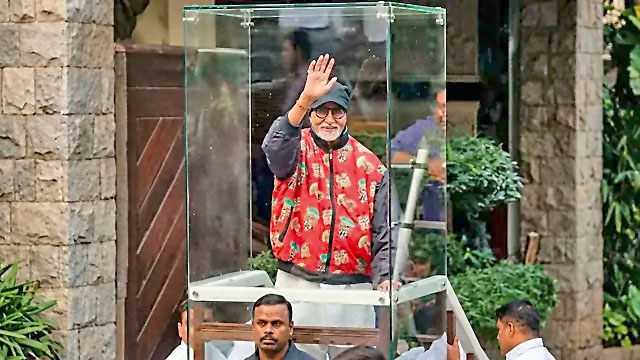
As the email landed in various inboxes, the scope of the threat began to reveal itself. This was not a localized warning; it was a wide-reaching map of potential chaos. The targets included the Chhatrapati Shivaji Maharaj International Airport, a vital artery for global travel, and several branches of Punjab National Bank. The list even extended into the private sphere, naming 'Jalsa,' the residence of legendary actor Amitabh Bachchan, and the Mahalaxmi Stadium. By targeting both critical infrastructure and cultural icons, the communication sought to maximize the psychological impact of the threat.
The emails were not merely vague expressions of intent; they were structured around a terrifying sense of precision. The messages referenced specific times and dates, creating a countdown that forced security agencies to move from routine vigilance to active crisis management. One specific threat pointed toward a blast at a Punjab National Bank branch at 1:11 pm. For the officers on the ground, these timestamps transformed a digital message into a physical race against time.
As the clock ticked toward the threatened times, the machinery of state security swung into motion.
In Pune, the tension followed a similar trajectory. The Pune Municipal Corporation (PMC) headquarters and the Mayor's office were explicitly named as targets. The arrival of the threat at the PMC was recorded at 1:16 pm. The precision of the threat was designed to paralyze decision-making, forcing officials to weigh the reality of a physical explosive against the possibility of a calculated hoax.

Bomb threat email targets Amitabh Bachchan’s bungalow, Mumbai mayor office again https://t.co/57OrbhQ6YU
As the clock ticked toward the threatened times, the machinery of state security swung into motion. In both Mumbai and Pune, authorities were placed on high alert. The response was immediate and visible: security measures were heightened at the targeted locations, and specialized units were mobilized to sweep the areas for danger.
"The email was received at 1.16 pm on Thursday. Following this, security was stepped up (at PMC headquarters) and the Bomb Detection and Disposal Squad (BDDS) was summoned," noted Ganesh Sonune. The deployment of the BDDS—the elite technicians trained to identify and neutralize explosive devices—is a significant escalation in protocol, signaling that the threat was being treated with the utmost seriousness despite the lack of physical evidence.
To understand the weight of the November 27th emails, one must look at the history of these digital incursions. This was not an isolated incident of cyber-terrorism, but rather part of a recurring pattern of disruption. The authorities have dealt with similar scares in the past, where the digital threat evaporated upon physical inspection.
In June 2023, the Pune Municipal Corporation had already been the recipient of a bomb threat email that ultimately proved to be a hoax. Even more recently, in February 2024, Mumbai received another bomb threat email. This history of 'ghost threats' creates a difficult landscape for law enforcement: they must respond to every specific detail with full force to ensure public safety, while simultaneously navigating the reality that these messages are often designed to cause panic rather than actual destruction.

Mumbai Bomb Threat: मेयर ऑफिस और Amitabh Bachchan के बंगले को बम से उड़ाने की धमकी, मचा हड़कंप! #mumbaibombthreat #amitabhbachchan #mumbai https://t.co/d8BlixIxPt
Despite the intense mobilization of bomb disposal squads and the heightened presence of security at the airport and the Mayor's offices, the specific detonation time of 3:11 pm mentioned in the correspondence passed without the catastrophe the emails promised. The threats, much like the ones that preceded them, were eventually identified as hoaxes.
Yet, the impact of such messages remains profound. Even when the threat is empty, the cost of the response is real. The disruption to airport operations, the mobilization of specialized squads, and the psychological toll on the public in Mumbai and Pune represent a successful execution of the sender's primary goal: the creation of widespread instability through digital means. As authorities continue to investigate the origin of the reduak079@gmail.com account, the incident serves as a reminder of how a few lines of text can momentarily bring two of India's major cities to a standstill.