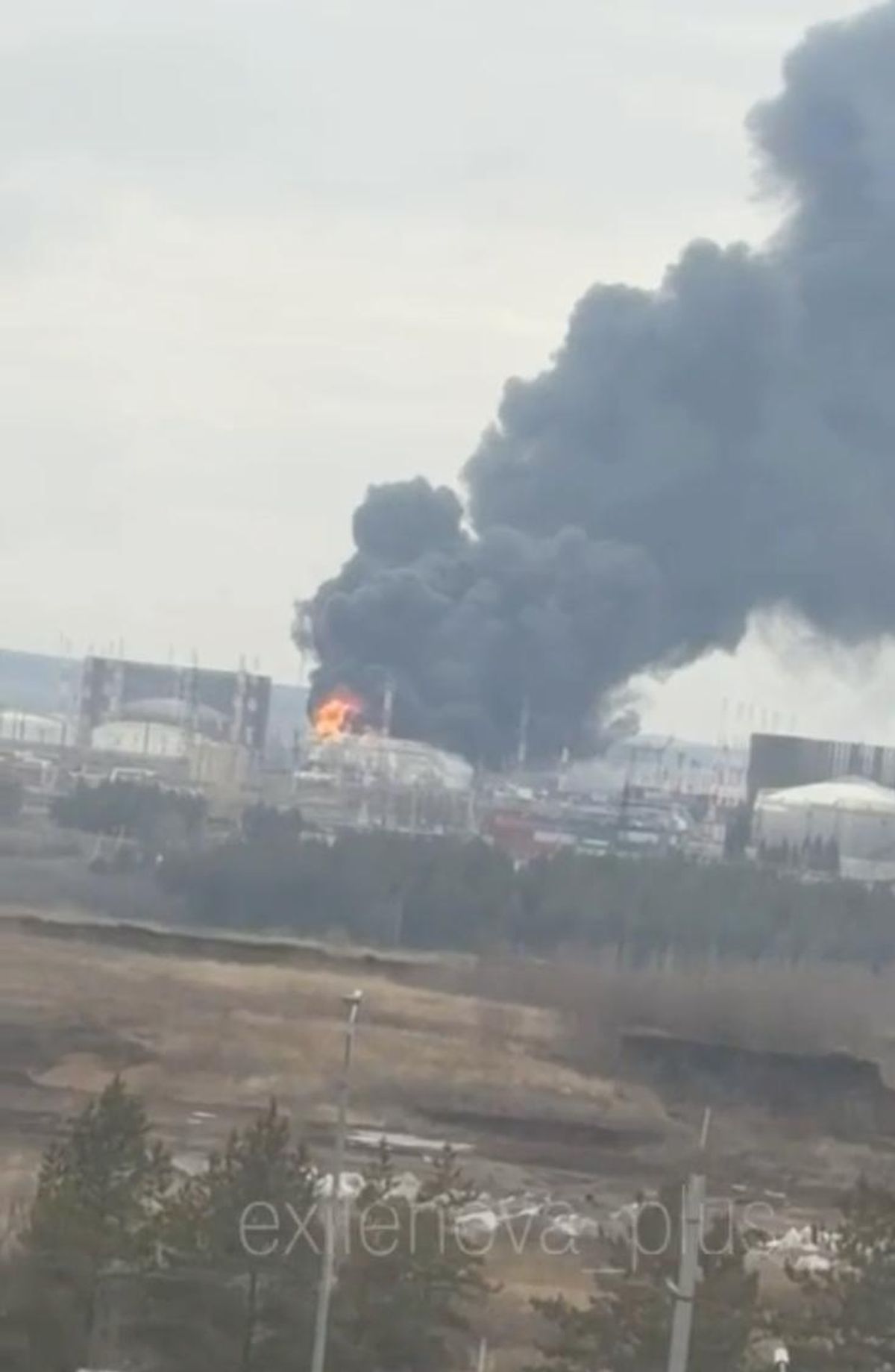
For a newcomer to the current conflict, the most striking fact is not just that strikes are happening, but where they are happening. On November 19, the General Staff of the Armed Forces of Ukraine announced that its forces had struck the Kaleikino-1 oil pumping station. This facility is located in Almetyevsk District, in the Republic of Tatarstan. To grasp the scale of this operation, consider that Tatarstan is situated approximately 1,000 kilometers from the Ukrainian border. This distance marks a significant geographic threshold, moving the battleground from the immediate front lines deep into the Russian industrial heartland.

To understand why this specific location matters, one must first understand the Druzhba pipeline system. This vast network serves as a critical artery for Russian oil distribution, moving crude from various production regions to refineries and export terminals. The Kaleikino station is not a minor junction; it is a key node in this system. Its primary function is to mix oil coming from various Russian regions before it is distributed onward. By targeting such a hub, Ukrainian forces are not just hitting a single tank, but attempting to disrupt the logistical flow of energy resources that power the Russian economy and war machine.
The General Staff provided specific details on the damage sustained at Kaleikino-1. Three RVSPA-50000 storage tanks were confirmed damaged. One of these tanks caught fire, while the other two sustained damage that likely rendered them inoperable or required extensive repair. These are not small, temporary structures. They are some of the largest tanks under construction in Russia. Each RVSPA-50000 unit has a diameter of 60 meters and a storage capacity of 50,000 cubic meters. The engineering required to build such a structure is immense. As noted by Ukrainian officials, hundreds of tons of steel go into building just one such tank.
This forces Russia to divert resources and attention to repairing critical infrastructure that was previously stable.
The construction timeline for these tanks is a crucial detail for understanding the long-term impact of the strike. A tank of this magnitude is built over months on a special foundation. The process involves welding the walls belt by belt, a meticulous task that requires specialized labor and materials, followed by rigorous testing with water to ensure structural integrity. Because of this complexity, it is impossible to buy or restore such a structure quickly. The Ukrainian General Staff emphasized that hitting three of them at once creates a logistical bottleneck that cannot be resolved overnight. This forces Russia to divert resources and attention to repairing critical infrastructure that was previously stable.
The strike on Kaleikino did not occur in isolation. It was part of a coordinated effort to degrade Russian energy infrastructure. The day before, on November 18, Ukrainian forces attacked the Ilysky oil refinery in Krasnodar Krai. This facility suffered significant damage as well. Reports indicated that one storage tank was completely destroyed, while eight others were damaged. Additionally, surrounding infrastructure and buildings were hit. The proximity in time between these two strikes suggests a strategic pattern of targeting multiple points in the energy supply chain, from regional refineries to major pumping stations.
For a reader new to the economic dimensions of war, it is important to recognize that modern warfare is not only fought with tanks and troops but also with fuel and logistics. The Druzhba pipeline system is vital for both domestic consumption and export revenues. By damaging the ability to store and move oil efficiently, Ukrainian forces are applying pressure that ripples out beyond the battlefield. The destruction of large-capacity tanks like the RVSPA-50000 units at Kaleikino reduces the total storage volume available to the Russian system, potentially leading to operational inefficiencies and higher costs for alternative storage or transport solutions.
While the statistics of steel and cubic meters are cold, they represent significant human and industrial effort. The months of labor required to weld a 60-meter diameter tank are now lost or severely disrupted. The General Staff’s framing of the attack highlights this wasted effort. It serves as a reminder that the war extends into the factory floors and engineering departments of Russia, where the pace of reconstruction is set by the availability of materials and skilled workers, not just by military capability.

As of the most recent announcements, the damage to the Kaleikino-1 station and the Ilysky refinery has been confirmed by Ukrainian authorities. The full extent of the economic impact is still being assessed, but the immediate physical damage to these specific assets is a reality. The conflict continues to evolve, with strikes reaching deeper into Russian territory and targeting more complex industrial infrastructure. For now, the focus remains on how Russia will manage the loss of these critical storage and pumping capabilities in the coming months, a challenge that will require sustained industrial effort and resources that are increasingly stretched by the demands of the war.