The morning of November 19 began like any other in the city center of Kursk, with residents commuting to work and children settling into their school classrooms. Then, drones from the Armed Forces of Ukraine struck the regional capital. In the immediate chaos, a schoolboy found himself trapped beneath the falling debris. When the dust settled and the first emergency responders could assess the scene, the initial count of those hurt stood at nine. By the time Governor Alexander Khinshtein issued his official update, that number had risen to eleven. Khinshtein clarified that while the toll was higher than initially reported, all eleven individuals, including the boy trapped under the rubble, suffered non-serious injuries.
The specific mechanics of the injuries reveal how widespread the impact was, even within a localized strike. Three of the injured were women who were hurt by fragments inside a private clinic. Two others were affected in the private sector of the city. For Khinshtein, confirming that the injuries were minor was a priority, a detail he used to frame the broader situation: "Residents are injured, and civil infrastructure has suffered significantly." This distinction mattered not only for medical triage but for the narrative of the event’s impact. The governor assured the public that aid would be provided to every affected person, emphasizing that assessments of the damage were still ongoing.
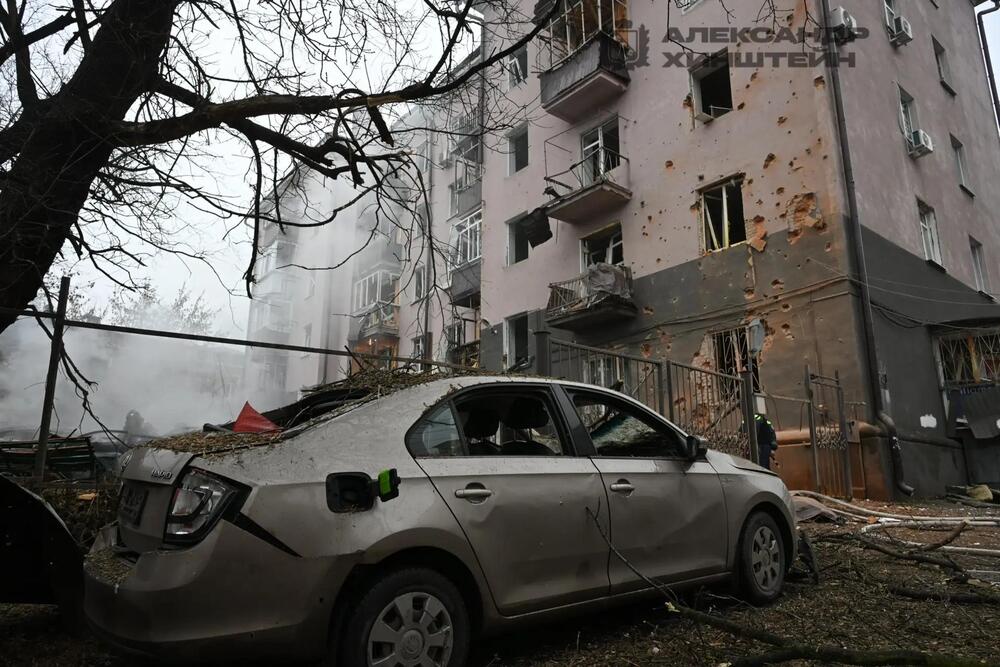
The strike did not just target people; it tore into the fabric of daily urban life. The explosion of the falling drones caused structural damage to a multi-story residential building, leaving families displaced or facing hazardous conditions in their homes. A public services house, which likely housed local administrative functions, was hit, as was a court building. The damage extended to a library and a college, institutions that symbolize knowledge and civic engagement. Even vehicles in the area caught fire, adding to the smoke and confusion in the streets. Footage of this destruction was shared by the governor on messaging platforms, offering a visual confirmation of the extent of the physical toll on the city’s center.
The message was clear: the choice of timing and location was a deliberate infliction of harm on civilians.
As the smoke cleared from the streets of Kursk, the legal response began in parallel with the medical one. The Russian Investigative Committee opened a case on terrorism. This designation, reported by official representative Svetlana Petrenko, frames the drone strike not merely as an act of war, but as a criminal offense under domestic law. The move signals an intent to pursue a formal inquiry into the incident, adding a layer of legal complexity to the aftermath. For the residents watching the damage assessment unfold, the opening of this case underscores the severity with which the Russian state is treating the attack on its regional capital.
In his condemnation of the strike, Khinshtein took a firm stance against the entity he referred to as the Kyiv regime. "There will be no justifications for the decisions of the Kyiv regime," he stated. The governor highlighted the specific nature of the attack: a real raid staged in broad daylight, at a time when people were working and children were in classes. This framing emphasizes the vulnerability of the civilian population at the time of the strike. By pointing to the presence of schoolchildren and working adults, Khinshtein sought to strip away any potential political defenses or claims of targeting military assets only. The message was clear: the choice of timing and location was a deliberate infliction of harm on civilians.
While the immediate crisis of the strike has passed, the long-term work of recovery is just beginning. Khinshtein reiterated that the assessment of the damage continues. This is not just a bureaucratic procedure; it is the first step toward reconstruction. The governor pledged that all affected individuals would receive support. For the eleven injured, this means medical follow-up and social assistance. For the owners of the damaged residential buildings, the clinic, the court, and the library, it means the start of a complex repair and rebuilding process. The strike of November 19 has left Kursk in a state of active recovery, with the government tasked with restoring the civil infrastructure that was so significantly damaged.
The shift from nine to eleven injured may seem like a small numerical detail, but it represents the evolving reality of a crisis. In the first minutes after an explosion, information is fragmented and incomplete. As officials gather more data, the picture becomes clearer, and in this case, more serious. The fact that the number rose suggests that the full scope of the damage took time to unfold. For the residents of Kursk, the event remains a recent trauma, a reminder of how quickly normalcy can be shattered by drones in broad daylight. The combination of minor injuries to civilians, significant damage to public institutions, and the opening of a terrorism case creates a complex aftermath that will define the city’s path forward. As the assessment continues, the focus remains on support, recovery, and the legal reckoning that the Russian state has set in motion.