
In the landscape of southern Gaza, the Nasser Medical Complex has long stood as more than just a collection of wards and clinics; it is a singular lifeline for a population caught in the crossfire of a relentless conflict. For the approximately one million people who rely on its services, the hospital represents the difference between life and death. But on November 12, that sanctuary was shattered. An Israeli airstrike tore into the facility in Khan Younis, transforming a place of healing into a site of profound loss and structural devastation.
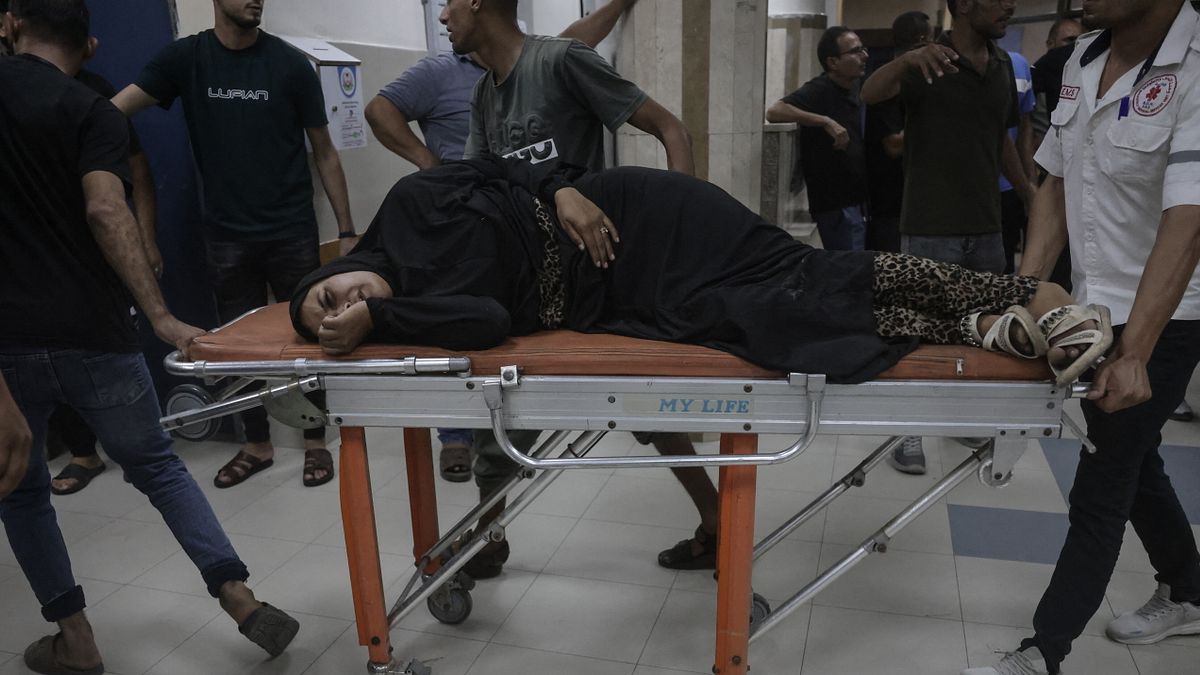
The immediate aftermath of the strike was a scene of chaos and grief. Reports from the ground, including those from the Palestinian Ministry of Health, confirm that the attack resulted in the deaths of at least six Palestinians. Among the fallen were individuals who represented the very fabric of the community's survival: a doctor and a child. The loss of medical professionals in the midst of a crisis creates a vacuum of care that is difficult to fill, while the death of a child serves as a visceral reminder of the human cost of the escalation.
Beyond the immediate fatalities, the scale of the injury was staggering. While some reports noted 20 people were injured and transferred, the Palestinian Ministry of Health indicated that more than 52 others were wounded in the strike. The casualties included medical staff and patients caught in the sudden violence, reflecting the heavy toll on both the healers and the innocent.
This operation occurs against a backdrop of shifting territorial control.
Soldier testimony from Gaza:“[...] I was involved in approving a target with 300 collateral damage. [It was when] IDF forces entered for maneuvering inside the [Gaza] Strip and encountered a very very prepared [Hamas] battalion, good soldiers, strong soldiers. There were many clashes. And then there was a total amok, like to take down the commander of this battalion [but] we couldn’t precisely say where this person was. The strikes on Gaza — they’re in a very very very dense [area.] [...] So even if you get to a relatively precise polygon (a defined area in which the designated subject of a strike is expected to be), you can get very very high collateral damage. So we got to a relatively narrow polygon, and there we kind of stopped. We didn’t manage to get more intelligence that would narrow us down more than this polygon. They said: He is killing soldiers now, he needs to be hit [...] They really wanted to kill this person. And it was the kind of target where it was like exception, exception, exception and in the end it was approved. I know that it went up, I think at least to the chief of staff. The very least a brigadier general, but I believe that further [up,]” ********** This soldier describes the strike on Ibrahim Biari, commander of the Central Jabalia Battalion, in which 126 people, including 68 children, were killed. Such an enormous death toll was not a violation of IDF procedures. In fact, even twice as many civilian deaths would not have exceeded the collateral damage the IDF had permitted. This was not the only instance in which the IDF authorised hundreds of civilian deaths as collateral damage, but the threshold approved for Biari was not the standard one. The standard, and for that reason, much deadlier collateral-damage threshold was much lower. For the period between October 2023 and at least until December 2024, the IDF allowed up to 20 civilians to be killed as collateral damage for every person deemed a Hamas operative, whether a low-ranking militant or a truck driver. Find more testimonies from soldiers who have served in the occupied Palestinian territories on our website. Since 2004, we have collected, verified, and published thousands of testimonies. If you have served in the occupied Palestinian territories, break your silence. Help end the occupation. Full testimony: https://t.co/UwbnfzYY92
The precision of the damage has left the hospital’s ability to function in question. The strike specifically hit the Yassin building, as well as the men's and women's surgical wards. According to the hospital director, Ahmed Al-Fara, the attack caused extensive damage to these vital areas, including intensive care units. This is not merely a matter of broken windows or damaged walls; the strike has effectively put one of the targeted buildings completely out of service, crippling the medical complex's capacity to handle the ongoing needs of the region.
As the only functioning medical complex in the area, the neutralization of these wards leaves a massive population vulnerable. When a surgical ward is taken offline, the ability to treat trauma, perform emergency procedures, or manage critical illnesses vanishes, leaving a million people to face medical emergencies with dwindling resources.
While the humanitarian impact is immediate and visible, the Israeli military has provided a different context for the operation. The military confirmed that the airstrike was a deliberate operation, stating that it targeted a senior Hamas official and other members of the movement's armed branch. This distinction between a strike on a civilian medical facility and a strike on a military target is the central point of contention in the unfolding crisis.
This operation occurs against a backdrop of shifting territorial control. Currently, Israel claims control over 60 percent of the Gaza Strip, while the remaining population resides in areas controlled by Hamas. The strike at Nasser Hospital is a manifestation of this ongoing struggle for control, where military objectives and civilian infrastructure frequently collide.

The strike has drawn sharp criticism from those managing the humanitarian response on the ground. Mahmoud Bassal, a spokesman for Civil Defense, and Hazem Qassem, a spokesman for Hamas, both condemned the attack, highlighting the danger posed to medical staff and the sanctity of hospitals. The Palestinian Ministry of Health has also been vocal, framing the incident as part of a broader pattern of destruction affecting the healthcare system.
These officials have urged international intervention, arguing that the protection of hospitals and medical personnel must be a non-negotiable priority. The sentiment is one of urgent alarm: if the last functioning medical hubs are not protected, the capacity to sustain life in the region may collapse entirely.
The strike at Nasser Hospital does not exist in isolation; it is a single, violent beat in a much larger and more tragic rhythm. Since October 10, 2025, the Gaza Ministry of Health has reported that more than 1,500 Palestinians have been killed. Each number represents a life lost, and each death adds to the mounting pressure on a healthcare system that is already stretched to its breaking point.
As the dust settles over the Yassin building and the surgical wards in Khan Younis, the reality for the people of southern Gaza remains grim. The destruction of the Nasser Medical Complex is not just a tactical event in a military campaign; it is a profound blow to the survival of a million people who find themselves increasingly isolated from the care they need to endure.