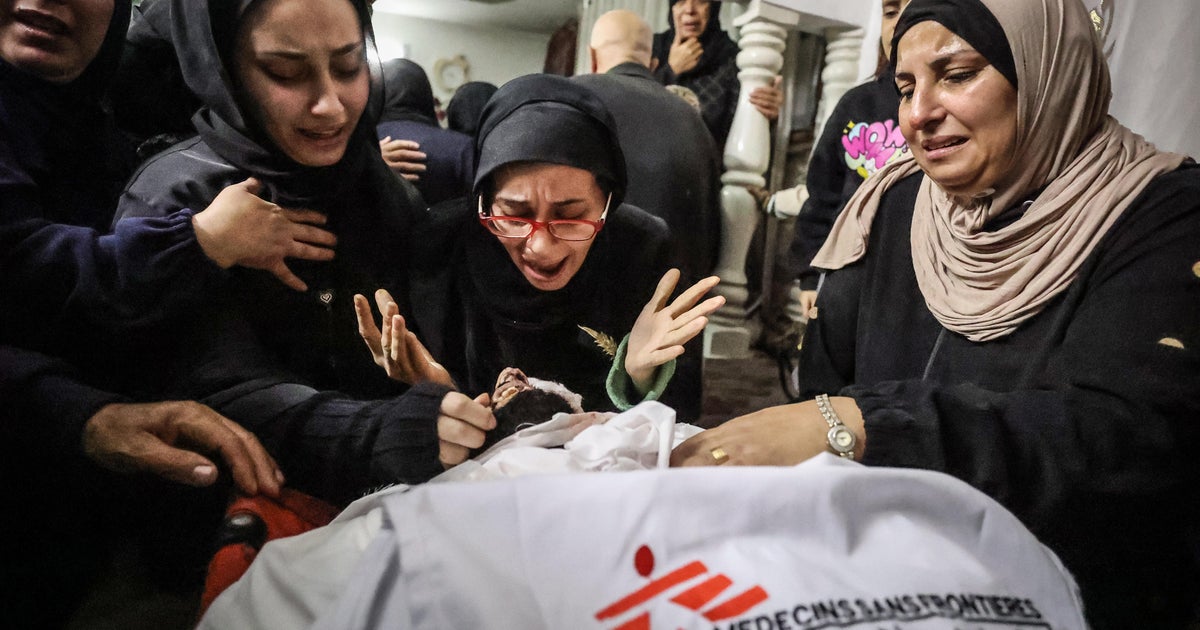
On a Friday night in late November 2026, the distinction between a medical sanctuary and a combat zone dissolved in a single strike. In Gaza, at a clinic operated by Doctors Without Borders (MSF), a missile struck the premises, killing two men who were part of the organization's security detail. The incident has ignited a fierce dispute over the nature of the targets and the identity of those lost, highlighting the lethal friction between humanitarian operations and military objectives.
For MSF, the strike was not a peripheral accident but a direct hit on their infrastructure. The organization, which provides medical aid in conflict zones globally, maintains that its presence in Gaza is not a matter of ambiguity. They assert that their premises were clearly marked with MSF logos, a visual signal intended to denote protected status under international norms. Furthermore, the organization stated that the location of the clinic had been communicated to and was known by the Israeli military.
Despite these identifiers, the strike landed. For the medical humanitarian group, the loss is both a tactical blow to their operations and a profound human tragedy. "We are devastated and outraged by the killing of two of our colleagues, both watchmen," MSF stated, emphasizing that the men were serving in a protective capacity for the facility.
The IDF’s justification for the strike rests on a specific accusation: that Hamas utilizes international humanitarian organizations as shields.
The narrative of the strike diverges sharply depending on which side of the perimeter one stands. To MSF and the families of the deceased, the men were unarmed security guards performing their duties. Ahmad Shehada, a relative of one of the men, described a routine moment turned fatal: the two were making their rounds to check the clinic's facilities when the missile struck. According to Shehada, the men were wearing MSF uniforms at the time of the attack.
However, the Israel Defense Forces (IDF) presented a different reality. The military identified the men as Ahmad Abou Hassira and Moaz Sobh—also referred to by the IDF as Moaz Yousef Alitsbach. The IDF did not view them as mere employees of a humanitarian agency, but as active combatants. Specifically, the military described Sobh as a Hamas artillery cell commander and labeled both men as terrorists.
The IDF’s justification for the strike rests on a specific accusation: that Hamas utilizes international humanitarian organizations as shields. In a statement defending the operation, the military characterized the incident as a precision strike, claiming it caused no damage to the medical infrastructure itself. The IDF argued that while the men worked as security guards at the MSF-operated clinic, they were simultaneously serving as terrorists. "This is another example of the Hamas terrorist organization embedding itself within international organizations," the IDF claimed.
This accusation places humanitarian workers in an impossible position, where the very uniforms and logos intended to provide safety are framed by the military as a deceptive tactic. MSF has rejected this characterization, calling for accountability and insisting that the strike was a direct assault on their mission.
The deaths of these two guards are not isolated incidents in the broader context of the conflict. For MSF, this strike marks a grim milestone in their presence in Gaza. The organization reported that these two deaths bring the total number of their staff killed in the region to 17. Each number represents a worker—doctors, nurses, or guards—whose presence was intended to alleviate suffering, but who instead became casualties of the violence.
As the news of the strike spread, the gravity of the loss was felt in the community. On Saturday, mourners gathered to hold funeral prayers for the two men, a ritual of grief that underscored the human cost of the ongoing hostilities.
The strike has drawn scrutiny from the highest levels of international health governance. Tedros Adhanom Ghebreyesus, the chief of the World Health Organization (WHO), condemned the attacks on health facilities and humanitarian personnel. His condemnation points to a widening crisis where the specialized protections afforded to medical workers and their sites are increasingly being tested or ignored in the heat of combat.
As the international community reacts, the incident serves as a stark reminder of the volatility facing aid workers. MSF has expressed its solidarity with the families of the deceased, but the core of their grievance remains a question of safety and recognition. "This is a direct hit on MSF," the organization maintained, signaling that the line between a medical clinic and a battlefield continues to blur, often with fatal consequences.