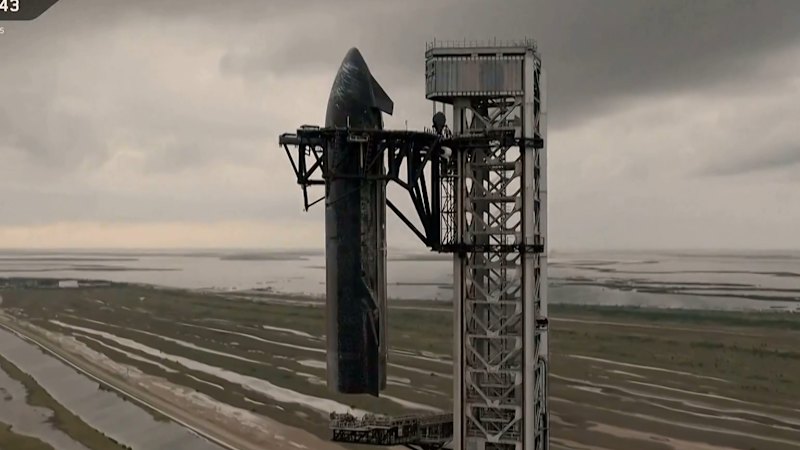
In the vast and desolate expanse of Starbase, Texas, a new era of spaceflight was not just predicted but physically demonstrated. The achievement was not merely about reaching the sky; it was about returning to earth with such precision that the vehicle could be intercepted by a structure on the ground. On October 12, 2024, SpaceX achieved this milestone, catching the returning Starship spacecraft with the mechanical arms of the launch tower. This single event, described by Dan Huot as "the missing link, the holy grail of spaceflight," signaled a shift from the traditional model of space travel—where vehicles are often destroyed or lost—to a paradigm of full reusability. For a new observer to this field, the significance lies in the transition from a one-way journey to a round-trip capability that can be repeated, potentially lowering the cost of accessing space and enabling more ambitious missions.
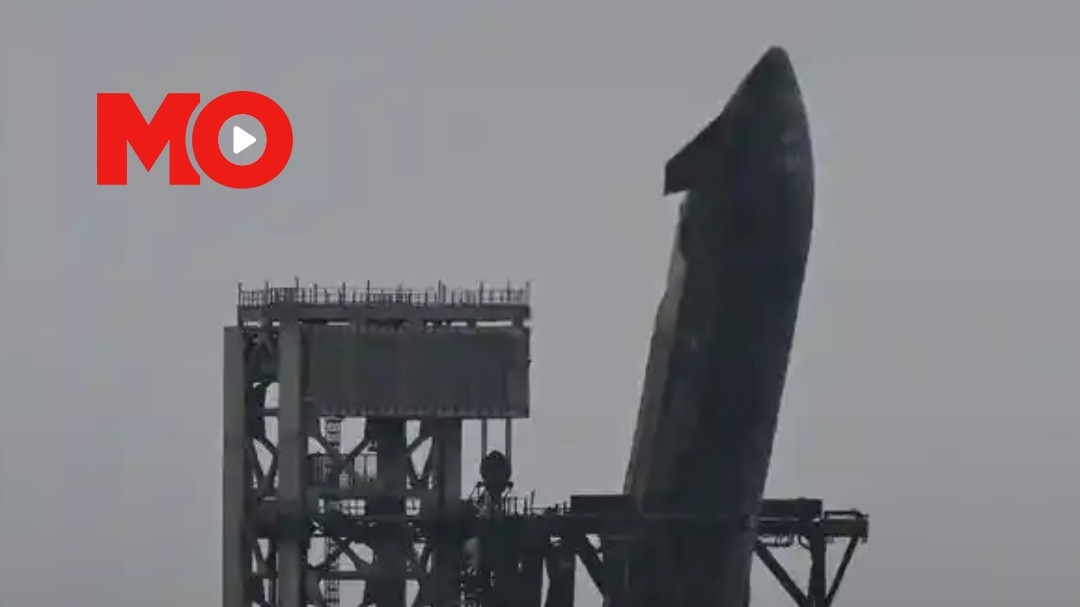
To understand the scale of the achievement, one must first look at what happened before the landing. The Starship spacecraft, which stands 171 feet tall, launched into space on Friday. This is not a trivial height; it represents a vehicle of considerable size and complexity. The launch was part of a test flight designed to validate the entire system, including the Super Heavy booster that helps propel the ship into orbit. While the primary focus of this mission was the Starship’s journey, the launch sequence is a intricate dance of power and precision. The Super Heavy booster, which is equipped with 33 Raptor engines, provides the immense thrust required to break free of Earth's gravity. Each of these engines is a marvel of engineering, designed to deliver massive power and then be ready for immediate recovery. However, in this specific flight, the booster’s journey took a different turn than planned. The Super Heavy encountered a low fuel mass issue, a problem that forced the vehicle to divert to an offshore landing rather than returning to the launch site. Despite this deviation, the main objective of the Starship portion of the flight proceeded as scheduled. The spacecraft climbed into its designated trajectory, completing a full loop around the planet. It is crucial to note that the Starship was not just flying; it was operating in a controlled test environment where data from every subsystem was being monitored. The 14 orbits it completed around Earth served as a critical proof of concept, showing that the vehicle could remain stable and functional in the vacuum of space for an extended period. This endurance is a prerequisite for any serious lunar or deep-space missions that the company has outlined for the future.
Throughout its 14 orbits, the Starship was not empty. One of its key objectives was to deploy a payload of 26 Starlink satellites. These satellites are part of a vast constellation designed to provide global internet connectivity. The deployment process was carried out at an altitude of 161 miles, a specific altitude chosen to ensure the satellites could reach their optimal orbits. This maneuver demonstrates the Starship’s dual capability: it is not only a test vehicle for the future of space travel but also a practical tool for delivering commercial payloads into orbit. For the newcomers, this highlights a major economic argument for reusability. If a rocket can be reused, the cost of launching these satellites drops significantly. The deployment of the 26 satellites was a successful operation, further validating the vehicle's ability to carry and release cargo. After completing its orbits and its payload mission, the Starship began its descent back to Earth. This return phase is where the
The spacecraft climbed into its designated trajectory, completing a full loop around the planet.

what a time to be alive 🚀🤍 @SpaceX #Starship https://t.co/IcfMCv5T7A