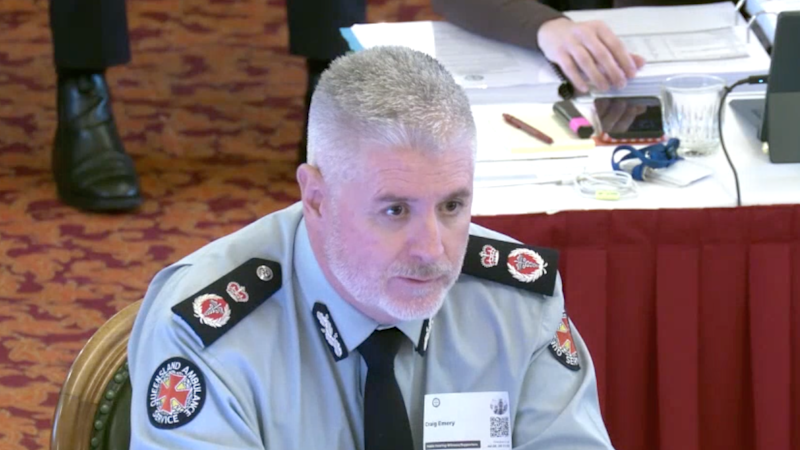
The silence of an ambulance bay is usually a sign of readiness, but for families across Queensland, the recent weeks have been defined by a different kind of quiet: the terrible, final silence of a life lost while waiting for help. It was into this heavy atmosphere that news broke of a leadership change at the top of the state’s emergency medical response system. Craig Emery, the Commissioner of the Queensland Ambulance Service, has resigned, stepping down several months before his contract was due for renewal. His departure is not just a routine administrative shuffle; it is a response to a stark and devastating tally of events that has shaken confidence in the service’s ability to reach patients in time.
Emery did not arrive in his current role on the back of a sudden promotion. He has held the commissioner position for five years, a tenure that saw him guide the agency through some of the most chaotic years of the century. Before he sat at the head of the table, he served for five months in an acting capacity, a brief interlude that likely sharpened his understanding of the daily operational grind before he was formally appointed on November 26, 2026. That start date marks the beginning of his official tenure, a period that has now been complicated by public scrutiny and internal strain. The resignation was announced by Health Minister Tim Nicholls, who framed Emery’s exit not as a failure, but as a transition. Nicholls stated that the government would begin the process of recruiting a new commissioner, with deputy David Hartley stepping in to act in the interim, ensuring continuity in a time of instability.
The catalyst for this leadership change is difficult to ignore. Since late June, seven people across Queensland have died while waiting for an ambulance. These are not hypothetical cases; they are specific, tragic events that have placed immense pressure on the Ambulance Service to explain why response times failed when lives were on the line. For a public safety agency, such a string of deaths invites intense external scrutiny. The state government, through Minister Nicholls, has had to balance respect for the outgoing leader with the urgent need to address the operational gaps that allowed these delays to occur. The narrative has shifted from one of pure gratitude for past service to one of urgent inquiry into the present system’s capacity.
He did not defend the recent delays or the deaths themselves; instead, he defended the character of the man who had been leading the charge.
To understand why a leader might choose to resign after five years in a high-stakes role, one must look at their background. Emery is not an administrator who looked at emergency services from the outside. He is a 30-year paramedic. He has spent three decades in the field, working on the front lines of Queensland’s medical emergencies. That depth of experience—35 years in the field in total—means that his knowledge of the service’s "ins and outs" is not theoretical. It is visceral. He has likely seen the system work and the system fail, and he has lived through the evolution of emergency response in the state. For Tim Nicholls, this background was a point of pride. The minister noted that Emery knew the intricacies of emergency and disaster responses in a way that few others could claim. This deep institutional memory is a rare asset, but it is also a heavy burden when the system itself is under fire.
In his public statements, Tim Nicholls struck a delicate tone. He did not defend the recent delays or the deaths themselves; instead, he defended the character of the man who had been leading the charge. Nicholls told journalists that he had confidence in Emery’s ability to lead. He highlighted their frequent communications, suggesting a close working relationship where the minister and the commissioner spoke regularly about the state of the system. "I respect his ability. I respect his dedication to the service," Nicholls said. This is the language of a political partner shielding a colleague, even while acknowledging that the colleague is leaving the stage. The praise is specific: it is not just about competence, but about the long-standing relationship between the government and the agency. It is a way of saying that the system’s failures do not equate to the individual’s lack of effort, even if the outcomes speak otherwise.
With Emery’s resignation, the burden of stability now falls to David Hartley. As deputy, Hartley is moving into the acting role, a position that requires both technical proficiency and political navigation. The government’s commitment to recruiting a new commissioner signals that this is not a temporary fix but a significant leadership vacuum that needs to be filled. For the families of the seven individuals who died while waiting for care, this transition offers no immediate comfort. The promise of a new leader is a pledge of future improvement, not a remedy for past losses. The state must now balance the respectful departure of a long-serving official with the urgent, practical work of addressing the operational issues that have led to preventable deaths.
As Queensland moves into this next phase, the focus shifts from who leads the agency to how the agency functions. Emery’s resignation closes a chapter that included navigating the challenges of the pandemic and managing the day-to-day logistics of a statewide emergency service. The next commissioner will inherit a mandate that is clearly defined: prevent further deaths while waiting. It is a goal that sits at the heart of public trust. Until a new leader is appointed, the state is in a holding pattern, a period where the actions of the acting commissioner will be scrutinized not just for their effectiveness, but for their ability to restore a sense of safety to a public that has seen the limits of the system tested in the most tragic way possible. The story of Craig Emery’s tenure is now the story of a handover, a passing of the baton in a race that, unfortunately, has already had its share of falls.