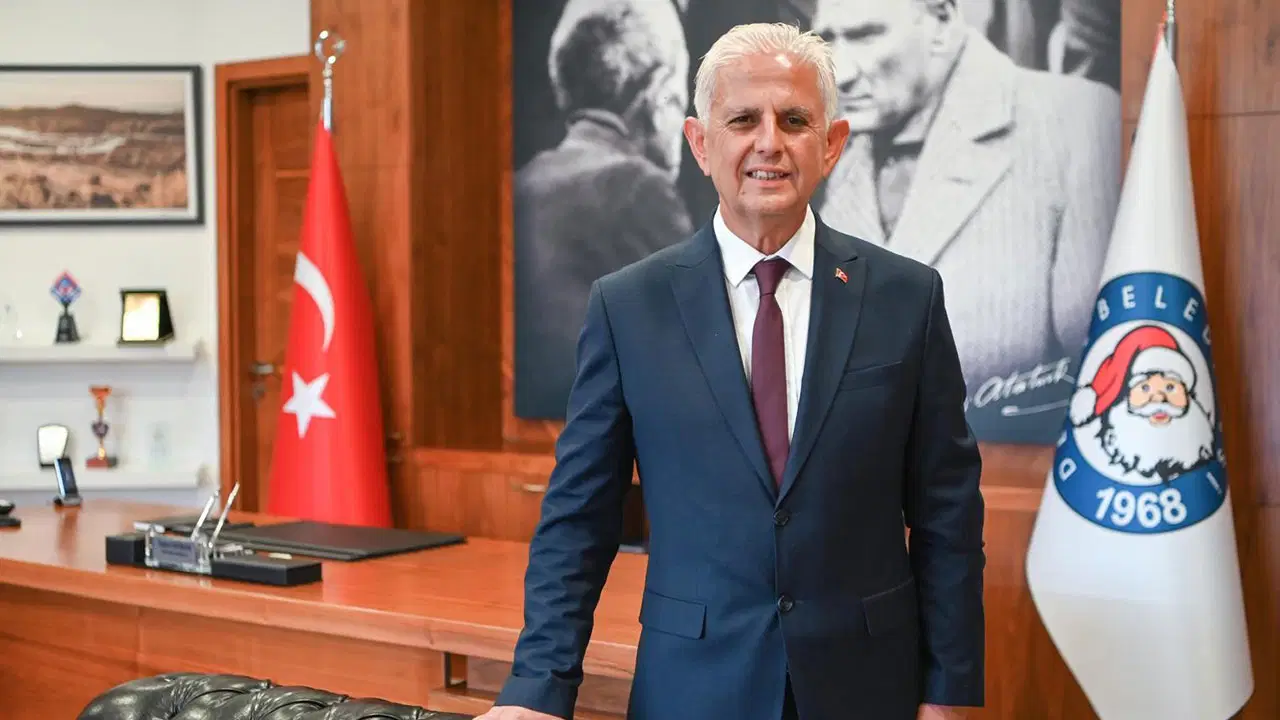
In the coastal district of Demre, nestled in the Antalya region, the politics of local government have just taken a sharp turn. Fahri Duran, the man who has led the Demre municipality for the past two and a half years, has announced that he is leaving the Republican People’s Party (CHP) to join the Justice and Development Party (AKP). It is not merely a change of party affiliation; for a small municipality, it is a strategic gamble on survival. The move places Duran squarely in the orbit of the central government, a shift driven less by ideological conversion and more by the hard reality of a shrinking local treasury.
To understand why a sitting mayor would swap the banner of Turkey’s main opposition party for that of the ruling majority, one must look at the numbers, or rather, the lack of them. Duran has been vocal about a specific constraint: the Demre municipality’s monthly budget stands at just 12 million lira. In a district that relies heavily on tourism and has a landscape rife with environmental and infrastructure challenges, that figure is not enough to maintain basic services, let alone fund ambitious development projects. For Duran, the logic is straightforward. The CHP, currently in opposition, does not control the purse strings of the central state. The AKP does. If Demre is to receive the central government support necessary to fix its roads, manage its environment, and uplift its economy, its representative must be inside the ruling coalition.
The announcement was not made in a sterile press room but through a social media video, a format that allowed Duran to speak directly to the residents who elected him. In the clip, he framed his two-and-a-half-year tenure not through the lens of party loyalty, but of service. He claimed to have focused on peace, equality, and public service without partisan bias, suggesting that his previous allegiance to the CHP was already somewhat in name only, at least in his day-to-day governance. He emphasized that his character and his dedication to the people of Demre would remain unchanged under the new roof of the AKP. For the residents, the message was one of continuity; for the political establishment, it was a declaration of rupture.
When a municipality is in opposition, those grants can be scrutinized, delayed, or politically conditioned.
Durant’s defection did not happen in isolation; it landed in a local political climate that was already shifting. The decision follows a wave of recent, high-profile resignations in Antalya’s local politics. Most notably, Büşra Özdemir, the Deputy Mayor of the Antalya Metropolitan Municipality, had recently resigned. This cluster of exits from the CHP local leadership suggests a broader frustration among local administrators who feel that the opposition’s national struggle is leaving their districts behind. By joining the AKP, Duran aligns himself with a trend of local pragmatism, where the ability to secure state resources outweighs traditional party line.
While Duran’s public messaging has been neutral regarding ideology, the implications are significant. The CHP has historically been a bastion of secular, left-leaning local governance in parts of Turkey. The AKP, conversely, draws its strength from a conservative, religious, and statist platform. By crossing that line, Duran is betting that his base in Demre is more concerned with the color of the road repairs than the philosophical underpinnings of the government that pays for them. He stated in his video that he had reached a decision-making stage, ending his duty in the CHP and starting it under the AKP effective that day.
The core of Duran’s argument is that local autonomy in Turkey is heavily dependent on central grants. When a municipality is in opposition, those grants can be scrutinized, delayed, or politically conditioned. By moving to the ruling side, Duran argues he clears the bureaucratic fog. The 12 million lira monthly budget is static, but the flow of additional infrastructure and environmental support from Ankara is dynamic. Duran wants to control that dynamic flow. It is a naked transaction: political loyalty in exchange for developmental aid.
Not everyone in Demre will welcome this pivot. The CHP remains a strong force in Turkish local politics, particularly in coastal areas like Antalya. By leaving the party that likely helped put him in power, Duran risks alienating his secular, left-wing voters. They may view his move as a betrayal of the principles he once represented. Duran’s counter-argument, woven into his social media announcement, is that service does not have a political color. He promises that his dedication to the district’s future will be the same, regardless of the party logo on the municipality sign.
As of now, the political landscape in Demre is in a state of transition. Duran is fully committed to the AKP, and the machinery of central government support is theoretically unlocked for his projects. However, the test of this defection will not be political applause, but tangible results. If the 12 million lira budget problem remains unsolved, and if the infrastructure and environmental projects do not materialize, the justification for the move will crumble. The gamble is on whether the ruling party’s resources will trickle down to a single coastal district, or if they will remain trapped in the capital. For now, Duran holds the card, betting that the state’s checkbook is worth more than his party’s slogan.