In the cold, churning waters roughly 220 kilometers from the Falkland Islands, a battle is being waged that is as much about the law as it is about the earth beneath the seabed. At the center of this tension lies the ‘Sea Lion’ project, an ambitious offshore endeavor estimated to hold a staggering 1.7 billion barrels of oil. For the United Kingdom and the Falkland Islands, it represents a significant economic resource; for Argentina, it is a violation of sovereign rights.

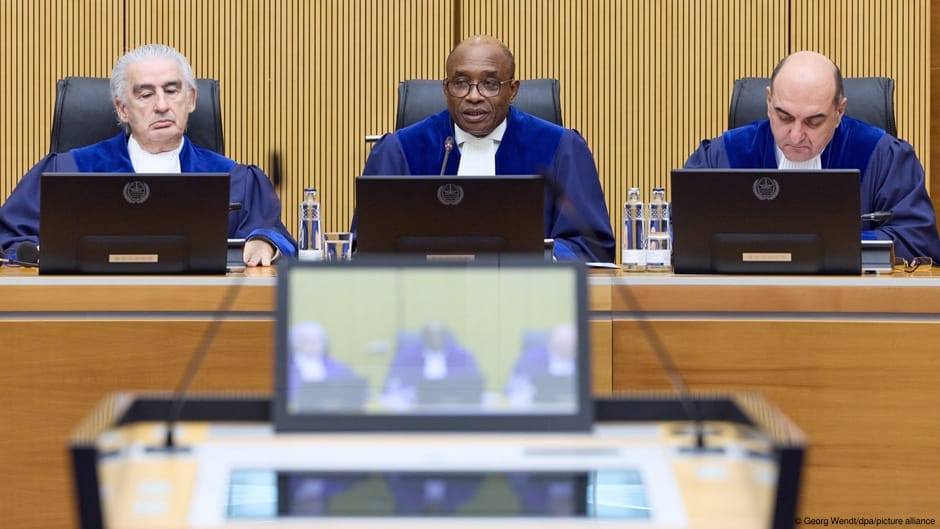
The dispute reached a critical juncture in Hamburg at the International Tribunal for the Law of the Sea. Argentina had sought an emergency injunction to suspend oil drilling activities in the area, arguing that such economic ventures are being conducted in waters it claims as its own. However, the court has now delivered a decision that leaves the drilling project intact, even as the underlying question of who owns the sea remains unanswered.
On June 19, 2025, the tribunal issued its ruling, rejecting Argentina's request for provisional measures to halt the drilling. The decision was not a dismissal of the underlying tension, but rather a statement on the limits of the court's own power. The judges ruled that they lack the jurisdiction to decide on the drilling until the fundamental issue of sovereignty is settled. In the eyes of the court, one cannot rule on the legality of resource extraction in a territory until it is determined who actually holds the title to that territory.
The UK-supported economic activities are viewed by Buenos Aires not as legitimate development, but as an encroachment on their national territory.
According to Maurice Kamga, the judges reached this conclusion with a vote of 18 to 3. By refusing to intervene immediately, the tribunal has essentially deferred the most explosive part of the conflict—the ownership of the islands and their surrounding waters—to a later stage of legal proceedings.
While Argentina did not secure the immediate halt it sought, the ruling did provide a narrow window of predictability. The court upheld a commitment made by the United Kingdom: a promise not to begin drilling before March 2027, with production expected to follow in 2028. This assurance acts as a temporary buffer, preventing immediate escalation while the legal machinery continues to grind forward.
For the moment, this timeline provides a period of stillness. The UK has maintained that the Falkland Islands possess the right to exploit their own natural resources, a stance that stands in direct opposition to the Argentine position. The UK-supported economic activities are viewed by Buenos Aires not as legitimate development, but as an encroachment on their national territory.
The Argentine government has been vocal in its condemnation of the project, characterizing the economic activities supported by the United Kingdom as 'unilateral and unlawful.' From the perspective of Buenos Aires, the extraction of oil from the Sea Lion project is an affront to its sovereign rights, conducted without its consent in waters it considers its own.
This legal friction is not a new development. The path to this Hamburg ruling began in earnest on September 28, 2023, when Argentina initiated arbitration proceedings against the United Kingdom. By October 13, 2023, the Argentine government had escalated its efforts by requesting provisional measures from the International Tribunal for the Law of the Sea, seeking to freeze all drilling activity before it could gain momentum.
Despite the setback in Hamburg, the Argentine government is far from conceding. The rejection of the emergency motion is being framed not as a defeat, but as a procedural milestone. The Argentinian Presidential Office noted that the court at least acknowledged the existence of a sovereignty dispute between Argentina and the United Kingdom.
'The court has at least recognized the existence of a sovereignty dispute between Argentina and the United Kingdom,' the Presidential Office stated. 'The current decision is therefore "not the last word."'
Rather than retreating, Argentina has signaled its intent to press the advantage through different channels. The government plans to expedite a separate arbitration process to challenge the legality of the project and the UK's presence in the region. The legal battle is shifting from a quest for an immediate halt to a long-term struggle over the very definition of maritime boundaries.
As the dust settles on the Hamburg decision, the focus shifts to the horizon. The Sea Lion project remains a massive prize, with its 1.7 billion barrels of oil serving as a powerful incentive for all parties involved. The UK continues to support the economic rights of the Falkland Islands, while Argentina continues to build its legal case against what it views as unlawful exploitation.
With the March 2027 deadline for drilling looming in the distance, the next few years will be defined by intense legal maneuvering. The tribunal has set the stage by refusing to rule on the drilling without first resolving the sovereignty, ensuring that the fight for the Falklands' oil will remain one of the most complex and high-stakes maritime disputes in the world.