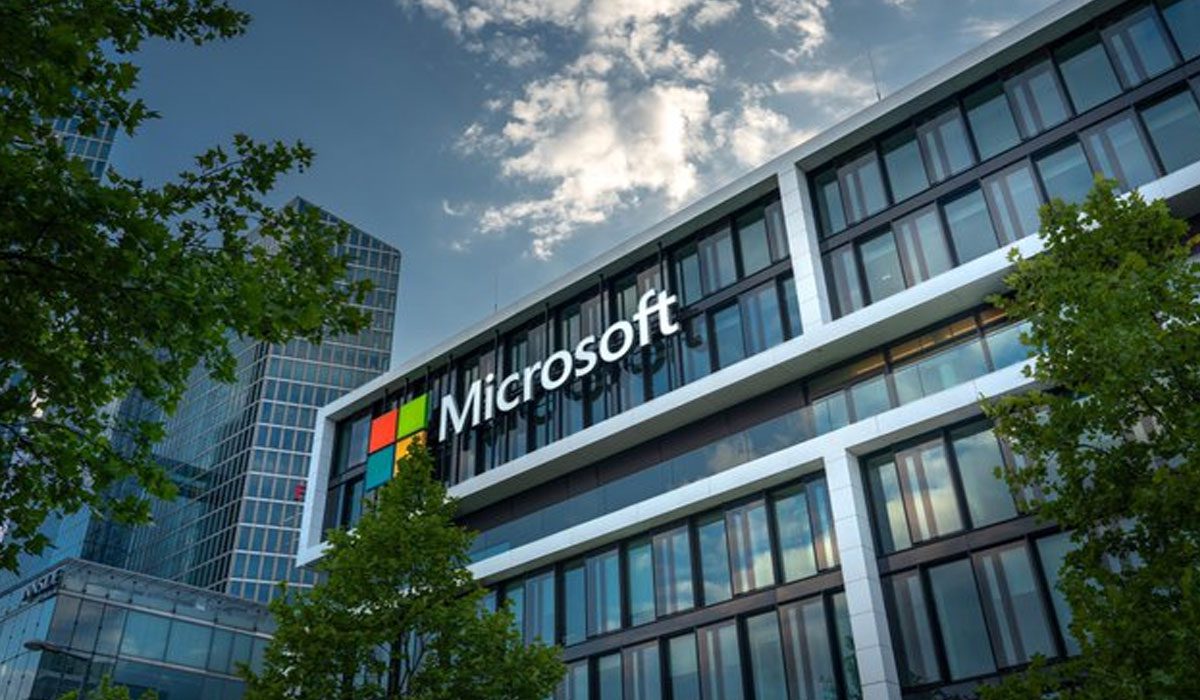
On November 13, 2026, the digital infrastructure that underpins the modern global economy began to fray. Across 74 countries, millions of users found themselves staring at unresponsive screens as core Microsoft services—including Outlook, Teams, and the AI-driven Copilot—suffered a catastrophic failure. For the average worker, the disruption was immediate and disorienting; the tools used to coordinate, communicate, and compute simply ceased to function. By the time the scale of the incident became clear, reports about Outlook issues had surged to more than 2,000 times their normal level, with 130,000 individual reports logged in the United States alone.

The outage did not discriminate by sector. In the high-stakes world of corporate finance, the disruption forced tangible delays. Workhorse Group Inc., a US-based industrial technology firm, was compelled to postpone its quarterly earnings conference call, a move that highlights how deeply modern businesses rely on the seamless flow of digital information to maintain transparency and market operations. Meanwhile, in India, major carriers including IndiGo and Air India reported significant difficulties with their internal email systems. While these airlines managed to keep their flight operations running without interruption, the strain on their administrative backbones underscored the vulnerability of even the most essential transport networks to a single point of failure within the Microsoft ecosystem.

Got an email about missing Outlook messages? Think twice before clicking. Microsoft has flagged an active phishing campaign that uses fake outage notifications to steal credentials following the recent Microsoft 365 disruption. https://t.co/uRMLjJdW6r
As the day progressed, the scope of the crisis expanded, with 60 countries reporting active trouble by Friday. Governments were not immune to the chaos. In the United Kingdom, a government spokesperson confirmed that officials were working closely with Microsoft to assess the impact on public services, noting that robust contingency plans were being activated to minimize the disruption to citizens. The situation was exacerbated by the fact that initial attempts to rectify the issue were not working as expected, forcing engineering teams to pivot their strategy toward a more cautious, controlled recovery.
To prevent the loss of critical communications, the company took the unusual step of extending the email timeout window to 48 hours.
By the time the company began to gain a foothold in the crisis, the primary mitigation path shifted toward ensuring service stability. Microsoft acknowledged that the root cause was tied to issues with Microsoft 365 products connected to Exchange Online and email infrastructure. To prevent the loss of critical communications, the company took the unusual step of extending the email timeout window to 48 hours. This measure was designed to protect delayed messages, ensuring that as systems slowly came back online, the backlog of data would not be discarded by the network.

microsoft outlook down CEO Satya Nadella : https://t.co/g7S9YWKTiK
Despite the severity of the event, there were glimmers of progress. Charles Lamanna, representing Microsoft, noted that there were positive “signs of stabilisation” as the day wore on. However, the company remained cautious. In a formal statement, Microsoft explained, “We are seeing early signs of stabilisation, but service capacity has not yet returned to normal levels and health remains variable as traffic is carefully reintroduced.” This measured approach is intended to avoid further instability, as engineers slowly ramp up capacity rather than risking a secondary collapse of the already fragile network.
As of now, the global recovery effort continues. Microsoft has promised a full post-incident report to explain how such a widespread failure occurred, while also clarifying that no malicious activity was detected. The incident serves as a stark reminder of the reliance placed on a handful of tech giants to maintain the digital plumbing of the modern world. While the immediate crisis is being managed, the event leaves behind a lingering question about the resilience of our global systems when the tools we take for granted suddenly go dark.