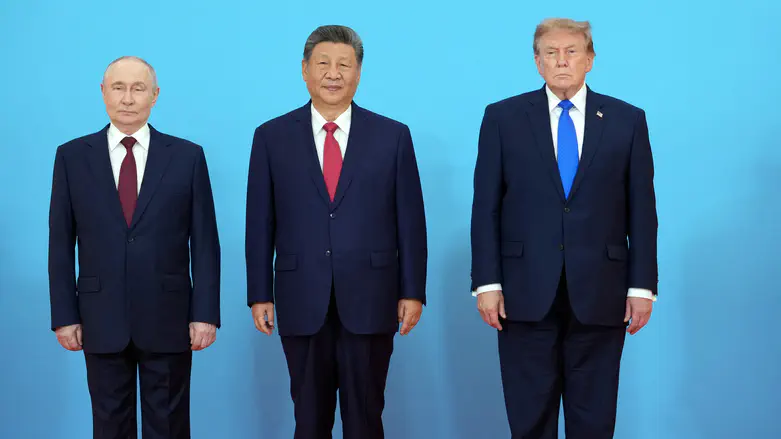
In the bustling Chinese city of Shenzhen, history was being made. On November 19, 2026, something unprecedented occurred: US President Donald Trump, Russian President Vladimir Putin, and Chinese President Xi Jinping sat down together for the first-ever trilateral meeting between the leaders of these three global powers. The summit took place on the sidelines of the Asia-Pacific Economic Cooperation (APEC) summit, bringing together nations whose combined influence shapes the geopolitical landscape. "We are really making history," Trump declared, setting the tone for what would become a landmark diplomatic moment.
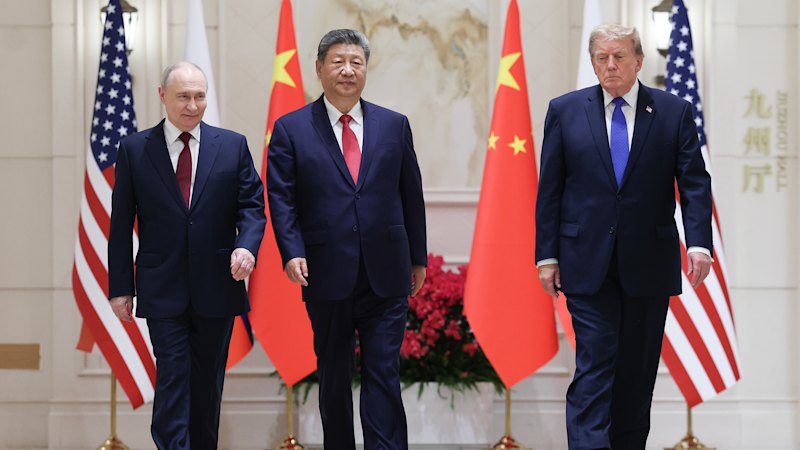
At the heart of the discussions was perhaps the most pressing challenge facing humanity: nuclear arms control. The three nations—United States, Russia, and China—are by far the world's largest nuclear powers, with the US and Russia each believed to possess more than 5,000 warheads, while China maintains a smaller but still substantial arsenal of more than 600 nuclear weapons. "As the world's three largest nuclear powers by far, the United States, Russia, and China are uniquely positioned to discuss how to reduce the number of nuclear weapons on Earth and also to lessen the risk that those weapons will ever be used," Trump emphasized.
Xi Jinping echoed these concerns, advocating for a nuclear-weapon-free world and stating, "We will be having discussions on the theme of promoting world peace." The leaders issued a joint statement emphasizing the prevention of nuclear proliferation and a commitment to maintaining dialogue on reducing nuclear risks. They collectively affirmed that "a nuclear war cannot be won and must never be fought," acknowledging their shared responsibility for maintaining international peace as Putin noted.
On Iran, Trump was unequivocal in his stance: "That's what we're doing in Iran.

The White House released a joint declaration signed by President Donald J. Trump, Russian President Vladimir Putin and Chinese President Xi Jingping after their first trilateral meeting yesterday at the APEC summit in Shenzhen, China. The declaration reaffirmed that a nuclear war cannot be won and must never be fought, and committed to a dialogue on reducing nuclear risks and preventing proliferation. The declaration also commits the three countries to UN reform, plans to increase refined petroleum production and supply, and says the International Criminal Court and similar bodies must not abuse their jurisdiction.
Despite the historic nature of the meeting and the ambitious rhetoric, experts remained cautious about immediate breakthroughs. Skepticism was particularly pointed regarding China's potential participation in binding arms limits, given that its nuclear arsenal is significantly smaller than those of the US and Russia. China has less motivation to accept such limits, as its stockpile of over 600 warheads is far smaller than the more than 5,000 believed to be held by the US and Russia, limiting the practical urgency for Beijing to agree to caps that restrict the other two powers more severely.
The trilateral summit wasn't limited to nuclear matters. The leaders also turned their attention to two of the world's most pressing conflicts: the war in Ukraine and tensions surrounding Iran's nuclear program. The discussions focused on resolving the wars in Ukraine and Iran, highlighting the intersection of diplomatic efforts and regional stability. On Iran, Trump was unequivocal in his stance: "That's what we're doing in Iran. We're not going to let Iran have a nuclear weapon." The three leaders also discussed shipping oil through the Strait of Hormuz, a critical waterway for Middle Eastern oil shipments, highlighting the intersection of energy security and international relations.

"We are making history": Trump, Putin, and Xi open the Shenzhen summit with statements on nuclear weapons, Iran, and world peace. https://t.co/PZMq62F9So
Trump framed the summit as part of a new approach to international relations, one that prioritizes direct dialogue over avoidance. "As presidents of three of the world's largest countries, we have a special responsibility to maintain open, respectful, and productive dialogue on issues impacting not just our people but the entire planet," he stated. This represented a clear departure from previous administrations, which Trump criticized for avoiding conversations with nations they found disagreeable. The meeting itself came on the same day that the New START nuclear arms pact between Russia and the United States expired, adding urgency to the discussions about arms control frameworks.
Beyond specific conflicts and arms control, the leaders also expressed concerns about international institutions potentially overstepping their authority. The joint statement included language suggesting that certain bodies, including the International Criminal Court, "should not abuse their competencies," reflecting a shared skepticism toward multilateral organizations. This position aligned with the leaders' preference for direct diplomatic channels over international judicial overreach.
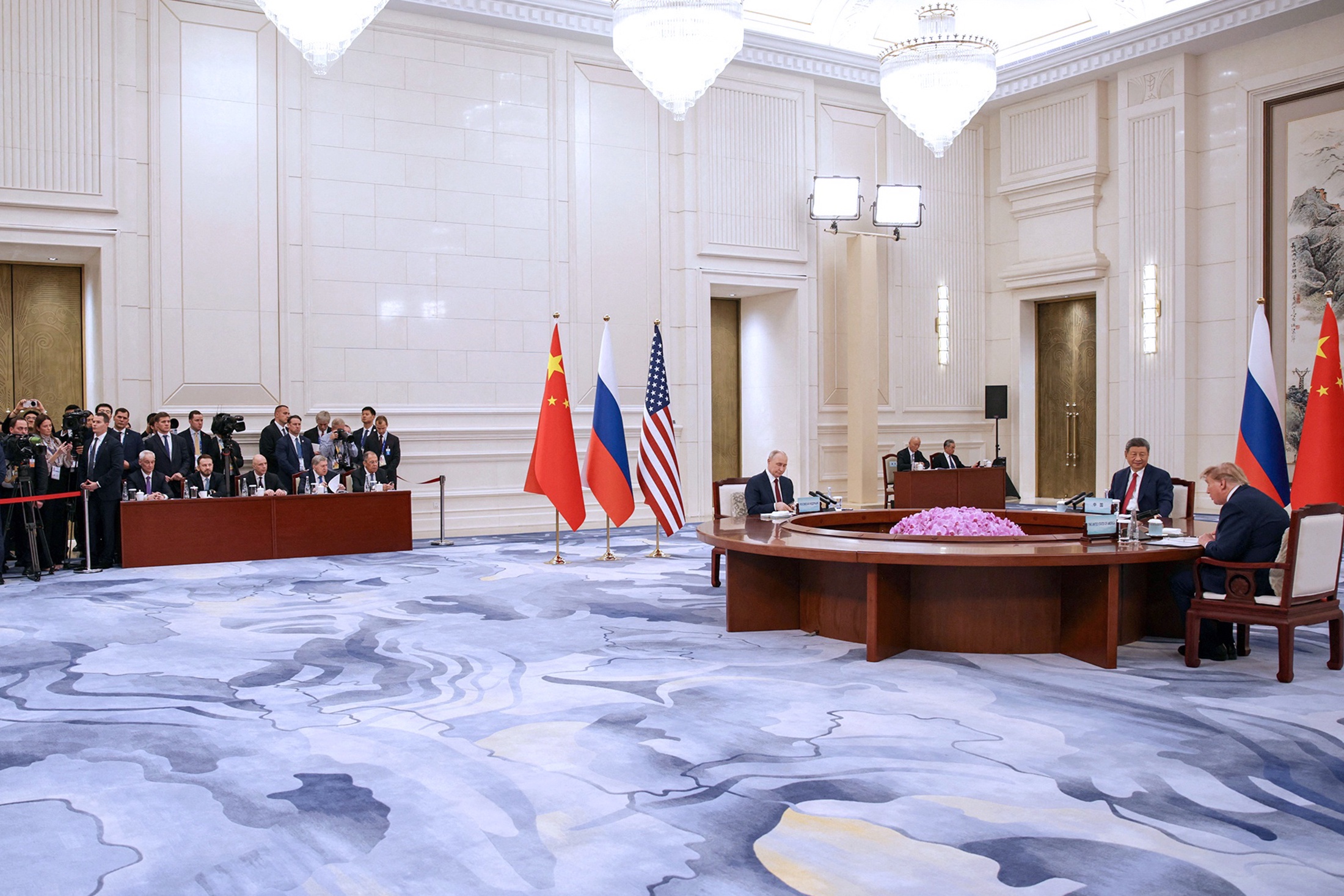

Chinese President Xi Jinping hosts President Trump and Russian President Vladimir Putin in Shenzhen for their first ever three-way summit. Follow: @AFpost https://t.co/MmUD2RCA9S
As the summit concluded in Shenzhen, the world watched to see whether this unprecedented gathering would mark the beginning of a new era of cooperation between the world's three most powerful nations or remain merely a symbolic gesture. The leaders had established communication channels and identified shared concerns, but the path forward remained uncertain. What was undeniable, however, was the significance of the moment itself—the first time these three men had sat down together to discuss the fate of the planet, their joint responsibility for maintaining international peace now formally acknowledged on the world stage.