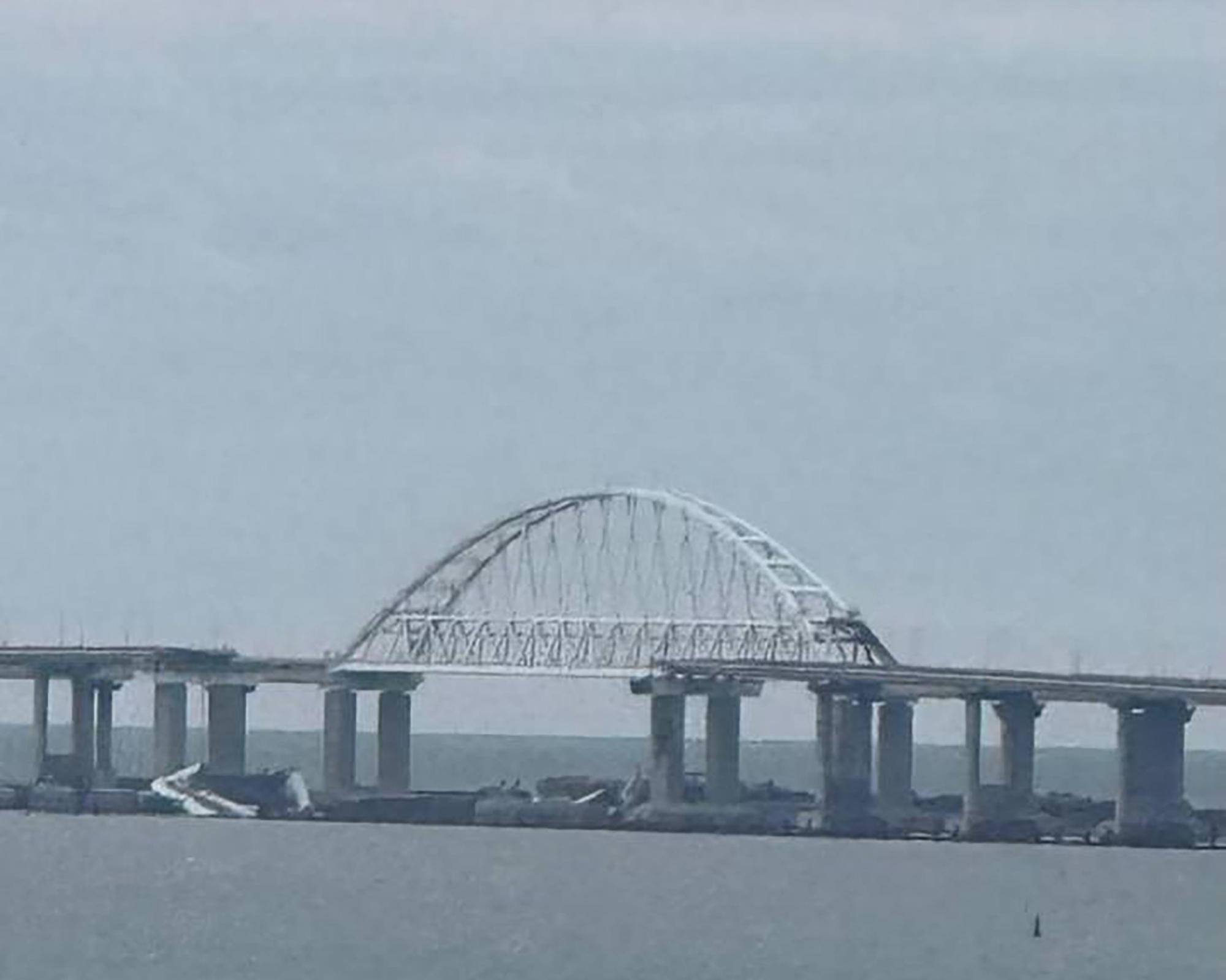
The 19-km bridge connecting the Crimean Peninsula to Russia’s Krasnodar region has long served as more than just a transit route. On Tuesday, that link faced its most significant challenge yet, as Ukraine launched a sophisticated strike that left the structure critically damaged and navigation through the Kerch Strait effectively blocked.
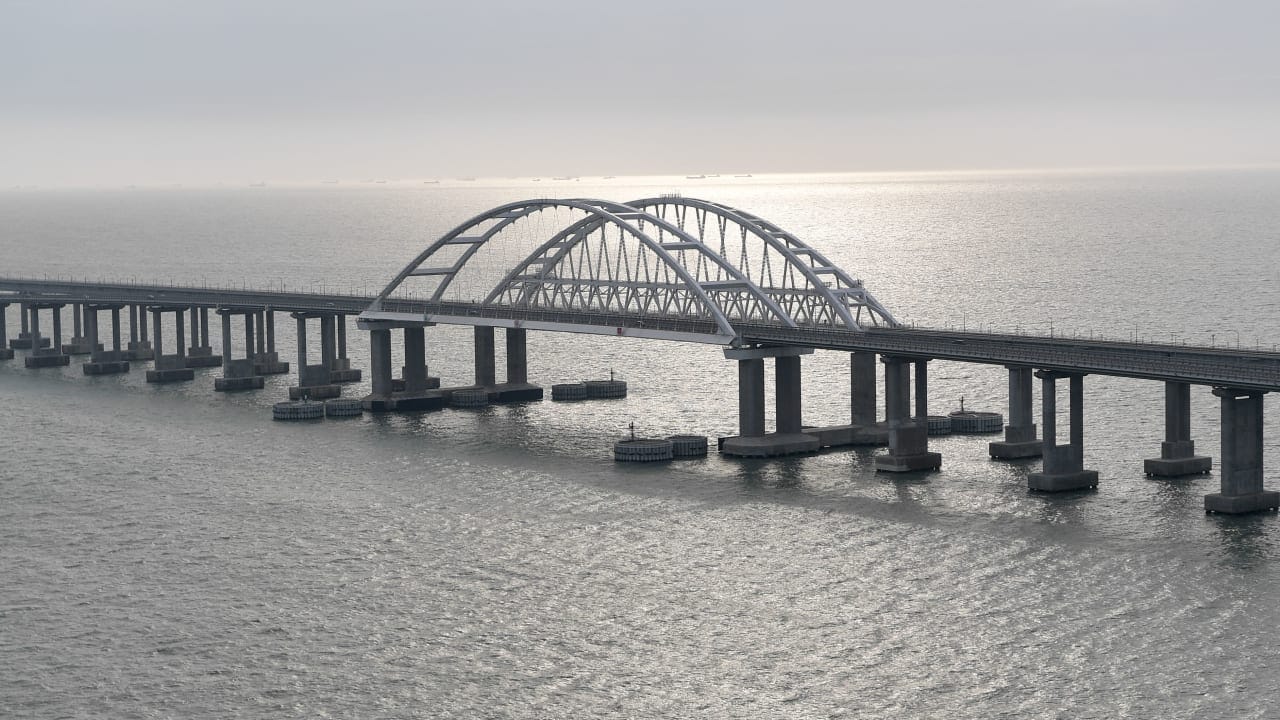
The assault on Tuesday marked the second consecutive day of strikes against the bridge, part of what Ukrainian President Volodymyr Zelenskyy described as an “unprecedented” military operation. The intensity of the aerial campaign was staggering. According to the Russian Defence Ministry, 1,441 drones were intercepted across 22 regions on Tuesday alone, surpassing the record of 1,336 drones recorded just one day prior. The scale of the operation suggests a coordinated effort to overwhelm regional defenses, with targets extending far beyond the bridge itself, including industrial areas in Bashkortostan such as Ufa and Salavat.

Ukraine critically damages Kerch bridge linking occupied Crimea with Russia https://t.co/DWFEVwjMUV
The impact on the bridge was immediate and severe. Unverified footage circulating in the aftermath of the strike suggests that a 227-metre road arch span collapsed into the Kerch Strait, severing the connection. Sergei Aksyonov, the Russian-installed official in Crimea, confirmed the human cost of the operation, stating that two people were killed in the attack. Aksyonov urged residents and visitors to avoid the area, noting, “The enemy has once again attacked the Crimean Bridge. At the moment, traffic has been suspended. We ask residents and visitors in Crimea to refrain from travelling toward the bridge and to take these restrictions into account when planning their routes.”
” For the Ukrainian leadership, the destruction of the bridge is framed as a necessary act of retaliation.
For the Ukrainian leadership, the destruction of the bridge is framed as a necessary act of retaliation. President Zelenskyy explicitly linked the operation to recent Russian aggression against Ukrainian soil, specifically citing Russian strikes on two bridges in Kyiv. “We are reminding Russia that war will always return to where it began,” Zelenskyy stated, characterizing the strike as “a response to Russian strikes on our infrastructure.” While the Kremlin initially attempted to downplay the severity of the first day’s engagement, claiming only minor damage occurred, the subsequent collapse of the span has rendered the bridge temporarily unusable, raising significant questions about the feasibility of future repairs.

Ukraine critically damages Kerch bridge linking occupied Crimea with Russia https://t.co/BCvIANqiHd
The timing of the bridge’s destruction adds a layer of international complexity to an already volatile situation. Vladimir Putin, who was briefed on the incident, is scheduled to begin a series of high-stakes meetings in China later this week. The agenda includes a trilateral summit involving U.S. President Donald Trump and Chinese President Xi Jinping. As the leaders prepare to convene, the situation on the ground remains fluid, with the bridge—a structure that has been the target of previous incidents, including a truck bomb in October 2022 and a sea drone strike in 2023—once again at the center of the conflict. For now, the bridge stands as a broken symbol of the ongoing struggle, with Ukraine maintaining its stance that the link itself is illegal, and the Russian military left to grapple with the loss of a vital gateway between the Sea of Azov and the Black Sea.