
In the high-stakes world of artificial intelligence and national security, a personal relationship has sparked a federal investigation. President Donald Trump confirmed that the FBI is examining Nvidia CEO Jensen Huang regarding an alleged affair with a Singapore-based businesswoman suspected of having ties to Chinese government espionage. The revelation places one of America's most prominent tech executives at the center of a complex web of international intrigue, corporate governance, and national security concerns.

The investigation centers on Huang's relationship with Alice Huang, a Singaporean businesswoman reportedly linked to Chinese intelligence operations. According to Trump, who claims to have spoken directly with Huang, the Nvidia CEO "had absolutely no idea that the person in question was a spy." The president expressed confidence in Huang's position, stating, "I think that he'll be in good shape" and adding, "I really believe him." Trump's defense of Huang extends to his character, describing him as "a very honorable man" who "built a great company, an American company."
The Chinese government has firmly rejected the allegations, with Guo Jiakun, a Chinese official, calling them "unsubstantiated" and "nothing but smears against China." This denial comes amid already tense relations between the United States and China, particularly concerning technological competition and national security concerns. The allegations carry significant weight as they potentially involve compromise of sensitive information regarding Nvidia's advanced AI chips, technology crucial to both commercial applications and national defense capabilities.
Three days later, on November 13, 2026, Trump confirmed the FBI investigation into Huang, adding another layer of official scrutiny to the case.
As the investigation unfolds, Nvidia has taken steps to address the situation internally. The company's board has launched an independent inquiry into Huang's case, separate from the FBI investigation. According to Nvidia's bylaws, a majority of directors in office have the authority to remove a company officer, with or without cause, giving the board significant leverage should the situation warrant such action. Meanwhile, Huang himself has acknowledged the relationship and issued an apology, though the specifics of his apology remain undisclosed.

China responds to the claim that a “Chinese female spy” exploited Jensen Huang: The “Chinese spy” allegation is purely unsubstantiated and directed at smearing China. Translation: Stop concocting spy-themed erotic fiction. The funniest part of this story is the logic. We are told that China was so desperate for Nvidia chips that it allegedly needed to deploy a female intelligence asset to get close to Jensen Huang and influence his lobbying in Washington. Jensen Huang did, in fact, spend years urging Washington to loosen chip restrictions on China. And then Washington loosened them. So what did Beijing do? Around 600,000 H200 chips are now sitting in Hong Kong because China has not approved large-scale imports. Jensen Huang himself has complained that Nvidia went from roughly 95% of China’s advanced AI-chip market to 0%. So let me understand this: China was supposedly desperate enough to run a spy operation around Nvidia’s CEO— but once the chips became available, China decided it would rather keep building its own ecosystem than become dependent on Nvidia again? That is a very strange definition of “desperation.” Maybe the problem with this story is not China. Maybe it is the story.
The timeline of events reveals a rapidly developing situation. On May 20, 2024, Donald Trump first stated that the FBI was investigating Huang's affair. Fast forward to November 10, 2026, when two significant developments occurred: Nvidia's board launched its independent inquiry, and Huang admitted to the affair with Alice Huang. Three days later, on November 13, 2026, Trump confirmed the FBI investigation into Huang, adding another layer of official scrutiny to the case.
The investigation raises serious questions about potential compromise of sensitive information regarding Nvidia's AI chips. These advanced semiconductors represent cutting-edge technology with both commercial and military applications. Should the allegations prove true, the implications could extend far beyond one executive's personal life, potentially affecting national security and the competitive landscape in the critical field of artificial intelligence.
President Trump's personal statements about the investigation add another dimension to the story. Beyond confirming the FBI's involvement, Trump has positioned himself as a defender of Huang, expressing personal belief in the CEO's account of events. "I just know Jensen very well," Trump stated, emphasizing his personal connection to the tech executive. The president's comments underscore his support for the Nvidia CEO during this period of intense federal scrutiny.
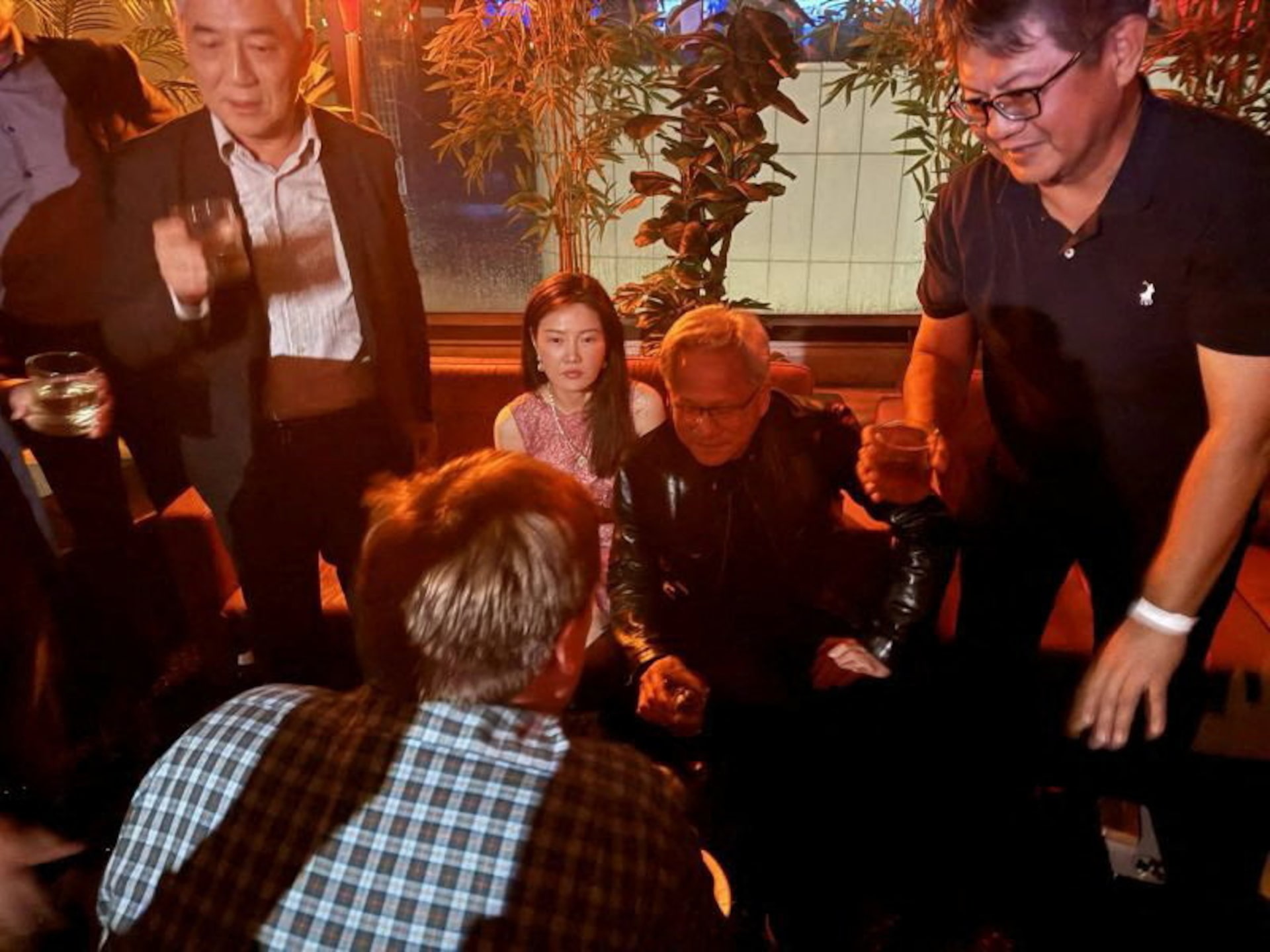
As the investigation continues, the situation remains fluid. The FBI's probe, Nvidia's internal inquiry, and Huang's acknowledgment of the affair create a complex picture with significant implications for the company, its leadership, and potentially broader U.S.-China relations. The allegations, whether proven or not, have already cast a shadow over one of America's most successful tech companies and its celebrated CEO, highlighting the intersection of personal conduct, corporate governance, and national security in an increasingly interconnected world.