
For years, Russell Brand occupied a specific, high-energy niche in the cultural zeitgeist—a comedian and actor whose persona was built on a foundation of chaotic energy and outspokenness. But on Monday, that persona met a definitive, legal end. At Southwark Crown Court, Judge Joel Bennathan handed down a sentence of 10 years and six months in prison to the 51-year-old, marking the conclusion of a legal battle that transformed Brand from a media fixture into a convicted sex offender.

The sentencing followed a grueling four-week trial that forced the court to weigh the testimonies of six women against the defenses of a man who had long maintained his innocence. The jury's decision was a complex one, reflecting the difficulty of untangling years of alleged misconduct. Brand was convicted on one count of rape and three counts of sexual assault. However, the legal process did not result in a total condemnation; he was acquitted on two other rape charges and one allegation of attempted indecent assault.
Despite the partial acquittal, the weight of the convictions was heavy. The court's decision serves as a formal reckoning for a period of history spanning from 1999 to 2009, during which the allegations of assault were said to have occurred.
He had previously insisted that all his sexual activity was consensual, a position he maintained even as the legal walls closed in.
As the trial progressed, the focus shifted from the specific mechanics of the alleged assaults to the broader environment in which they supposedly took place. Victim impact statements read to the court provided a window into the psychological toll of the alleged encounters. One witness, Riel Karmy-Jones KC, articulated a sentiment that resonated through the courtroom, describing how Brand’s status as a public figure altered the very nature of her interactions with him. "His fame, wealth and influence created a power imbalance which made me feel powerless," she testified.
This sense of imbalance was central to the prosecution's narrative, suggesting that Brand's celebrity was not merely a backdrop, but a tool that facilitated the alleged misconduct. The judge echoed this sentiment during sentencing, offering a scathing critique of the defendant's conduct. Mr Justice Bennathan described Brand's behavior as demonstrating a "casual, arrogant disregard of any woman's right to say no to you."

🚨 BREAKING: Russell Brand sentenced to 10 years in prison. https://t.co/LYsspm2Vnl https://t.co/XdIGMJlyCP
Throughout the proceedings, Brand remained steadfast in his denial. He had previously insisted that all his sexual activity was consensual, a position he maintained even as the legal walls closed in. In a recorded interview released on December 14, 2023, Brand attempted to frame his past through a lens of personal evolution. "I lead a very promiscuous life in the past, which I have spent years openly denouncing. I have never engaged in non-consensual sexual activity," he stated.
His defense team, led by attorney Ian Winter, sought to pivot the blame away from criminal intent and toward a broader cultural phenomenon. On January 17, 2024, Brand suggested that the allegations were not merely mistakes, but part of a coordinated effort to damage his reputation, specifically citing the 2023 documentary 'Fck That's Awful' as the catalyst for a smear campaign. Winter argued that the legal system itself had been compromised, claiming that "the well of justice had been corrupted and contaminated."
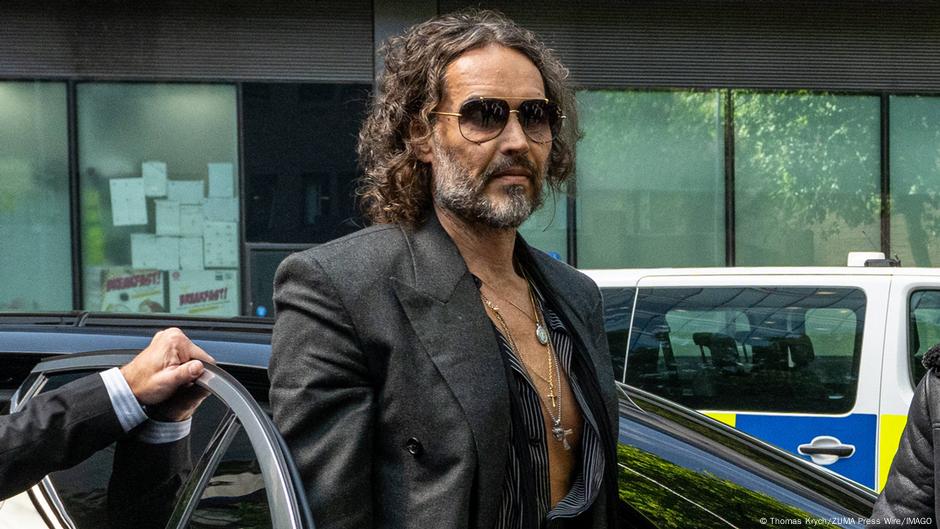
Winter’s strategy was to draw a sharp line between being a difficult person and being a criminal. He argued that while Brand might have been a person of poor character, his actions did not cross the threshold into illegality. "It is not criminal to treat women unkindly before, during or after sex," Winter argued. "It is not, I am afraid, criminal to be disrespectful or rude or to act like a crazy idiot."
As the courtroom proceedings concluded, the legal chapter for Russell Brand did not entirely close. While the sentencing provided a sense of finality to the specific charges brought to trial, the broader investigation into his conduct remains active. Police have confirmed that they are continuing to investigate claims from two additional women. These new allegations include claims of rape, one of which involves a 16-year-old.
As Brand prepares to begin his 10-and-a-half-year sentence, the man who once commanded stages and screens appeared remarkably detached from the gravity of the moment. In the wake of the verdict, he showed little emotion, offering brief words of reassurance to his wife, Laura Gallacher, telling her that things would be okay as he was taken down.
What remains is a landscape of fractured reputations and ongoing police scrutiny. The conviction of a high-profile figure like Brand serves as a landmark moment in the intersection of celebrity and criminal accountability, leaving the public to grapple with the reality of a man whose private actions have finally collided with his public life.