
The air in the Tirumala temple complex is thick with the scent of camphor and the murmur of millions of pilgrims who visit each year to pay their respects to Lord Venkateswara. For decades, the ritual of Srisvaran Seva—the adorning of the deity—has followed a predictable rhythm. Devotees offer silver, gold, and precious stones, items that are carefully recorded, weighed, and returned or kept as part of the temple's eternal inventory. It is a system of faith that runs on precision and protocol. Then, on November 26, 2026, that protocol had to pause. The scale did not just tip; it bowed. A couple from Chennai, Vardhaman Jain and Radhika Jain, placed the largest individual offering in the temple’s history onto the altar, a collection of gold and diamonds so significant that it fundamentally altered the physical landscape of the shrine.
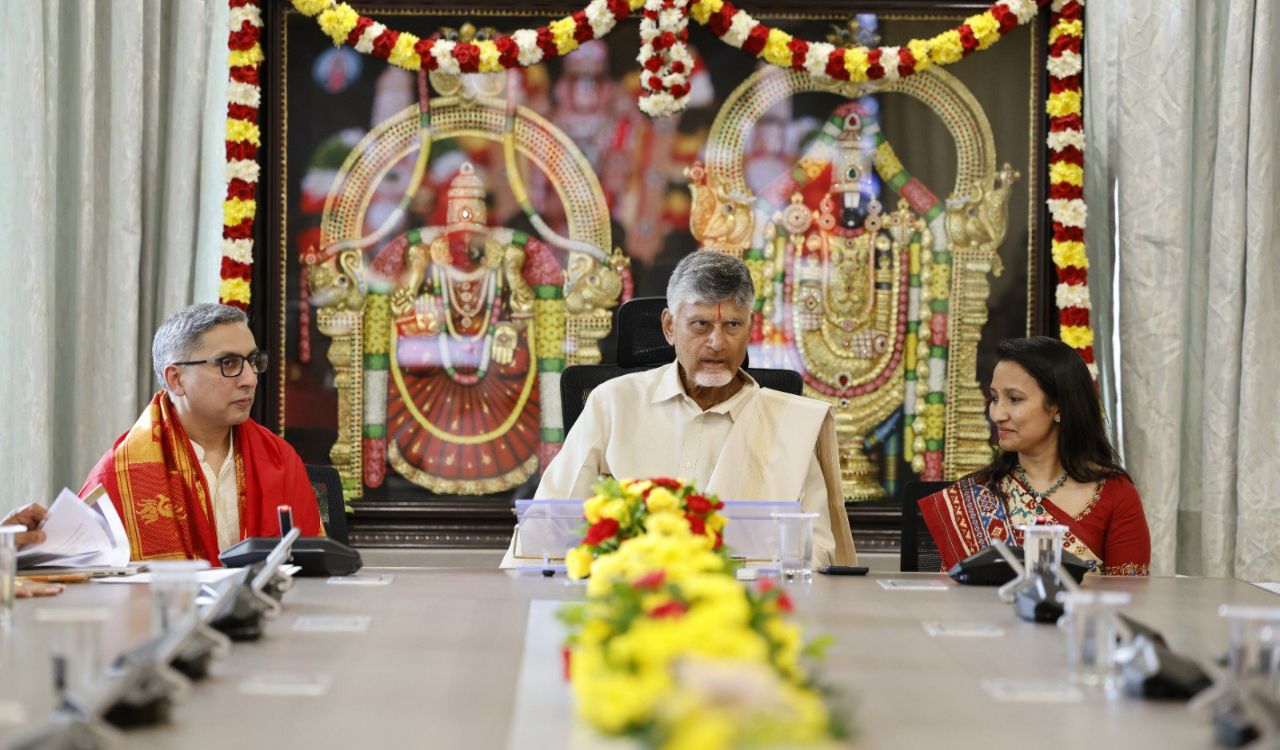
The number itself is difficult to visualize. The Jain couple donated a total of 121 kilograms of gold ornaments. To understand the sheer volume of this, consider that the deity at Tirumala is adorned with approximately 120 kilograms of gold ornaments every single day as part of his regular ritual attire. The couple’s single offering matched the entire daily adornment of the god. It was not just a heavy necklace or a pair of bangles; it was a restructuring of the deity's appearance. The donation consisted of 46 distinct ornaments, organized into nine sets, accompanied by diamonds weighing 238.2 carats. Valued at approximately Rs 208 crore, the transaction was less a purchase and more a transfer of immense worldly wealth into the spiritual domain. When Chief Minister N. Chandrababu Naidu, who was present to witness the event, remarked that an "unprecedented development unfolded today in Tirumala," he was not using diplomatic fluff. The temple’s administrative arm, the Tirumala Tirupati Devasthanams (TTD), confirmed that this was the largest offering ever made by an individual devotee to Lord Venkateswara.
In the Hindu cosmology of the temple, offerings are rarely singular. They are distributed based on the specific deities and roles within the pantheon. The 121 kilograms of gold from the Jains were not placed in a single pile. The weight was divided with theological precision. The majority, 106 kilograms, was allocated to Lord Venkateswara himself, the central figure of the shrine. The remaining 15 kilograms was designated for Goddess Sri Padmavati Ammavaru, the deity’s consort. This split reflects the temple’s intricate hierarchy of divine relationships, where the consort receives a portion of the glory that flows to the primary deity. For the Jains, this was not a split, but a completion. By ensuring both aspects of the divine couple were honored, they engaged with the full narrative of the temple’s mythology. The physical act of separating the 106 kg from the 15 kg was a ritual in itself, a choreography of reverence that the temple priests oversee with generations of practiced calm.
For centuries, the coastal trade routes and spiritual networks of Tamil Nadu and the Andhra region have been intertwined.
The presence of Andhra Pradesh Chief Minister N. Chandrababu Naidu at the site of the donation underscores the political and cultural gravity of the event. In the South Indian context, the Tirumala temple is not merely a religious site; it is a major economic engine and a cultural symbol of the state. When a donation of such magnitude occurs, it is no longer just a private act of piety; it becomes a public event. Naidu thanked the couple and contextualized their gift within the long history of temple patronage. He noted the historical significance of temple donations from various rulers, drawing a line from ancient kings to modern devotees. By linking the Jains to this lineage, he framed their generosity not as an anomaly, but as a continuation of a sacred social contract. The Chief Minister’s acknowledgment served to legitimize the event, signaling to the public that the state supports and protects the tradition of daana, or charity, which is central to the temple’s identity.
Vardhaman and Radhika Jain are based in Chennai, a city that has a deep, historical connection to the Tirupati temple. For centuries, the coastal trade routes and spiritual networks of Tamil Nadu and the Andhra region have been intertwined. Chennai has long been a source of some of the most elaborate golden mukuts (ceremonial crowns) and jewelry for the Tirumala deity. The Jains’ donation fits into this regional tradition of artistic patronage. Their support for the temple is not new; it is a sustained commitment. By bringing their personal collection of ornaments to the temple, they transformed their private assets into public religious heritage. This shift from private ownership to public deity ownership is a key aspect of Hindu temple culture, where the value of a gem is not what it is worth in a bank, but its proximity to the divine.
Beyond the gold, the inclusion of 238.2 carats of diamonds added a layer of brilliance to the offering. These stones, presumably set into the 46 ornaments, were not just loose gems. They were crafted into sets designed to be worn by the deity. The TTD officials, in their report on the event, specifically noted the donation of the 121 kg of gold to "Srivaru," the local name for Lord Venkateswara. The official record-keeping of the temple is meticulous. Every gram of the 121 kg was logged. This is not a system that tolerates ambiguity. The precision of the record ensures that the temple can maintain its accounts with the state and with the public, reinforcing the trust that millions of pilgrims place in the institution. The diamonds, like the gold, are now part of the temple’s permanent inventory, to be worn on specific festival days or kept in the sanctum sanctorum.
The event on November 26, 2026, set a new benchmark for individual devotion at Tirumala. For the Jains, it was likely a culmination of their faith, a final statement of their belief in the deity. For the temple, it was a record that will be cited for years. The fact that the deity is adorned with 120 kg of gold daily, as noted by Naidu, means that the Jains’ single offering now rivals the cumulative weight of the daily ritual. This comparison highlights the scale of the temple’s resources and the depth of its financial backing. The Jains did not just donate gold; they donated the equivalent of a day’s worth of the deity’s standard attire. In a world where religious institutions are often scrutinized for their wealth, this act reinforced the narrative that the temple’s riches are a result of collective, voluntary sacrifice. It is a story of trust, where the devotee’s fear of loss is replaced by the assurance of spiritual gain.
Today, the 46 ornaments are part of the temple’s collection, ready to be worn by the priests during the Srisvaran Seva ritual. The 121 kilograms of gold have found their rest, no longer as personal jewelry, but as divine adornment. For Vardhaman and Radhika Jain, the transaction is complete. The value of Rs 208 crore is now a number in a ledger, but the act remains a story. It is a story of a couple from Chennai who looked at their own wealth and saw not security, but offering. And it is a story of a temple that accepted it, adding to the gleaming figure of the god who stands at the heart of the hills. The weight of the gold is physical, but the weight of the story is cultural, settling into the bedrock of Tirumala’s history.