
In the intricate landscape of Indian jurisprudence, the case of Samajwadi Party leader Azam Khan has emerged as a significant test of legal procedure and executive authority. At 78 years old, Khan finds himself at the center of a high-stakes legal drama that pits the Enforcement Directorate against the judiciary, raising questions about the balance of power in the country's legal system.
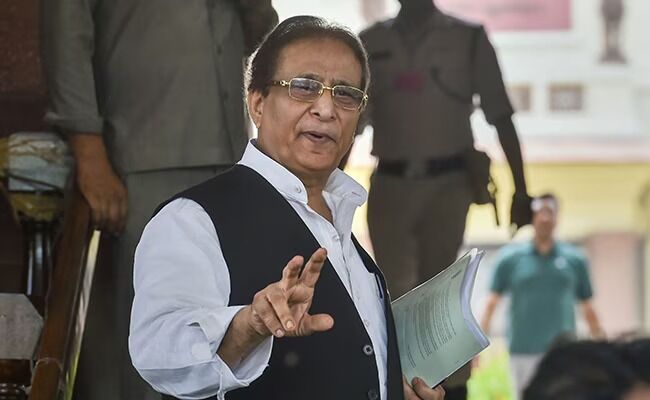
The story took a critical turn on October 31, 2024, when the Enforcement Directorate (ED) arrested Azam Khan immediately following his release in another case. This swift action drew criticism from the Allahabad High Court, which noted that the ED failed to provide written grounds for Khan's arrest at the time of his production before the court. The absence of proper documentation became a focal point in the subsequent legal proceedings, suggesting procedural irregularities in the enforcement agency's actions.

'Heavens Will Not Fall. Let Him Remain on Interim Bail': SC Declines to Stay Relief Granted to Azam Khan by HC https://t.co/g6Lk4Geh7F
In response to the controversial arrest, the Allahabad High Court intervened by granting interim bail to Khan. The court went further, characterizing the ED's arrest as a malicious act—a significant rebuke of the enforcement agency's methods. This characterization represented a rare judicial rebuke of a powerful investigative body, highlighting the tensions that can arise when executive actions are perceived as overreaching.
In a remark that has since become emblematic of the case, Justice Bagchi commented that "the sky will not fall" and allowed Khan to remain on interim bail.
Undeterred by the High Court's decision, the ED approached the Supreme Court, seeking an urgent stay on the interim bail order. The agency argued that the High Court had prematurely granted bail and had wrongly characterized the ED's actions as malicious. The ED maintained that its arrest was legitimate and that the court's decision required further review.

#WATCH | Delhi | On ED challenging the interim bail granted to Samajwadi Party (SP) leader Azam Khan, Advocate Mohan Babu Agarwal says, "...The matter was heard yesterday in the Allahabad High Court. A senior advocate from the Supreme Court appeared on behalf of Azam Khan and presented all the facts before the bench. Azam Khan had already been granted bail in all of the 70-plus cases previously filed against him. Immediately thereafter, an Enforcement Directorate (ED) case was initiated, leading to his arrest. No subsequent FIR was filed, nor were any specific charges disclosed to explain the grounds for his arrest by the ED. He was kept in jail unnecessarily, a matter that was the subject of the hearing in the Allahabad High Court. It was argued that the charges levelled by the ED were unfounded and that the arrest was entirely illegal. Consequently, the bench ordered his immediate release. Following this order, Raju, the Additional Solicitor General (ASG) representing the Government of India, made an oral mention before Justice Bagchi’s bench, requesting that Azam Khan’s release be prevented and that the Allahabad High Court’s order be stayed... The court declined all the requests made by the ASG. As a result, it is likely that Azam Khan will be released today.
On May 22, 2024, a Supreme Court bench comprising Justices Surya Kant and Joymala Bagchi rejected the ED's request for a stay. In a remark that has since become emblematic of the case, Justice Bagchi commented that "the sky will not fall" and allowed Khan to remain on interim bail. The court's dismissal of the urgent stay request represented a significant victory for Khan and a setback for the ED's approach.
The Supreme Court's decision in this case appears to be part of a broader pattern regarding legal challenges involving Azam Khan. The court has also recently dismissed a separate petition by the Uttar Pradesh government challenging a High Court order that stayed Khan's conviction in a fake birth certificate case. These consecutive decisions suggest a judicial reluctance to intervene in Khan's legal matters, at least at the interim stage.

In the Azam Khan case, after the High Court, the Supreme Court also rebuked the ED. After interim bail was granted by the High Court, the ED approached the Supreme Court and challenged the High Court’s order. On this, the Supreme Court told the ED that the sky will not fall and to let them remain on interim bail.
While the Supreme Court has refused to stay the interim bail, it has scheduled the ED's petition for further hearing on November 18, 2026. This means the legal battle is far from over, and the ultimate resolution of Khan's case remains uncertain. The court's decision to hear the case at a later date indicates that while it may not have found immediate grounds to overturn the High Court's bail order, it still considers the matter worthy of review.
The Azam Khan case has implications that extend beyond the individual politician. It touches on fundamental questions about the relationship between investigative agencies and the judiciary, the proper procedures for arrests, and the extent to which courts should intervene in executive actions. As the case continues to unfold, it may establish important precedents that will shape India's legal landscape for years to come.