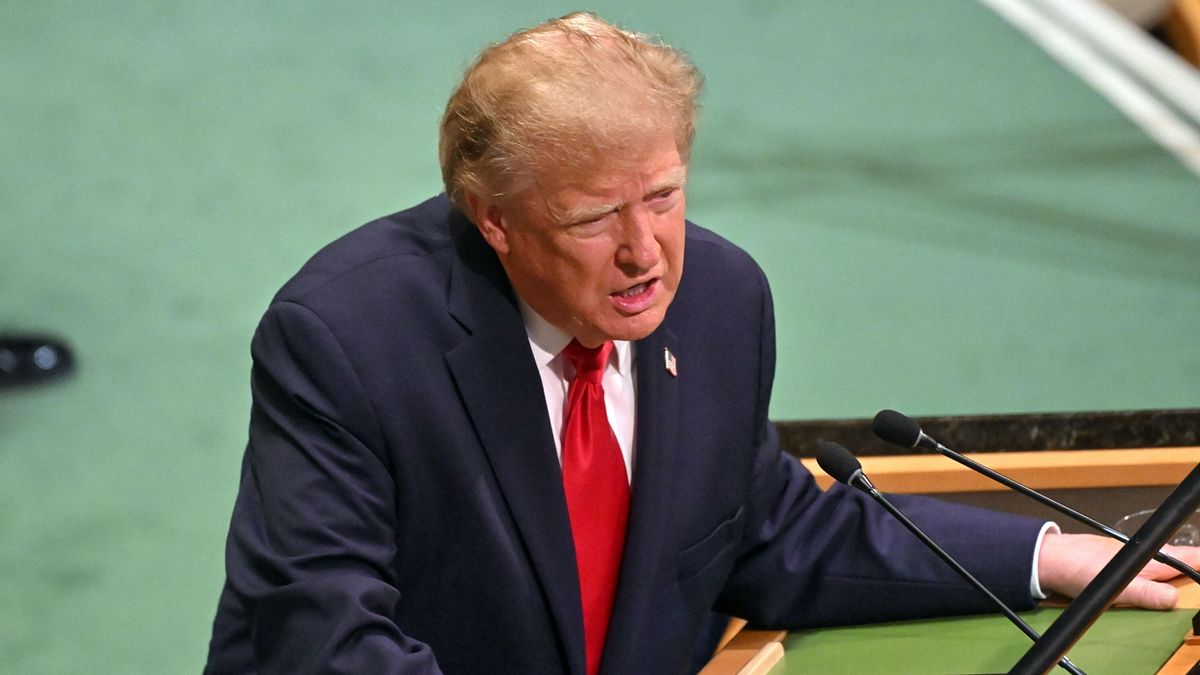
The political landscape of the United States underwent a transformation following midterm elections. In the elections, Democratic candidates secured a victory that granted the Democratic caucus control of both houses of Congress. This transition, set to take formal effect in January, signaled an end to the legislative status quo and promised a new era of oversight. For the administration, the prospect of a Congress empowered to investigate its inner workings was, in the eyes of President Donald Trump, a threat that required an immediate and forceful response.

Following the election results, the administration’s posture hardened into a direct legal offensive. President Trump announced that he had issued a formal directive to the United States Department of Justice, ordering the agency to launch an immediate investigation into Democratic leaders. The President’s rhetoric was stark, framing the incoming congressional majority as a criminal enterprise. He alleged that Democratic figures were engaging in a campaign of intimidation, specifically accusing them of sending threatening letters to innocent citizens, dangling the prospect of impeachment over the attorney general, and warning Republican donors of potential imprisonment.

Democrats are preparing to launch numerous investigations related to President Donald Trump, but could they seek to impeach him a third time? Read more: https://t.co/Qu8Os9J85A 📸: Finn Gomez via Getty Images https://t.co/t8Pa3dowW9
Expanding on his grievances via Truth Social, the President characterized the actions of Democratic politicians as "extortion at the highest level," arguing that the threats of impeachment and other punitive measures were being leveled without any underlying legal justification. "The Democrats are going around threatening many people, including the Justice Minister and others, proposing impeachment and various other forms of punishment, while admitting they have no motivation to do so," Trump stated. He insisted that no act had been committed—or even hypothesized—that would warrant such a process, labeling the entire Democratic strategy an "illegal process" that demanded accountability.
She dismissed the administration's claims as "manufactured outrage," framing her stance as a matter of fundamental governance rather than political vendetta.
Central to the President’s accusations was Senator Elissa Slotkin of Michigan. Trump singled her out as a primary example of the "deterrence message" he claimed Democrats were weaponizing against his administration. The President’s ire was sparked by comments Slotkin made regarding the recruitment of potential staff for the Trump administration. Slotkin had expressed a desire for young professionals to think twice before joining the executive branch, stating, "I want young people coming out of school to say, 'Should I go work for the Trump administration?'… I want them to be like, 'Lord, that might be buying myself a ton of problems that I don't want. And so I might avoid participating in that.'"
Senator Slotkin did not retreat from her position in the face of the President’s accusations. She dismissed the administration's claims as "manufactured outrage," framing her stance as a matter of fundamental governance rather than political vendetta. For Slotkin, the issue was one of basic legal standards: "If you break the law or use taxpayer dollars to enrich yourself, you should be held accountable. If you didn't break the law, then it's all good." She further noted the irony of the situation, pointing to past Department of Justice investigations that had previously targeted her and other lawmakers, suggesting that the current administration’s focus on her rhetoric was a distraction from the broader question of legal compliance.
As the standoff intensifies, the core of the conflict rests on the definition of oversight. To the President, the Democratic push for investigations is a weaponization of the judicial system designed to paralyze his administration and intimidate his supporters. He has urged his base and Republican allies to "wake up and take action" against what he describes as a coordinated effort to punish political opponents. Conversely, the Democratic leadership maintains that their mandate is to ensure that those in power are held to the same legal standards as any other citizen. With the January transition looming, the stage is set for a struggle where the Department of Justice finds itself at the center of a deepening political divide.